Jada’s post-assault trauma
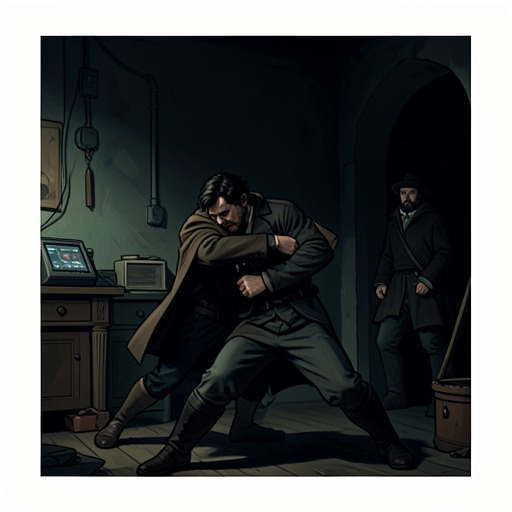
The ExceptionJada’s post-assault trauma is the lasting psychological and physical aftermath of Simon Powers restraining her in a restaurant parking lot after she declined to go home with him. The episode does not occur in isolation: Jada has already left a marriage marked by fear and manipulation, and Simon’s actions make the threat of unwanted control immediate in a new relationship. In its aftermath, ordinary solitude and movement through familiar places can bring anxiety, while Cane Alexander’s response raises a further question about the boundary between protection and control.
Earlier Fear and the Decision to Leave
Before the encounter with Simon, Jada’s marriage to Decker had taught her to anticipate sudden changes in his behavior. He could be considerate one moment and frighteningly angry the next; insults, intimidation, and emotional manipulation made it difficult for her to trust her resolve to leave. Decker invoked the life they had built, the prospect of starting over, and their plans for a family, pressing on the insecurities that made her reconsider. Jada describes this cycle as exhausting, and says she struggled to explain why she had endured it.
The turning point came when Jada discovered Decker cheating. She moved her belongings to her friend Mandi’s home that night, choosing it partly because Mandi’s husband, Mason, was a professional fighter and she was unsure how Decker would react. Although Decker had never hit her, she feared what he might do. His response afterward alternated between pleading and anger; during a drunken episode he appeared at Mandi’s door, then continued to complicate Jada’s life by fighting the divorce from a distance.
When Decker later accused Jada of not wanting their marriage to work, she answered with a fuller account of the fear she had lived with: nights spent anxious that he might come through the door in a rage, and repeated infidelity she had tried to overlook. Speaking openly marked a change in their balance of power. Jada challenged his claim over her, asserted that she was no longer his wife or partner, and invoked the divorce papers. That earlier struggle matters to her later trauma because it establishes a history in which a man’s anger and possessiveness had already made her feel unsafe, even without physical assault.
The Parking-Lot Encounter
The incident with Simon begins after dinner, as the pair walk toward Jada’s car. In the nearly empty rear of the parking lot, Simon asks her to follow him to his home. Jada declines, using a message from her sister Kari as a reason to leave. She offers the possibility of another time in the hope that he will accept the refusal and let her go. Instead, he blocks her access to the car door and grabs her arm.
Jada tries to remove his hand and tells him to stop. When that fails, she threatens to scream, attempting to regain control of a situation in which nobody else is nearby. Simon pulls her toward him and restrains her. The account makes the setting part of the danger: the entrance area is busy, but the back of the lot is almost vacant, and Jada looks around for help without seeing anyone. She is left to confront him alone.
Her response is not simply fear. She tries to establish a boundary, resist his grip, and find a way to escape. The suddenness of Simon’s actions also distinguishes the encounter from her experience with Decker: Jada recalls that Decker had threatened or cornered her, but had never touched her. Simon’s physical contact therefore makes her feel violated and vulnerable in a way that her earlier experiences, serious as they were, had not.
Immediate Aftermath and Continuing Vigilance
The drive home takes about thirty minutes, but feels much longer. Jada is shocked and unable to process the event clearly; the pain in her arm is the one sensation she can readily identify. She checks the rear-view mirror because she fears Simon may have followed her, although she does not see his Avalanche. At home, she runs inside, shuts and locks the front door, and leans against it with her eyes closed before trying to steady herself. The sequence shows safety becoming something she has to actively check and re-establish, rather than something she can take for granted.
The anxiety does not disappear simply because Simon is absent. Later, even though nobody has heard from him since the incident, Jada remains uneasy when she is alone at Kari’s house. She checks that the house looks normal, moves quickly to the door, and locks it behind her; she also disarms and rearms the security system. The repeated actions are practical precautions, but they also reveal how the assault has altered her sense of ordinary domestic safety.
That vigilance surfaces in a less obviously threatening setting when Jada and Kari exercise outdoors. Jada notices something at the edge of her vision and turns sharply, though she sees nothing out of place: children are playing and residents are watering plants as usual. Her hair rises, and she acknowledges that she is paranoid. Kari recognizes that the incident with Simon was strange, and Jada calls it both strange and awful. The calm, everyday surroundings offer no confirmation of a new danger, yet they do not prevent Jada’s body from reacting as if one might be present.
Relationships, Protection, and the Meaning of Safety
Simon’s assault also changes the terms of Jada’s relationship with Cane. When Cane later admits that he feels as though Jada is his, he recognizes that this feeling is unreasonable and out of line. He explains that seeing her with Simon worried him, that he had asked Max Quinn to keep an eye on her, and that he had sought to have her father reassign Simon’s Solomon Place account. Those actions connect Cane’s protectiveness to the danger Jada faced, but they also show him acting on her behalf without first giving her full control of the decision.
That conflict is sharpened by Cane’s earlier insistence that Simon could not buy Solomon Place: Cane says he will reject any offer Simon submits and make the property unavailable to him. The business decision and the personal danger become entangled, as Cane’s effort to exclude Simon from the property market becomes one more expression of his determination to control the threat. Jada’s trauma therefore sits within a broader dispute about who gets to decide what safety requires.
When Jada sees Simon’s blood on Cane, she asks what happened, and Cane identifies it as Simon’s. The revelation signals that the confrontation has produced a retaliatory response, but it does not erase the harm of Cane’s earlier choices. Jada tells him she does not know whether she can forgive him for knowingly hurting her. Her reaction keeps the account from treating male intervention as an uncomplicated cure for the original assault: an act meant as protection can itself damage trust when it disregards her autonomy.
Narrative Significance
The trauma is represented through recurrence and altered behavior rather than through a claim that Jada has recovered. Fear first appears in her history with Decker, returns with force when Simon blocks her escape, and continues in checking, locking, and scanning her surroundings. The contexts differ—marriage, a deserted part of a parking lot, a home, and a routine walk with Kari—but each tests whether Jada can feel secure without anticipating a man’s anger or intrusion.
The contrast between Jada’s earlier verbal resistance to Decker and her later physical attempts to free herself from Simon makes her agency visible without making the encounter a story of easy triumph. She speaks up and acts to protect herself, yet remains shocked and anxious afterward. Likewise, Cane’s concern may respond to a genuine danger, but his decisions expose the tension between being protected and being treated as someone entitled to choose. The assault’s lasting significance lies both in the fear it leaves behind and in the relationships through which Jada must negotiate safety, trust, and control.