Market Street
The ExecutionersMarket Street is the shabby commercial spine of New Essex, a neighborhood of aging storefronts, cheap bars, and transient rooming houses that becomes the staging ground for the Bowden family's ordeal. It is here that Max Cady, freshly released from prison, plants himself in the spring, taking a room at 211 Jaekel Street near the corner of Market and making the street's establishments his habitual haunts. The street functions as the novel's primary theater of surveillance and near-confrontation, the place where the law's impotence and Cady's patient menace are most nakedly displayed. Its worn, peeling surfaces and transient population mirror the moral decay that Cady brings with him, making it the physical correlative of the Bowden family's besieged state.
Setting and Character of the Street
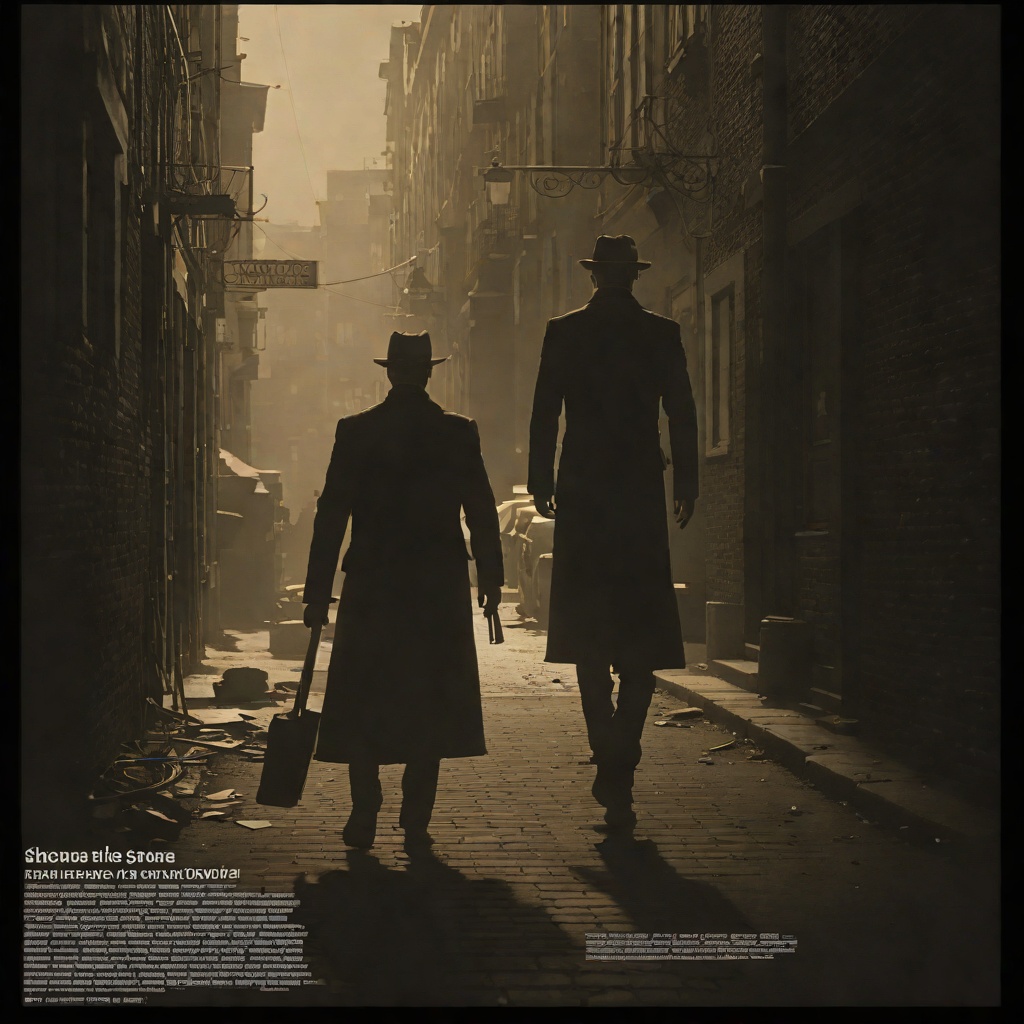
Market Street is established early as a neighborhood where caution is reflexive. When Sam Bowden parks there in the eighteen-hundred block, he carefully locks his car because, as the narration notes, it is a neighborhood where one automatically locks the car. The buildings show their age and neglect: number 1821 has no sign showing ownership or management, its small show window almost opaque with dust, displaying a few weary soft-drink posters and cigar ads. In peeling gilt across the window is painted CIGARS MAGAZINES CANDY. The street's seediness is further underscored by the grossly fat woman with red hair who sits on the stone steps of the neighboring building, her suety body bulging the soiled pink dress she wears, taking small sips from a can of beer. This is a world of faded commerce and casual squalor, far removed from the domestic order of the Bowden home.
Cady's Base of Operations
The street serves as Cady's anchor point in New Essex. He checks into a rooming house at 211 Jaekel Street, near the corner of Market, on May fifteenth, paying ahead until the end of June. He drives a gray Chevy sedan about eight years old with West Virginia plates, and the local police, checking registrations frequently, pluck him out of a Market Street bar for questioning. Captain Mark Dutton reports that Cady made no fuss, remaining mild and patient throughout. The police investigation reveals his origins: he comes from a little hill town near Charleston, West Virginia, where his brother had been holding the home place; when Max returned, they sold it and split the proceeds, leaving him with about three thousand dollars carried in a money belt. Charleston and Washington both cleared him, and his car registration and license are in order, leaving the authorities with no grounds to hold him.
Nicholson's Bar and the Surveillance of Cady
The street's central landmark is Nicholson's Bar, the establishment where Cady is most often found and where the private investigator Sievers conducts his surveillance. Sievers reports picking Cady up at six o'clock coming out of the rooming house, watching him walk three blocks down Market Street to Nicholson's. There Cady is known only as Max, and his companion is Bessie McGowan, a fat blonde with a loud laugh, described as one of those Market Street characters, not quite a prostitute but so close the difference doesn't show. Sievers follows them through a series of evasive maneuvers, noting that Cady started turning too many corners, and concludes that Cady was being cute, deliberately shaking off his tail. The bar itself, when Sam Bowden later visits, is a narrow room with striated plywood walls painted dark green, bar stools and the edge of the bar upholstered in green imitation leather, with mirrors and chrome and tricky lighting on the back bar that are peeling and not holding up well. The television over the bar is on, there is an out-of-order sign on the jukebox, and three men sit at the far end talking in low, important voices. Beyond the bar part is a wider cocktail lounge that the daylight does not reach, a fittingly dim space for the shadows that gather there.
Narrative Significance
Market Street operates as the novel's counterpoint to the Bowden home, a space where the law's reach falters and Cady moves with impunity. It is where the police can only roust Cady without consequence, where Sievers can only watch and report, and where Sam Bowden himself ventures into a world he does not control. The street's peeling paint and transient population embody the breakdown of order that Cady represents, and its persistent presence in the narrative underscores the Bowdens' inability to escape his orbit. The street is not merely a setting but an active force in the story, its geography shaping the rhythms of surveillance, evasion, and near-encounter that define the novel's middle sections.