Max Cady and Carol Bowden
The ExecutionersThe relationship between Max Cady and Carol Bowden is the novel's central axis of terror, the point where Cady's campaign of psychological intimidation against Sam Bowden transforms into a direct, physical assault on the family's most vulnerable member. Carol is not merely a bystander to the siege; she is its ultimate target, the person whose violation would inflict the deepest wound on Sam. The narrative traces her arc from an unaware wife, to a resentful partner kept in the dark, to a terrified woman whose breakdown mirrors the family's unraveling, and finally to a survivor who must rebuild herself in the aftermath of a brutal attack. Her ordeal is the emotional core of the story, the event that forces Sam to abandon his faith in the law and embrace a course of action he finds morally repugnant.
The Unseen Watcher and the First Intrusion
Before Carol knows Cady's name, his presence has already registered in her domestic world. On a Wednesday morning, with the children in school, Carol hears their dog Marilyn barking furiously, assuming she has treed a chipmunk. Only when the dog gives a shrill yelp does Carol go out into the yard, where she sees a gray, beat-up car parked on the shoulder of the road and a heavy, bald man smoking a cigar, sitting on the stone wall that marks the property line, well over a hundred yards away, facing the house. The man makes no move, and Carol, uneasy, retreats inside with Marilyn, who hides under the living-room couch. She tells herself he is a salesman who stopped to enjoy the view, but when she looks again he is gone. This silent, unmoving observation is the first thread of the relationship: Cady's menace is established not through action but through his patient, predatory gaze, and Carol's instinctive unease is the first sign that the family's peace is already compromised.
The Revelation and the Burden of Secrecy
Carol's role in the crisis is defined by her exclusion from it. Sam, believing he is protecting her, withholds the truth about Cady's release and his threats. When Carol finally learns the extent of the danger, her anger is not at Cady but at Sam's overprotectiveness. She resents being treated like a child, insisting she is not a fool and that she was meant to go on thinking everything was dandy while Cady could roam at will, poison their dog, and work his way up to the children. This confrontation reveals the strain Cady's presence places on the marriage itself. Sam's confession, made while sitting on one of Jake Barnes's sagging docks with Carol, feet dangling above the water, is met with her wide-eyed disbelief: "Here!" she says, "Right here?" The threat has invaded not just their home but their most intimate moments of leisure. Sam's own sense of inadequacy compounds the problem; he confesses to feeling ineffectual, the king of his little tribe who cannot put the fear of God in Cady, not with his office-type physique, a contrast to Cady's muscles that seem to have no name yet.
The Merry-Go-Round of Terror
The psychological toll on Carol is rendered through a haunting childhood memory that becomes a metaphor for her state of mind. In a moment of profound vulnerability, she tells Sam about a carnival ride when she was about seven years old, after her mother had died. Her father lifted her onto a big white horse on a merry-go-round, paying the man to make the ride long. For a while it was wonderful, but then the faces of the people began to blur, the music seemed to get louder, and she felt she was going to be hurled off. She wanted it to stop, but nobody could hear her yell. This memory surfaces as her present terror: "I want it to stop, Sam. I want it to stop going around and around. I want to stop being scared." The merry-go-round is the perfect image for Carol's experience of Cady's siege—a relentless, accelerating cycle of fear from which she cannot dismount. Sam, hearing her naked plea, feels he has never been so helpless in his life, nor loved her so much. The crisis has stripped away pretense, revealing both her terror and his profound, helpless love.
The Night Attack and Its Aftermath
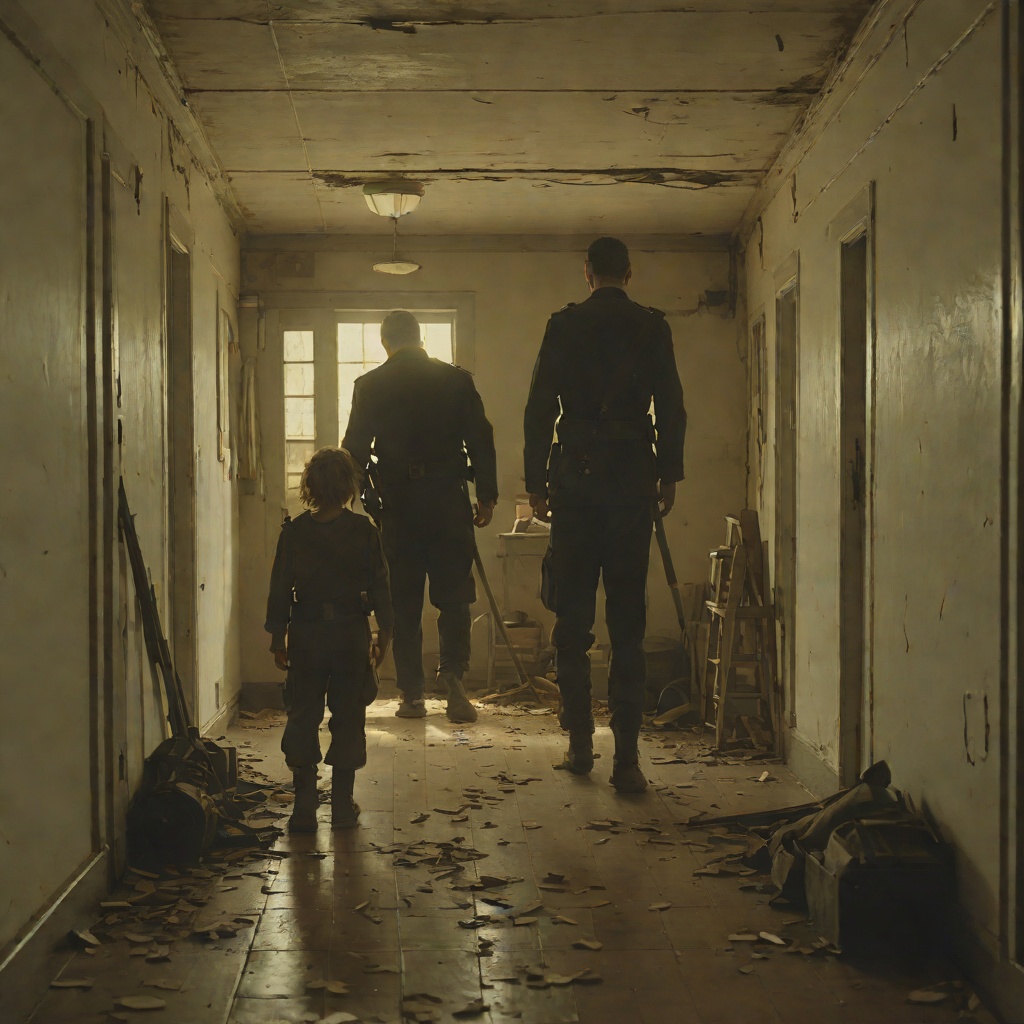
The relationship reaches its violent climax in a night attack that nearly destroys Carol. Cady, having killed the private detective Andy Kersek in the upstairs hallway, enters Nancy's room where Carol is hiding. The scene Sam discovers is one of utter devastation: Kersek lies blocking the hall, his gun five feet away; the bedside table is tipped over, the lamp shattered; Carol lies half under the bed, curled in a fetal position, wearing only her pajama trousers, the top ripped off and hanging by one sleeve, with two deep, bleeding scratches on her back. She makes an endless, broken sound with each breath, a mewling of fright and pain that Sam recognizes as the unforgettable sound he heard long ago in a Melbourne alley. When he tries to pull her out, she fights him, her eyes squeezed tightly shut. Carol's account of the attack is fragmented and broken: she heard a scratching near the door, found the buzzer and pushed it for a long time, had the gun, and then he ran right in through the door "like it was paper." She fired, she screamed, she tried to fight, and he hit her. When Sam asks if Cady did anything to her, she frowns, trying to concentrate, but the answer is left hanging, the full horror of the violation remaining unspoken. Carol's description of Cady as smelling "like some kind of animal" completes her dehumanization of him, but it also marks the depth of her trauma.
Recovery and the Recalibration of Values
In the aftermath, the relationship between Sam and Carol becomes the site of a hard-won recovery and a fundamental shift in their worldview. Carol, holding Sam's hand hard, articulates what she has learned: that all over the world, people are dying or their hearts are breaking, and while it happens they feel complete incredulity—"This can't be happening to me. This isn't the way it was meant to be." She believes she is stronger and braver now, because she knows that everything they have is balanced on a delicate web of incidence and coincidence. Sam's response echoes and extends her insight. He describes the feeling as like recovering from a serious illness: the world looks fresh and new, everything looks special, and he feels enormously alive. He admits he was getting stuffy, idealizing his profession and leaning on it too heavily. Now he knows it is just a tool, to be used wisely when it can help, and abandoned for a course of action that will be of use when it cannot. This conversation, held over beer while looking out across the lake, marks the end of Carol's ordeal and the beginning of a new, more precarious but more honest understanding between them. The siege has not just wounded them; it has forced them to confront the fragility of their existence and to recalibrate their values in its wake.