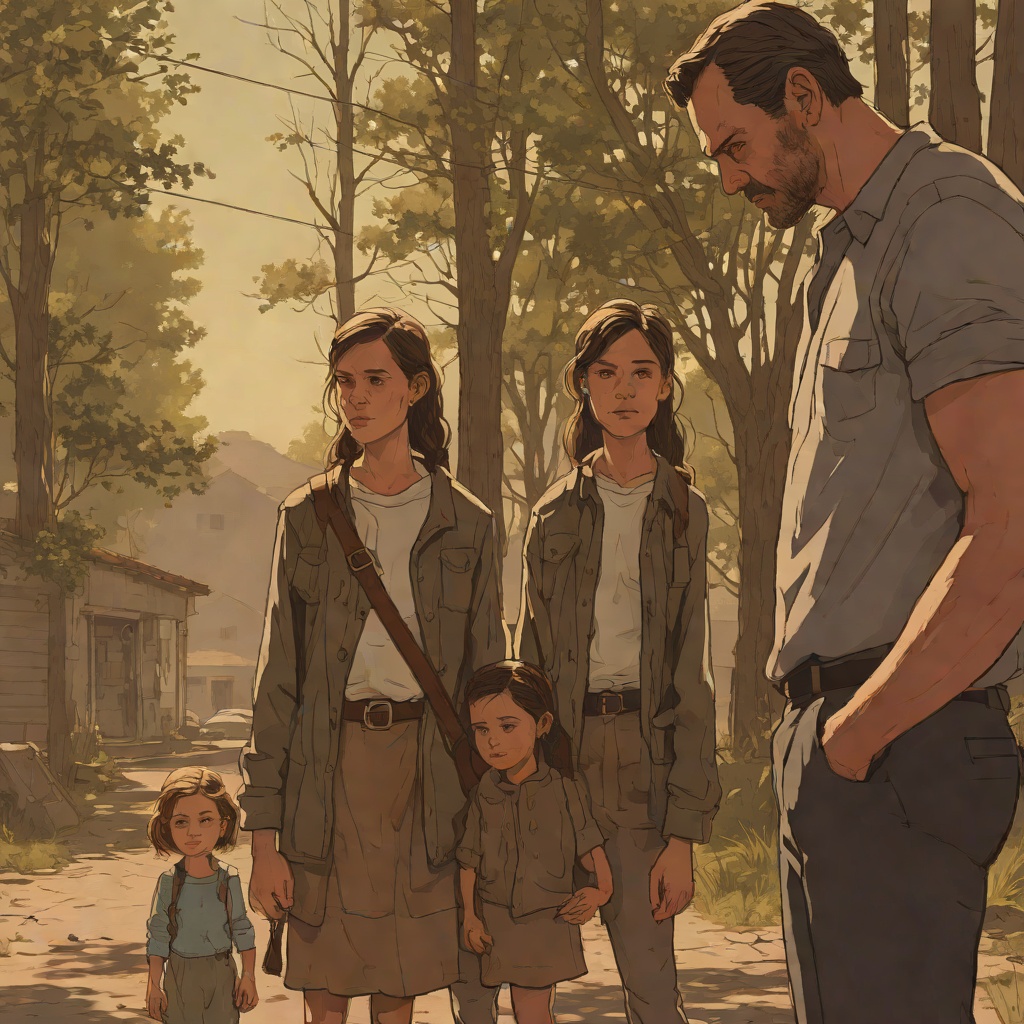
Nancy Bowden and Tommy Kent
The ExecutionersNancy Bowden and Tommy Kent's relationship is a quiet counterpoint to the violence that engulfs the Bowden family, tracing a teenage romance from its innocent beginnings through the crisis of Cady's siege, and ultimately serving as a marker of the family's return to normalcy. Their courtship, conducted against the backdrop of summer camps, drive-in movies, and a Labor Day picnic, reveals the generational shift Sam Bowden observes and provides a measure of hope and continuity in a narrative dominated by menace.
Origins and Early Courtship
The romance first surfaces in a moment of domestic negotiation. Nancy, eager to attend a drive-in movie, asks her father's permission for a double date. She explains that Tommy Kent is a senior and eighteen, old enough to drive at night, and that the plan involves Sandra and Bobby. The movie is a John Wayne picture, and Nancy had meant to ask about it on Friday but forgot on account of Marilyn's death. Carol's immediate question—whether Tommy is from the family that owns the furniture store—anchors the Kent family in the respectable middle-class world of New Essex, a world that Cady's presence threatens to shatter.
A Summer Romance at Camp
The relationship deepens during the summer when Nancy attends Minnatalla camp. Carol, with her characteristic sharp-eyed observation, uncovers the truth behind Nancy's excitement about the plan for the summer. Nancy had been packing her red dress with a furtive manner, and when Carol teased her that it would be a divine getup for scrabbling up the side of a mountain, Nancy confessed haughtily that there are social evenings when the groups from both camps mingle. Carol, knowing the top age for the young gentlemen from Gannatalla was fifteen, pointed out that the red dress would be like shooting a cricket with a deer rifle. Rather than be accused of lowering her sights, Nancy admitted that Tommy Kent had a job as assistant director of athletics that year at Gannatalla. Carol's amused report to Sam—that Tommy would probably become very buddy with an elderly staff member of eighteen or so and break their chicken's heart—captures the playful, protective parental view of the romance.
The Threat of Cady and Nancy's Role
The idyllic romance is soon shadowed by the menace of Max Cady. Sam, recognizing the danger, takes Brady aside and asks him to take on an extra responsibility: to tuck Jamie under his wing and make sure he is never alone. Sam explains that Cady, in jail but due for release, wants to hurt him through his family, and that he and Carol believe Jamie will be safer at camp than at home. When Brady asks about Nancy, Sam notes that she will be three miles away at the other camp. Nancy, however, is not merely a passive bystander. She is drawn into the family's crisis, and her maturity becomes evident. When the family decides to return home, Nancy is grave and conscientious about her responsibility to the younger ones. She tries to tell her parents that she doesn't think it is very smart to go back and get the police to make a greater effort to pick Cady up, and she thinks it unwise to try to stay at home, suggesting they should stay at a hotel in New Essex. She wishes both of them wouldn't leave, but if that is the way they want to do it, she can certainly take care of Jamie and Bucky and keep them out of trouble.
A Generational Contrast
Sam's reflections on Tommy and Nancy's generation reveal a deeper significance to the romance. In a moment of rare introspection, Sam tells Carol that he suspects they are near the end of the glamour days of juvenile delinquency. He describes a very unusual crop of kids coming along—good kids, but strange, bored with the dissipations of their elders and the animal philosophies of their contemporaries. They are tired of using the bogeyman of military service as a built-in excuse for riot and disorder. This is a very moral crop of kids, he says; they are sophisticates, but they practice moderation by choice. They seem to have a sense of moral purpose and decent goals. Tommy is a good kid, Sam concludes, and the pendulum is swinging back. Carol claps solemnly and says, "Hear, hear." This generational assessment stands in stark contrast to the portrait of Cady, whose family history—hill people, moonshiners, violent criminals—marks him as a product of a different, darker America.
The Labor Day Picnic and Resolution
On Labor Day, the Bowden family, with Tommy Kent as the special guest, takes the traditional last trip of the year on the Sweet Sioux to the island. It is a warm day with a fresh wind across the lake. They eat at noon, and at two o'clock the kids are swimming. Sam sits on a blanket in his swimming trunks, arms resting on his upraised knees, can of beer and cigarette in hand, while Carol lies on her back beside him, her arm across her eyes. The presence of Tommy as the special guest marks the culmination of the summer romance and the family's return to a semblance of normalcy after the ordeal. Sam's own reflections on the day—that it is like recovering from a serious illness, that all the world looks fresh and new, that he feels enormously alive—are framed by the domestic scene that includes Nancy and Tommy. The romance, which began as a simple teenage crush, has become a symbol of the family's survival and the promise of a future beyond the shadow of Cady.