New Essex's law enforcement policy
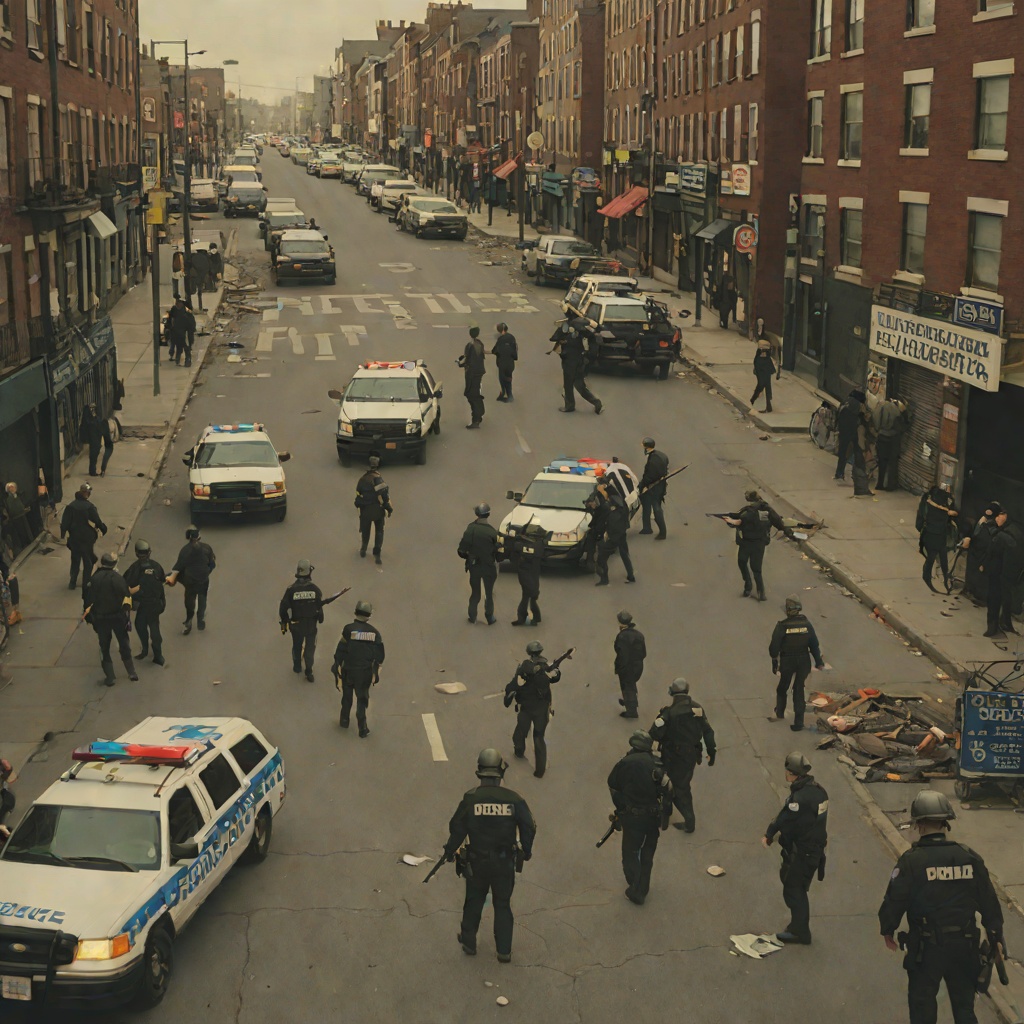
The ExecutionersNew Essex's law enforcement policy, as articulated by Captain Mark Dutton of the New Essex Police Department, is a deliberate and pragmatic system of managed vice and selective crackdowns. Dutton presents it to Sam Bowden as the reason the town is "a fairly clean town," indeed the "cleanest of its size in the state." The policy rests on a frank, off-the-record admission: the police keep a few small-time operators in business because there is always a certain level of demand for their services. In exchange for protection from larger syndicates, these tolerated criminals contribute to both political parties and to the Police Benevolent Fund, and they keep the department advised on any floaters who come to town looking for a score. The proof of the system's success, Dutton claims, can be found in the F.B.I. statistics, which show a low index in nearly every classification of crime, a dramatic reversal from twenty years earlier when the town had one of the highest rates in the state.
The Tolerated Vice and the Extralegal Method
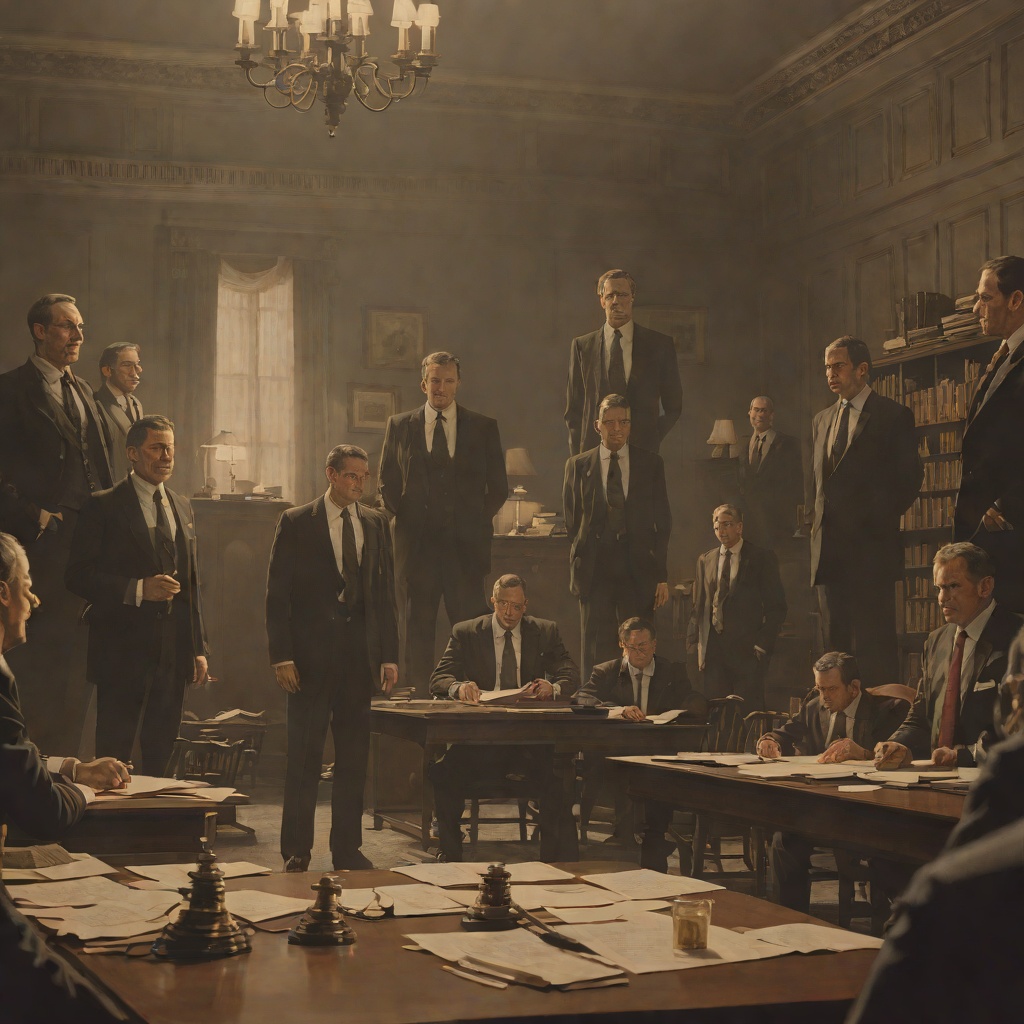
The policy's core logic is the containment of evil: "We keep the little devil we know in business and keep out the big devil we don't." Dutton acknowledges that the "Christer set" continually criticizes the department for playing footsie with its tame rascals, but he insists the arrangement is what makes it safe to walk the streets at night in New Essex. The system's most dramatic demonstration came three years before his conversation with Sam, when two big Chicago-Miami-Las Vegas types arrived with their sunglasses, pigskin luggage, lavender Cadillac, and a pair of blonde secretaries who could not quite type. They took suites at the New Essex House and began circulating, hoping to sell syndication to the town's tame operators. Chief Turner, Mayor Haskill, Commissioner Goldman, and Dutton held a conference and put ten of their best men on the visitors, interpreting the law their own way. The men could not turn around without breaking some ordinance they had never heard of; both suites were bugged; and the blondes were picked up, fined heavily for soliciting, and given the usual blood tests and physicals whenever they left the hotel. It took four days and fifty-six hundred dollars in fines before the syndicate men gave up, and the county and state police were alerted to grab them four times for speeding and drunken driving before they hit the state line, with all but one license lifted so a single driver could get them across. They have not been back, though Dutton concedes that sooner or later somebody will try again, because there is money in New Essex and where there is money, organized vice can be sold.
The Limits of the Policy for Sam Bowden
When Sam asks whether the same treatment could be applied to Max Cady, Dutton immediately refuses, and his reasons expose the policy's boundaries. First, the city is up to a hundred and thirty thousand population with the same size police force, in manpower but not equipment, that it had when there were eighty thousand; the department is undermanned, underequipped, underpaid, and overworked, forcing Dutton to call men back on duty and apologize for unpaid overtime while mothers march on City Hall for more school-crossing guards. Second, using extralegal methods against Cady would set a curious precedent: the earlier operation had been justified as averting a definite threat to the whole city, not to one individual, and if Cady employed the right shyster, the questions asked could get damn hot. Third, Sam is not a resident of New Essex; he works there but pays no city taxes, and while his firm does, this is not the business of his firm. Finally, Dutton has looked at the man and judged him clever, not in any murderous rage, merely trying to pressure Sam a little. The captain offers only a promise: if Cady steps out of line anywhere inside his area of authority, the arresting officers and the judge will be properly informed and will whack him with the stiffest deal the law allows. When Sam presses further, Dutton's only additional suggestion is to pack the family off somewhere, predicting that Cady will get tired of his game and leave town after a while.
The Policy's Blind Spot and the Nature of Cady
The refusal to act against Cady reveals the policy's fundamental blind spot: it is designed to repel organized, rational predators, not the solitary, irrational one. Dutton's own assessment that Cady "won't scare and you can't hurt his dignity because he hasn't got any" acknowledges that the usual tools of intimidation are useless against him. Sam's own observations reinforce this, as he tells Carol that Cady is not sane, that a little warning bell rang louder and louder as he listened to the man, and that there are always little clues to the rogue beast. The private investigator Sievers later provides the clinical term, explaining that Cady is a "psychopathic personality," a classification for people they cannot treat, who do not respond to any appeal, and whose only thought is whether they will be caught. Sievers notes that Cady was headed for jail whether he got caught on the rape charge or not, and that people like him have no comprehension of right and wrong. The policy's reliance on rational self-interest and deterrence simply does not apply to such a man, and the town's clean record offers no protection against him. Even the police captain's own network of informants proves porous: Bessie McGowan, one of the town's tolerated operators, describes Cady as "all man" but "mean as a snake," who does not give a damn for anybody in the world but himself, and who beat her when she pressed him for information. The law enforcement system that keeps New Essex clean is thus structurally incapable of addressing the very threat that Cady represents, leaving Sam Bowden to face the rogue beast alone.