The Bowden family's siege
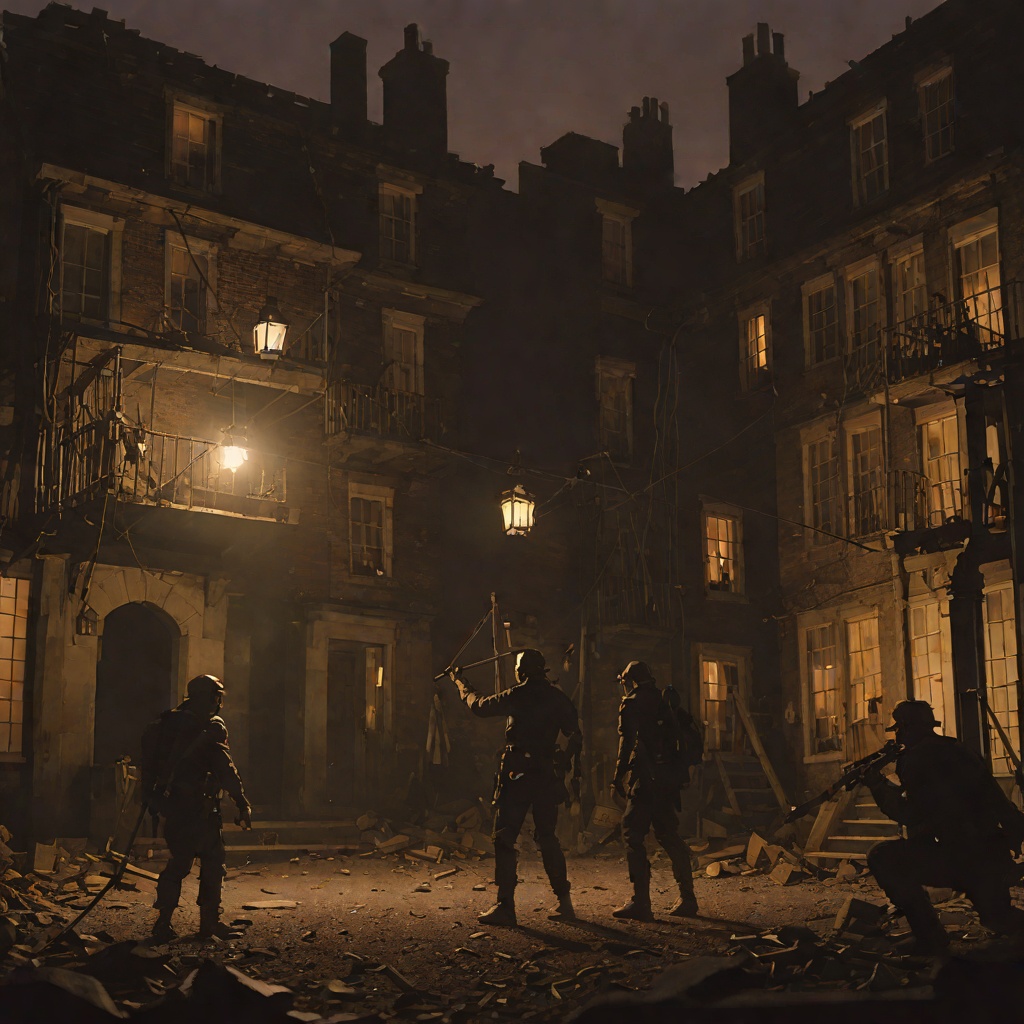
The ExecutionersThe Bowden family's siege is the central condition of John D. MacDonald's The Executioners, the sustained state of terror and psychological attrition that Max Cady imposes on Sam Bowden and his household after Cady's release from prison. It is not a single event but a prolonged war of nerves, a campaign of escalating physical attacks and psychological pressure that transforms the Bowdens' secure suburban idyll into a fortress under threat. The siege is the novel's engine, driving the plot from the first stirrings of dread to the final confrontation, and it is also its deepest subject: a study of how an external menace corrodes the internal stability of a family, testing its bonds, exposing its vulnerabilities, and forcing each member to confront the fragility of the world they had taken for granted.
The Shattering of the Fool's Paradise
The siege begins not with violence but with the slow erosion of the Bowdens' sense of security. Sam Bowden, a partner in the law firm Dorrity, Stetch and Bowden since 1948, had built a life that seemed immune to catastrophe. His marriage to Carol was, in his own assessment, "of the very best variety," his children were healthy, and his house just outside the village of Harper, thirteen miles from New Essex, sat on ten acres of land whose value was constantly increasing. He had no savings to speak of, but his hefty insurance program gave him a feeling of security. This was the fool's paradise that Cady's return destroys. The first intimation of trouble comes when Sam, on the family's first expedition of the year to the island twelve miles out into the lake, finds himself unable to swim away from "the sticky little tentacle of fear" that has fastened itself around his heart. Carol, with the extrasensory equipment of fifteen years of marriage, notices his distraction immediately, chiding him for being "physically present but spiritually among the missing." The siege, even before it has a name, has already breached the walls of their domestic peace.
The Bowdens' home itself becomes part of the siege's geography. The farmhouse they had fallen in love with in 1950, with its elms and oaks and line of poplars, its front windows overlooking a far vista of gentle hills, had seemed the perfect refuge. But as Sam turns into his driveway, he finds himself wishing for the first time that they had close neighbors. The Turner house is visible only as a peak of roof, and the farms on the far hill slopes are distant. There are houses along the road, but widely spaced, and no houses very close. The isolation that had once been a virtue now becomes a vulnerability, a fact that Cady exploits and that the family must live with as the siege deepens.
The Escalating Attacks
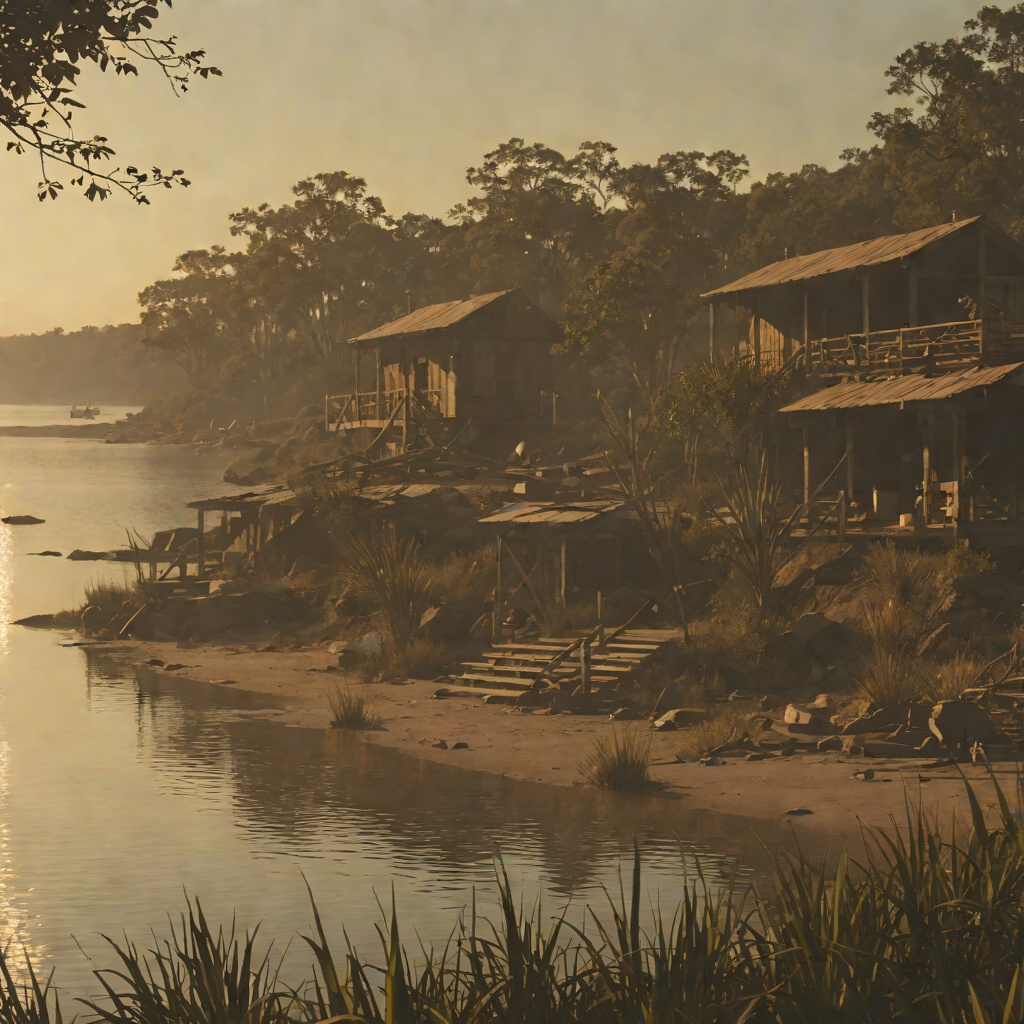
The siege unfolds through a series of distinct attacks, each more serious than the last. The first blow is the poisoning of the family dog, Marilyn, with strychnine-poisoned meat bait, an act that Carol reads as a harbinger: "So now this Cady can roam around at will and poison our dog and work his way up to the children." The attack on the dog is followed by the boat-yard confrontation, where Cady appears at the family's boat, sitting on a low pile of timbers twenty feet away, wearing a yellow knit sports shirt and sharply creased slacks in a shade of cheap electric blue, smiling at Sam. The confrontation is a pure exercise in psychological pressure, a demonstration that Cady can appear anywhere, at any time, and that the family's movements are not private. Sam's daughter Nancy, present at the scene, understands immediately that this is not a problem that will affect only her parents: "The children were within the orbit."
The siege escalates dramatically with the sniper attack on Jamie Bowden. The shot is fired from a range of about seven hundred yards, downhill, from a knoll the children call Shady Hill. The investigating officer explains the near-miss with chilling precision: the boy's arm was close to his side, the wind was gusty from the south, and one of those gusts drifted the slug over a few inches. "Nobody was trying to scare the boy," the officer says. "They made a pretty good try at killing him. If he'd put his slug say two and a half inches further to his right, that boy would have been dead before he could fall all the way down." The attack on Jamie is followed by the loosening of the station wagon's wheel lugs, an act of sabotage that nearly kills Carol. She describes the experience in fragments: the car wandering, the funny crunchy noise, the terrible vibration, the wheel scooting out ahead of her, the turning over, something hitting her in the mouth. When Sam tells her that somebody loosened the nuts, she closes her eyes and shuts her hand hard on his fingers, whispering, "Oh, God!"
The Family Under Pressure
The siege is not only external; it works its way into the family's internal dynamics, testing and transforming each member. Carol Bowden, who had once believed in her "absolute right, her unalterable heritage, to be happy and raise my kids and eventually shoo them out of the nest," suffers a visible breakdown. Her fear crystallizes in a childhood memory: at a carnival, when she was about seven, her father lifted her onto a big white horse on a merry-go-round, and she wanted it to stop, felt she was going to be hurled off. The merry-go-round becomes her metaphor for the siege itself: "I want it to stop, Sam. I want it to stop going around and around. I want to stop being scared." She looks at Sam with naked plea, and he has never felt so helpless in his life, or loved her so much. The siege has stripped away her defenses, leaving her exposed and terrified.
Sam Bowden's response to the siege is a moral crisis that unfolds slowly, hour by hour. The concept that grows in his mind is so alien to his nature as to revolt him: it means a reversal of all his values, of all the things he lives by. He knows that this inner combat makes visible changes in his manner, and several times he sees Carol looking at him speculatively, knowing he seems moody and absentminded. The siege forces him to contemplate actions—the hiring of underworld thugs, the purchase of a gun—that he would once have found unthinkable. His moral crisis is the siege's deepest cost, a corrosion of the self that parallels Carol's emotional breakdown.
The children are drawn into the siege as well. Nancy Bowden, Sam's daughter, is forced into premature maturity, taking on responsibility for her younger brothers. When the family decides to leave the island, Nancy is grave and conscientious about her duty to Jamie and Bucky, and she tries to tell her parents that she doesn't think it's smart to go back and get the police to make a greater effort to pick Cady up. She thinks it unwise to try to stay at home, and suggests they stay at a hotel in New Essex. She wishes both of them wouldn't leave, but if that is the way they want to do it, she can certainly take care of Jamie and Bucky and keep them out of trouble. The siege has made a child into a caretaker.
The Limits of Protection
The siege also exposes the limits of the institutions that are supposed to protect the family. When Sam and Carol appeal to Captain Dutton of the State Police, they are met with a frank admission of helplessness. Dutton listens with no change of expression while Sam tells him of the loosened wheel lugs, and then offers only a hope: "All I can say to you is I hope we can pick him up soon. I don't know what other assurances I can give you. I've given the job the best priority I can give it." Carol's response is sharp and bitter: "You want us to hide," she says. "You want us to hide and wait and then, when he's wanted for murder, you'll give it some extra priority." The state's monopoly on violence, the novel suggests, is inadequate against a determined non-state actor like Cady, and the family is left to defend itself.
The End of the Siege
The siege ends only with Cady's death, in a confrontation that is itself a kind of trap. Sam's shots bring Cady down, but not immediately: the officers find blood halfway up the hill, a lot of it. One of Sam's last two shots tore Cady's right arm on the inside, just below the armpit, tearing an artery open. Cady climbed another three hundred feet before he ran out of blood. The siege ends not with a clean victory but with a grim, drawn-out dying, a blade of grass pasted to the dead man's lips.
The aftermath is a slow recovery, marked by a changed understanding of the world. Carol, sitting with Sam after the ordeal, confesses the lesson she has learned: "I think maybe I'm stronger and braver. I hope I am. Because I know that everything we have is balanced on such a delicate web of incidence and coincidence." She has abandoned her "enormous and infantile trust that this world was made for me to be happy in," recognizing instead that "there are black things loose in the world. Cady was one of them. A patch of ice on a curve can be one of them. A germ can be one of them." Sam, watching Carol swim out into the lake, her crawl competent and leisurely, toasts himself with a fresh beer and says to himself: "Moment of significance. On this day and this hour and this minute, I have come all the way out from under a dark cloud labeled Cady. I am, unexpectedly, quite whole again." The siege has ended, but its legacy is a permanent awareness of fragility, a knowledge that the world is not made for happiness, only for luck.