Hannah
The Executive Assistant: A female CEO·male assistant workplace romanceHannah is the head of the design team at Firth Marketing and a practical, reliable member of Alison’s staff. Her importance emerges during the LearnQuest campaign crisis, when Henry abruptly demands that the company abandon its current direction and return to the original campaign version. Hannah becomes the person who converts that reversal into a workable plan, while her fatigue and increasingly tight voice register the pressure imposed on the design team.
Identity and Professional Position
Hannah’s formal role is that of design-team leader. She is responsible for coordinating the designers’ response to client instructions, tracking the work required across several advertising formats, and communicating with Alison about progress. The evidence presents her less through personal biography than through professional conduct: she waits for direction, organizes information, supervises other designers, and gives Alison an accurate account of what the team can accomplish.
Her role also places her at the point where executive decisions become labor. Henry can demand a wholesale change in direction, and Alison can authorize overtime and relay the client’s wishes, but Hannah and the designers must examine the old documents, redistribute the work, revise the materials, and absorb the lost time. This makes Hannah an important representative of the staff affected by decisions made above them.
The Campaign Reversal
Hannah’s first major appearance in the crisis comes through an email reporting Henry’s demand to scrap the existing work and start again. She asks whether the original deadline still applies, recognizing that the team may have to compress weeks of labor into only a few days. Her message is not merely administrative: it identifies the concrete consequence of Henry’s change and seeks confirmation before the designers commit themselves to an impossible schedule.
Alison receives the message a day late because she has silenced her phone while away at the beach. The delay leaves Hannah and the rest of the team waiting, while Alison realizes that she is no longer in the city and must ask employees to return to the office over the weekend. Hannah’s position therefore reveals the cost of Alison’s absence before Alison fully confronts it. The crisis is not only a client-management problem; it has already become a disruption of the employees’ time and an additional burden after the stress of the previous campaign.
When Alison finally calls, she apologizes for contacting Hannah on a weekend and explains that Henry wants the company to return to the original version. Hannah answers that she has been waiting to hear from Alison. The restrained exchange conveys both her professionalism and the strain beneath it. She agrees to call everyone to the office, even though her voice sounds tight, and accepts Alison’s assurance that the overtime will be compensated.
Coordination Under Pressure
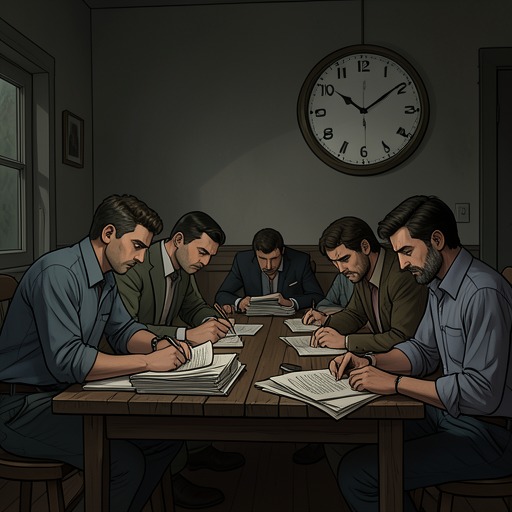
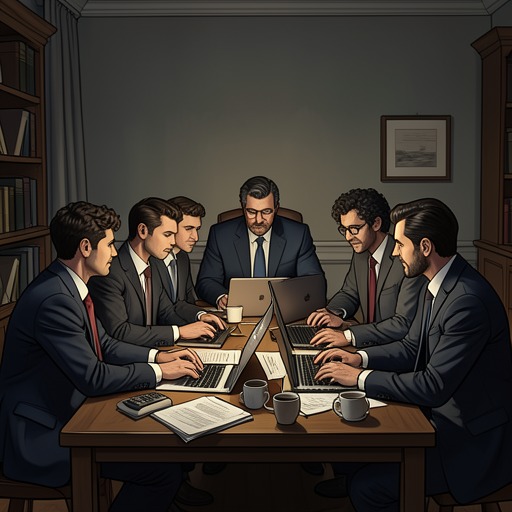
Once Alison reaches the office, she finds Hannah at her computer with two other designers. They are already reviewing the documents and design notes for the original version and dividing the responsibilities among themselves. Hannah identifies the scope of the work in concrete terms: video advertisements, web advertisements, promotional posts, and the other campaign components must all be reassigned and rebuilt.
Hannah’s method is orderly rather than dramatic. She does not treat panic as a substitute for planning; she breaks the emergency into categories and distributes the labor. Alison asks her to place the division of responsibilities in a document and share it so that progress can be monitored. Hannah’s organization gives the campaign a structure at the moment when Henry’s reversal has threatened to dissolve its timeline.
Alison then withdraws to coordinate with Henry and track the team’s work. Hannah continues directing the designers, while the halls fill with tension as employees rush to fulfill the client’s last-minute wishes. Her work thus operates in the background of Alison’s executive response. The campaign’s survival depends not only on Alison’s communication with Henry but also on Hannah’s ability to make the revised assignment legible and actionable for the people carrying it out.
Limits, Exhaustion, and Candor
Around nine o’clock, Hannah appears in Alison’s office looking tired. She reports that much remains to be done but believes the unfinished work can wait until the next day, adding that rough drafts have already been sent for approval. Her judgment marks an important boundary: she continues to advance the campaign, but she refuses to pretend that the team can complete everything immediately without consequence.
Alison tells Hannah to rest and makes sure that the other employees leave as well, even instructing her to force them out if necessary. The exchange places Hannah between two competing demands. She is expected to keep the project moving, yet she is also one of the workers whose exhaustion Alison can no longer ignore. Her appearance at the office late at night makes visible the labor concealed by the abstract language of deadlines, revisions, and client satisfaction.
On the following Friday, Hannah reports on behalf of the worn-down team that they have reviewed all of Henry’s notes and made every requested change. She calls the result their best and says that it is all they have left in the tank. The statement is both a production update and a warning. The work has reached its practical limit, and the team’s depleted condition is inseparable from the campaign’s forced acceleration.
Narrative and Thematic Significance
Hannah functions as a grounded counterpoint to Alison’s work-centered self-discipline. Alison experiences the emergency through panic, guilt, and the compulsion to repair everything personally, while Hannah repeatedly turns the crisis into specific tasks and concrete assessments. Yet Hannah’s tired voice, strained communication, and exhausted appearance prevent that competence from being romanticized. Organization makes the workload manageable; it does not make the workload harmless.
Her scenes also sharpen the story’s concern with workplace surveillance and responsibility. Alison initially works behind closed blinds because she wants to hide from her employees and from Cameron, but during the campaign emergency she must face the people whose schedules and energy her decisions affect. Hannah’s reports force Alison to see the human measure of the crisis: designers waiting for instructions, dividing assignments, staying late, and eventually admitting that their capacity is exhausted.
That significance becomes clearer after Alison collapses from overwork. Dr. Adams explains that illness and exhaustion, combined with stress and a severely compromised immune system, caused the collapse, and sternly tells Alison that she must rest and find balance because her way of living is unsustainable. Hannah is not the cause of Alison’s breakdown, but the campaign scenes show the same system of overwork that Alison has imposed on herself extending outward to her employees. Through Hannah, the narrative makes work-life imbalance collective rather than purely personal: the emergency consumes an entire team, and Hannah’s professionalism survives only alongside an unmistakable physical and emotional cost.