Autumn
The Fall of the House of UsherAutumn gives the story its initial date and tonal frame: the narrator reaches the House of Usher on a dark day as evening approaches, and the visit unfolds over the days leading to the Usher siblings’ deaths and the house’s collapse. The season is not assigned a precise date or explained as the cause of events, but its placement at the threshold of the year’s decline accords with a narrative of illness, enclosure, and extinction.
Temporal Frame and Arrival
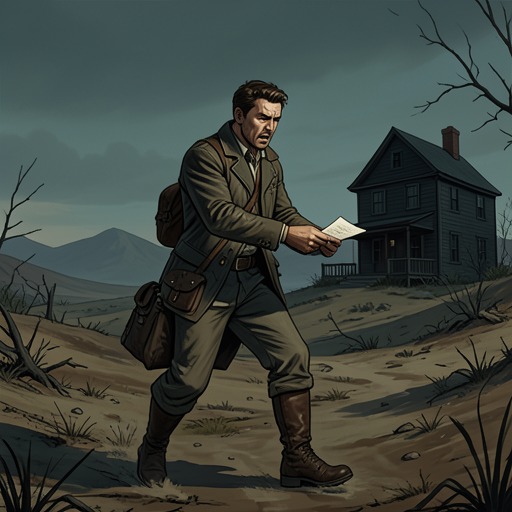
The story opens during a whole day in autumn, with the narrator traveling alone through a desolate region beneath low clouds. He comes within sight of the House of Usher as evening draws on. The season therefore marks the beginning of his visit, not merely an incidental date: autumn’s overcast weather and the fading daylight establish the conditions in which he first encounters the house and its surroundings.
At the outset, the narrator experiences the landscape as oppressive rather than beautiful. The bleak walls, vacant windows, sedges, and decayed trees contribute to his sense of gloom. Looking into The tarn beside the Usher house does not relieve that impression; the reflected landscape appears still more disturbing. Autumn is thus introduced through a setting whose visible signs of decay make the season’s atmosphere echo the condition of the estate.
The Season Across the Visit
The opening establishes autumn as the temporal setting for the visit, which continues across several days. During that interval, the narrator learns that Roderick Usher suffers from extreme nervous agitation and a morbid sensitivity to ordinary sensations. Light, food, clothing, and floral odors distress him, while only certain sounds from stringed instruments are tolerable. His disorder is described as both constitutional and a family affliction, and he also fears the influence of the mansion and its surroundings upon his spirit.
The same visit brings the narrator into contact with Madeline Usher, Roderick’s twin sister and his last living relative. Her long illness includes apathy, physical decline, and transient cataleptic episodes. On the evening of the narrator’s arrival, Roderick says that she has succumbed to her illness and will no longer be seen alive. The medical uncertainty surrounding her condition becomes consequential when Roderick decides to preserve her body in a vault within the house for a fortnight before its intended final interment.
Autumn, Delay, and the Final Night
After several days of grief, Roderick’s behavior changes: he abandons his usual activities, wanders through the rooms, and appears increasingly agitated. The final night of the visit turns listening into a source of mounting evidence. As the narrator reads from The Mad Trist, the sounds described in the tale seem to recur in the mansion: first a noise resembling the breaking of a door, then a distant harsh sound, and finally a muffled metallic reverberation. Roderick, whose sensitivity to sound has already been established, eventually confesses that he heard Madeline moving in the coffin and believes she has escaped the vault.
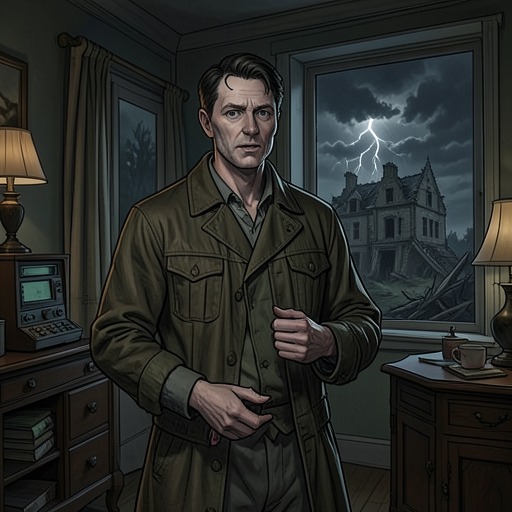
Madeline appears at the chamber door, gravely weakened by her ordeal, and falls upon Roderick; both siblings die. The narrator flees the house during the storm. From the old causeway he sees the fissure in the building widen, and the House of Usher breaks apart and sinks into the tarn. The story does not specify a new season or a calendar date for these concluding events; they belong to the same visit whose opening was anchored in autumn.
Seasonal Significance
Autumn’s importance is chiefly structural and atmospheric. It locates the narrator’s arrival at a late point in the year and places the opening scenes amid diminishing light and signs of decay. Those details correspond to the Usher family’s increasingly enclosed world: Roderick anticipates the loss of his sister and the extinction of his line, while Madeline’s illness leads to a burial that proves premature. The season does not explain these events, but it gives their progression a coherent setting of decline.
The movement from an autumn evening to the storm-lit conclusion also shapes the story’s pacing. The initial gloom is presented as an impression the narrator cannot fully explain; over the course of the visit, that uncertainty becomes entangled with illness, the sealed vault, and the sounds heard from within the house. By the ending, the setting that first framed the narrator’s unease has become the site of the siblings’ deaths and the mansion’s destruction. Autumn remains a temporal anchor, while the narrative turns its atmosphere of decline into a sequence of irreversible losses.