Roderick Usher
The Fall of the House of UsherRoderick Usher is the final male heir of an ancient family whose identity has become inseparable from its ancestral mansion. A nervous disorder, extreme sensitivity, and mounting fear shape his life at the House of Usher; after his twin sister Madeline is placed in a vault, his failure to reveal that he heard her movements leads into the story’s fatal climax. His fate joins private terror to the extinction of his family and the destruction of its home.
Identity and Family Background
Roderick belongs to a very old family known for unusual sensitivity of temperament. Across generations, that disposition is associated with works of art, discreet generosity, and an intense interest in the complexities of music. The family’s line has produced no enduring collateral branch: inheritance and the family name have passed through a narrow direct line, with only slight and temporary variation. The narrator reflects that this continuity helped merge the original title of the estate with the family name. To local people, the House of Usher can mean either the family or its mansion, an ambiguity that gives Roderick’s personal fate a significance beyond his own life.
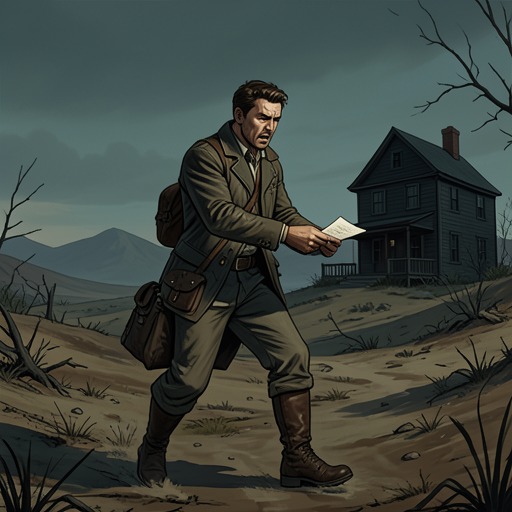
The narrator had been Roderick’s close companion in boyhood but admits that he knew little about him. Roderick’s reserve was longstanding, and many years had passed since their last meeting. Their old friendship nevertheless gives Roderick a reason to reach beyond the isolation of the mansion: in a letter sent from far away, he describes acute bodily illness and mental distress, and asks his former companion to visit as the one friend whose company might relieve him. The letter’s evident agitation and urgent appeal prompt the narrator to come.
Illness, Sensitivity, and Fear
When the narrator arrives, Roderick greets him with apparent warmth, but his manner soon reveals the strain beneath it. His behavior shifts between animation and sullenness, while his speech alternates between hesitation and sudden, controlled intensity. The narrator observes that Roderick’s familiar features have changed markedly since boyhood, a visible alteration that makes their reunion feel at once intimate and unsettling.
Roderick describes his condition as both constitutional and inherited, then tries to minimize it as a passing nervous complaint. Its practical effects are far-reaching. He can endure only very plain food and clothing of particular textures; the smell of flowers oppresses him, even weak light torments his eyes, and sounds are generally unbearable. Stringed instruments are the exception. These restrictions make the mansion’s enclosed life more than a matter of preference: his body and mind appear increasingly unable to tolerate ordinary surroundings.
His deepest fear is not a specific external danger but the effect that any incident might have on his already heightened agitation. He anticipates a point at which fear will overwhelm his capacity to endure, and worries that he will lose both life and reason in that struggle. His distress therefore feeds upon its own expectation: he fears not only what may happen, but the terror that an event might provoke in him. The story makes that apprehension consequential when small sounds later become evidence, for Roderick, of the danger he has dreaded.
The Mansion and Its Influence
Roderick has lived for years within the House of Usher and, according to the narrator, has not ventured outside it. He is bound to a belief that the mansion’s form and materials exert an influence over his spirit. The gray walls, turrets, and water beside the house are part of that belief; he understands the dwelling not as neutral shelter but as a force that has shaped his mental life through long exposure.
He also recognizes a more immediate source of his gloom: Madeline’s severe, prolonged illness and the prospect of losing her. She is his only companion and his last living relative. Her death, he says, would leave him the final representative of the ancient line. This fear links his intimate attachment to her with the family’s approaching extinction. The House of Usher as family and mansion thus converge in Roderick’s experience: the possible end of his sister, his own isolation, and the future of the family are all bound to the same enclosed place.
After Madeline’s apparent death, Roderick’s behavior deteriorates. He abandons ordinary occupations, moves restlessly from room to room, and seems at times to struggle with a secret he cannot bring himself to disclose. The narrator cannot determine whether this agitation signals knowledge or is simply another expression of mental disorder. That uncertainty matters: the eventual revelation comes not through a clear explanation but through Roderick’s response to sounds that seem to repeat the action of a story being read aloud.
Madeline and the Vault
Madeline’s illness has baffled her physicians. Her symptoms include persistent apathy, gradual physical decline, and temporary cataleptic episodes. On the evening of the narrator’s arrival, she succumbs to what Roderick takes to be the final stage of her illness. For several days afterward, neither sibling’s name is spoken between Roderick and the narrator, who tries to ease his friend’s melancholy through reading, painting, and music. Their shared activities do not dispel Roderick’s distress.
Roderick then announces that Madeline is dead and intends to keep her body for a fortnight in a vault within the mansion before final burial. He gives practical reasons: the unusual nature of her illness, inquiries from her physicians, and the distant, exposed location of the family burial ground. The narrator, remembering the uneasy impression made by the family physician, does not oppose the plan. At Roderick’s request, he personally helps carry the coffin to the vault beneath the part of the house where he sleeps. The chamber is deep within the building, damp, without natural light, and reached through a long passage; its door is heavy iron.
As the two men look at Madeline before closing the coffin, the narrator notices for the first time how closely she resembles Roderick. Roderick then discloses that they are twins and that a profound, difficult-to-explain sympathy has always existed between them. The resemblance and the revelation of their twin relationship deepen the connection between their fates, while the circumstances of the burial place later make the narrator’s sleeping quarters part of the story’s geography of dread.
Recognition and Final Night
In the days after the entombment, Roderick changes further. He neglects his former pursuits, appears more agitated, and speaks with a tremor of fear. The narrator senses that he may be trying to communicate something, but cannot tell whether this impression reflects a concealed truth or the effects of madness. Roderick’s earlier claim of exceptional sensitivity acquires a grim importance during the storm-bound night that follows.
To occupy him, the narrator reads from The Mad Trist, a romance about Ethelred forcing his way into a dwelling. As the reading describes a door being broken, the narrator hears a distant sound resembling the one in the tale. Later, at the passage describing a dragon’s cry, he hears another harsh, distant sound. At the mention of a shield striking the floor, a hollow metallic reverberation reaches the room. The narrator initially treats these correspondences as coincidences amid the storm. Roderick, however, sits facing the door, trembling and rocking, as the sounds accumulate.
Roderick finally reveals that he has heard Madeline moving inside the coffin for days, yet has not dared to speak. He interprets the sounds that accompany the reading as the cracking of her coffin, the movement of the vault door, and her efforts to escape. The story does not show him knowingly arranging to bury her alive: he participated in the entombment under the belief that she was dead. His confession instead exposes his prolonged silence after he recognized that she might still be alive. Fear, which he had described as an overwhelming force, has become an impediment to action with fatal consequences.
Death and Narrative Significance
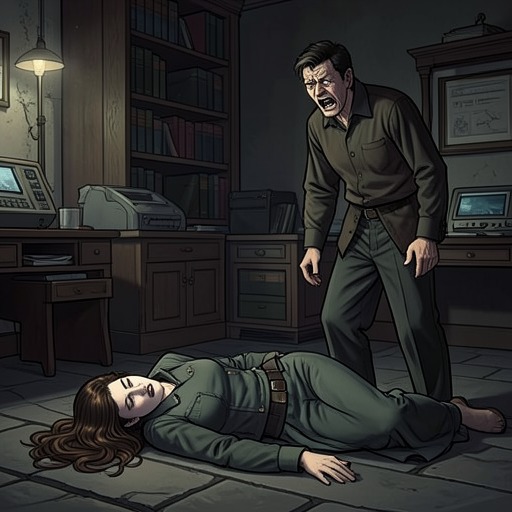
The chamber door opens in a rush of air, and Madeline appears at the threshold. Her return confirms the truth of Roderick’s disclosure: she has escaped the vault and survived the entombment, though the struggle has left her gravely weakened. She falls upon her brother, and both die. The outcome fulfills Roderick’s dread of losing his sister and of being unable to withstand the terror of what follows, while ending the direct family line he had feared would be extinguished.
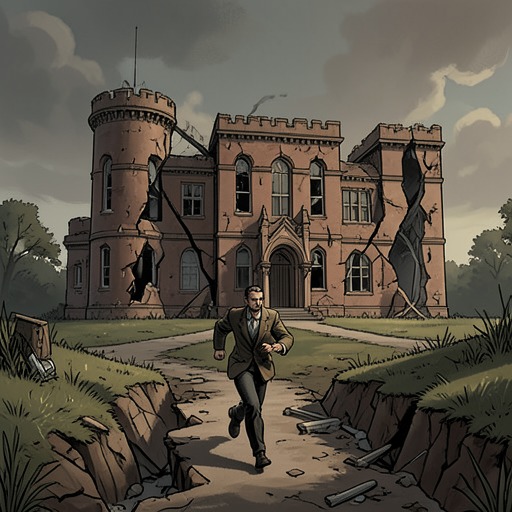
The narrator flees the chamber and the mansion. As he crosses the old causeway, he sees a fissure that had already extended across the building widen; the walls separate, and the House of Usher sinks into the tarn. The collapse follows the deaths of the twins and brings the family’s end together with the destruction of its home. Roderick is therefore central not only as a doomed inhabitant of a haunted-seeming mansion but as the point at which the story’s principal bonds meet: friendship, twinship, inheritance, illness, and the unstable boundary between apparent death and life. His sensitivity makes him acutely responsive to the sounds of the final night, but his fear prevents him from acting on what he hears until action is no longer possible.