Roderick Usher’s nervous disorder
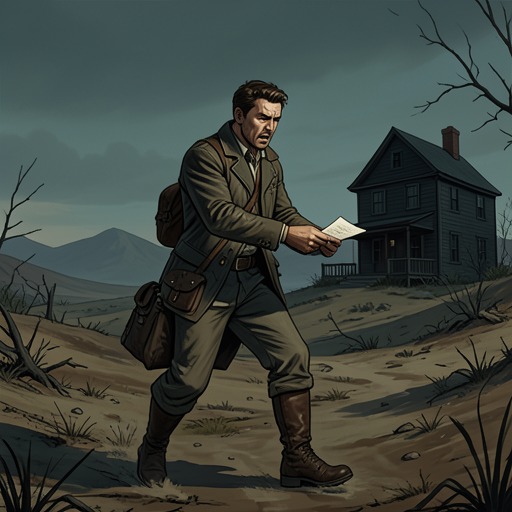
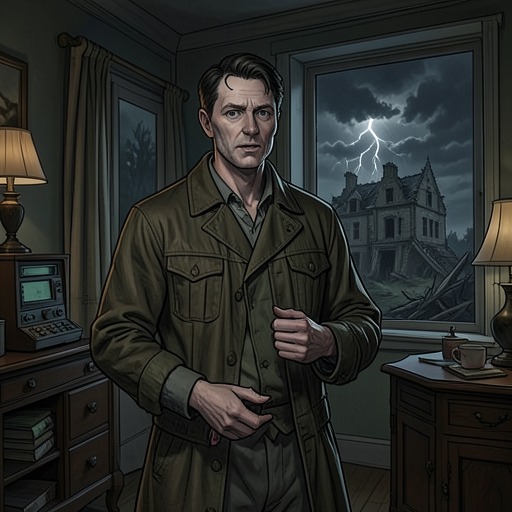
The Fall of the House of UsherRoderick Usher’s nervous disorder shapes both his daily experience and the House of Usher’s mounting crisis. He describes it as a constitutional and hereditary affliction, yet also tries to dismiss it as a temporary nervous complaint. Its symptoms make ordinary sensations difficult to endure; his fear of what those sensations may mean eventually converges with the apparent burial of his twin sister, Madeline Usher, and his inability to act on what he hears.
Symptoms and Self-Understanding
Roderick’s condition appears first as a marked instability of manner. His behavior shifts between liveliness and gloom, while his voice moves from tremulous indecision to a forceful, measured utterance. The narrator understands these contrasts as efforts to master habitual agitation, not as evidence that Roderick has regained control. His own account is similarly divided: he calls the illness a family evil for which he sees no remedy, then immediately recasts it as a nervous affection that should pass.
The most concrete features of the disorder are sensory. Roderick says that only the plainest food is bearable, that he can wear garments of only certain textures, and that the odors of flowers oppress him. Even faint light pains his eyes. Sound is no less restrictive: among sounds, he can tolerate only particular ones produced by stringed instruments. These limits turn the environment into a source of continual strain and help explain why the narrator’s attempts to keep him company through reading, painting, and music cannot dispel his gloom.
Roderick’s fear is not simply fear of a particular danger. He dreads the consequences of future events because even a trivial incident, he believes, might intensify his agitation. He anticipates a point at which fear will overwhelm both his life and his reason. The account therefore presents his disorder as a self-reinforcing condition: ordinary events acquire the power to threaten him because he is already apprehensive of their effects.
The House, Family, and Bereavement
Roderick also believes that the House of Usher exerts a special influence over him. He has not ventured beyond it for many years, and he attributes his condition in part to the shape and material of the mansion, its grey walls and turrets, and the tarn below. He describes an influence produced by the dwelling’s physical presence and its long effect on his spirit. Yet he hesitantly acknowledges a more immediate source of his gloom: Madeline’s severe, prolonged illness and the prospect of her death.
Madeline is his beloved sister, his companion for many years, and his last living relative. Roderick says that her death would leave him the final member of the ancient Usher line. When the narrator sees her pass through the room, Roderick hides his face and weeps. Her illness has long resisted the physicians’ skill; the reported symptoms include apathy, gradual physical wasting, and brief episodes with cataleptic qualities. On the evening of the narrator’s arrival, she becomes unable to continue as before and is taken to bed. The uncertainty surrounding her condition and apparent death later becomes inseparable from Roderick’s distress.
After Madeline is reported dead, Roderick arranges for her body to remain temporarily in a vault within the mansion rather than be taken to the family burial ground. He gives practical reasons for this decision: the unusual character of her illness, the medical men’s urgent inquiries, and the exposed remoteness of the burial ground. The narrator assists him. When they briefly look at Madeline before closing the coffin, the narrator notices the siblings’ strong resemblance and learns that they are twins, between whom Roderick says an unusually close sympathy has always existed. The decision to place her nearby gives the later sounds a specific and consequential meaning.
Escalation and the Sounds of the Tomb
In the days after the entombment, Roderick’s condition changes visibly. His usual manner disappears, his ordinary occupations are neglected, and he wanders through the chambers with hurried, uneven steps. His face grows paler, and his eyes lose their former brightness. His voice acquires a habitual tremor. At times he seems to attend fixedly to empty space, as though listening to an imagined sound; at others, the narrator suspects that he is struggling to disclose some oppressive secret. The uncertainty belongs to the narrator’s observation: he cannot decide whether Roderick’s behavior signals a hidden knowledge or the vagaries of madness.
During a stormy night, the narrator reads from The Mad Trist in an effort to distract Roderick. The tale describes a door being forced, a dragon’s shriek, and a shield falling with a loud ring. After each episode, the narrator hears a corresponding sound from somewhere in the mansion: first a distant cracking, then a harsh, drawn-out grating or scream, and finally a hollow metallic reverberation. At first he treats the correspondences as coincidences, but the sequence makes the sounds increasingly difficult to set aside. Roderick, meanwhile, faces the chamber door, rocks steadily, and appears to listen.
Confession and Consequence
Roderick finally tells the narrator that he has heard the sounds for a long time. He says that he detected Madeline’s first faint movements in the coffin but did not dare disclose what he heard. As he interprets the noises accompanying the reading, he identifies them with the coffin coming apart, the iron vault door moving, and Madeline struggling in the passage. His confession changes the meaning of his earlier listening: what the narrator had taken for attention to imaginary sounds may have been Roderick’s fearful response to sounds he believed were real.
Madeline then appears at the chamber entrance. Her return confirms that she was alive when placed in the tomb, though the narrative does not establish precisely how Roderick understood her condition at each stage. She falls upon her brother, and both die. The disorder’s decisive consequence is thus bound to a failure of speech and response: Roderick says he heard his sister but remained silent until her return was immediate. His sensitivity, especially his exceptional hearing, is at once a defining symptom and the means by which the hidden crisis becomes known. The final collapse of the House of Usher follows the deaths of the twins, bringing Roderick’s feared family ending and the mansion’s fate together.