The extinction of the Usher family line
The Fall of the House of UsherThe extinction of the Usher family line is both a genealogical endpoint and the culmination of the story’s entwining of family and mansion. Roderick Usher and Madeline Usher are presented as the last members of an ancient line without enduring collateral branches; when both die, the family’s continuity ends, and the House of Usher collapses into the tarn.
Lineage and Inheritance
The narrator describes the Usher family as having been known across generations for unusual artistic sensibility, as well as for generous but unobtrusive charity. Its defining genealogical feature, however, is the absence of any enduring branch outside the direct line of descent. The family’s inheritance and name have passed down that line with little lasting variation, leaving no established collateral relatives to continue the family beyond its immediate heirs.
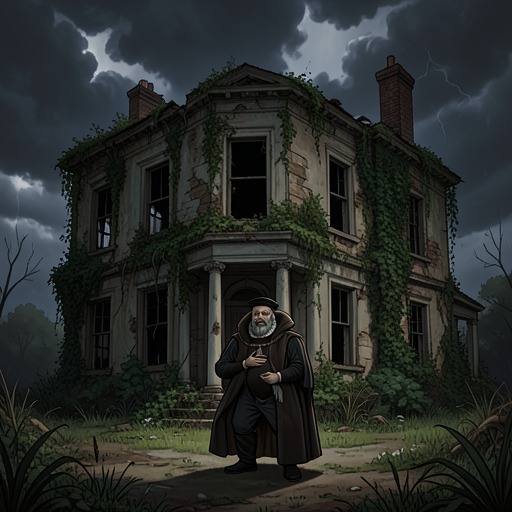
The narrator connects this narrow succession to the meaning of the name House of Usher. In his interpretation, the long transmission of the estate together with the family name has so closely identified the people with their property that the name used for the mansion also refers to the family. This connection makes the eventual end more than the death of two individuals: the family’s extinction and the destruction of its ancestral home become parallel outcomes.
The Twins as the Last Close Relatives
Roderick tells the narrator that Madeline is his sole companion of many years and his last relative on earth. The two are twins, a fact the narrator learns while helping Roderick place her coffin in a vault beneath the mansion. Their physical resemblance strikes him then, and Roderick says that a deep, difficult-to-explain sympathy has always existed between them. The account thus identifies the final two members of the line not as distant heirs but as siblings whose lives have been closely bound.
Madeline’s long illness makes the family’s end seem near even before her apparent death. Her physicians have been unable to resolve the condition, which includes apathy, gradual wasting, and recurring but temporary cataleptic episodes. On the evening of the narrator’s arrival, she succumbs to the illness, and Roderick tells him he believes this was the last time she would be seen alive. The narrator’s brief glimpse of her therefore precedes the choice that will turn an apparent death into the crisis that destroys the remaining family.
Entombment and the Delayed Revelation
After several days of grief, Roderick announces that Madeline is dead and decides to keep her body in a vault within the mansion for a fortnight before final burial. He gives practical reasons: the unusual nature of her illness, questions from her physicians, and the remote, exposed location of the family burial ground. The narrator, remembering a disturbing-looking person encountered on the staircase, does not challenge what seems to him a cautious precaution. At Roderick’s request, he helps carry the coffin to a small, damp, lightless vault far below his own sleeping room. Its heavy iron door and copper-covered interior make the temporary placement feel sealed away from the household above.
When the coffin is opened briefly, the narrator notices Madeline’s resemblance to Roderick and learns that they are twins. Her illness has left signs that, to the narrator, make the distinction between death and a cataleptic state unsettlingly uncertain. He and Roderick close the coffin and secure the vault. In retrospect, these circumstances frame the entombment not as a confirmed burial after an unambiguous death, but as a decision made under medical uncertainty—one whose consequences Roderick later recognizes too late.
In the days that follow, Roderick’s condition changes markedly. His usual occupations fall away; he moves through the mansion in agitation, and the narrator suspects that he is struggling with an oppressive secret. During a storm, the narrator reads from The Mad Trist. Each passage describing a violent sound in the embedded tale is followed by a similar sound apparently heard from elsewhere in the mansion: first the breaking of a door, then a harsh cry, and finally a muffled metallic reverberation. The sequence turns the reading into an acoustic pattern through which the sealed vault seems to answer the story.
Roderick then admits that he has heard Madeline moving in the coffin for many days but did not dare tell the narrator. He interprets the sounds accompanying the reading as the breaking of her coffin, the movement of the iron door, and her efforts to escape. His confession retrospectively changes the meaning of the temporary entombment: Madeline was placed in the vault alive, and Roderick had heard evidence of it while remaining silent. The narrator’s earlier confidence in a harmless precaution gives way to the recognition that the family’s final crisis has been developing beneath the rooms they occupied.
Deaths and the End of the House
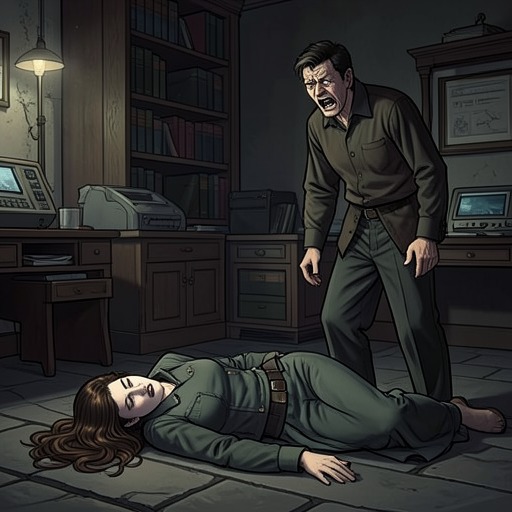
As Roderick declares that Madeline is outside the chamber, the doors open and she appears. The narrative presents her as having struggled to escape the vault. She falls upon Roderick, and both die. With Roderick identified as the last surviving member of the direct line after his sister’s apparent death, their deaths leave no Usher heir or close relative to carry the family forward. The end of the line is therefore confirmed through the fate of the twins themselves, rather than through a later account of inheritance.
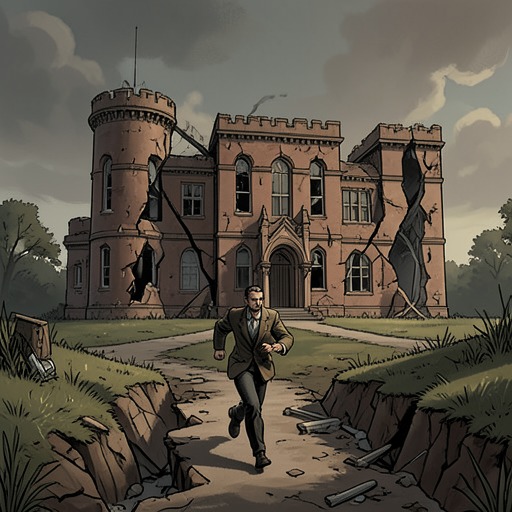
The narrator flees the mansion during the storm. From the old causeway, he sees the fissure in the building widen; the walls divide, and the House of Usher falls into the tarn. The family’s extinction and the mansion’s collapse occur in immediate succession, completing the association established earlier between the Usher name, its owners, and their estate. The story makes no separate account of surviving branches or a successor: its final image is the ancestral house’s remains sinking beneath the water, as the family’s direct line ends with Roderick and Madeline.