Pont des Arts
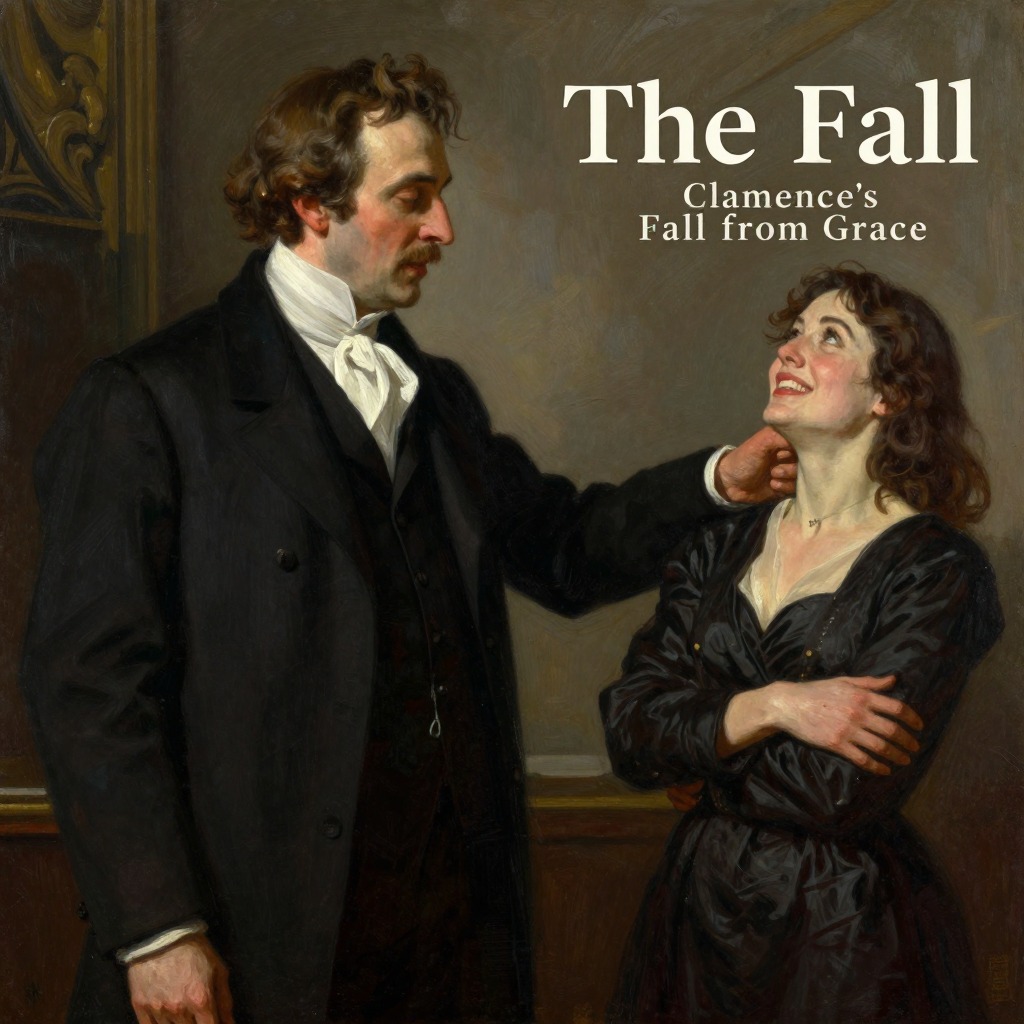
The FallThe Pont des Arts is the Parisian bridge where Jean-Baptiste Clamence hears a mysterious laugh that shatters his self-assured existence, marking the beginning of his moral collapse and his eventual transformation into a judge-penitent.
The Laugh on the Bridge
One fine autumn evening, still warm in town and already damp over the Seine, Clamence was walking up the quays of the Left Bank toward the Pont des Arts. Night was falling; the sky, still bright in the west, was darkening; the street lamps were glowing dimly. The river was gleaming between the stalls of the secondhand booksellers. There were but few people on the quays; Paris was already at dinner. Clamence was treading on the dusty yellow leaves that still recalled summer. Gradually the sky was filling with stars that could be seen for a moment after leaving one street lamp and heading toward another. He enjoyed the return of silence, the evening's mildness, the emptiness of Paris. He was happy. The day had been good: a blind man, the reduced sentence he had hoped for, a cordial handclasp from his client, a few liberalities, and in the afternoon, a brilliant improvisation in the company of several friends on the hardheartedness of our governing class and the hypocrisy of our leaders. He had gone up on the Pont des Arts, deserted at that hour, to look at the river that could hardly be made out now night had come. Facing the statue of the Vert-Galant, he dominated the island. He felt rising within him a vast feeling of power and—he did not know how to express it—of completion, which cheered his heart. He straightened up and was about to light a cigarette, the cigarette of satisfaction, when, at that very moment, a laugh burst out behind him. Taken by surprise, he suddenly wheeled around; there was no one there. He stepped to the railing; no barge or boat. He turned back toward the island and, again, heard the laughter behind him, a little farther off as if it were going downstream. He stood there motionless. The sound of the laughter was decreasing, but he could still hear it distinctly behind him, come from nowhere unless from the water. At the same time he was aware of the rapid beating of his heart. There was nothing mysterious about that laugh; it was a good, hearty, almost friendly laugh, which re-established the proper proportions. Soon he heard nothing more, anyway. He returned to the quays, went up the rue Dauphine, bought some cigarettes he did not need at all. He was dazed and had trouble breathing. That evening he rang up a friend, who was not at home. He was hesitating about going out when, suddenly, he heard laughter under his windows. He opened them. On the sidewalk, in fact, some youths were loudly saying good night. He shrugged his shoulders as he closed the windows; after all, he had a brief to study. He went into the bathroom to drink a glass of water. His reflection was smiling in the mirror, but it seemed to him that his smile was double.
The Aftermath and the Unraveling
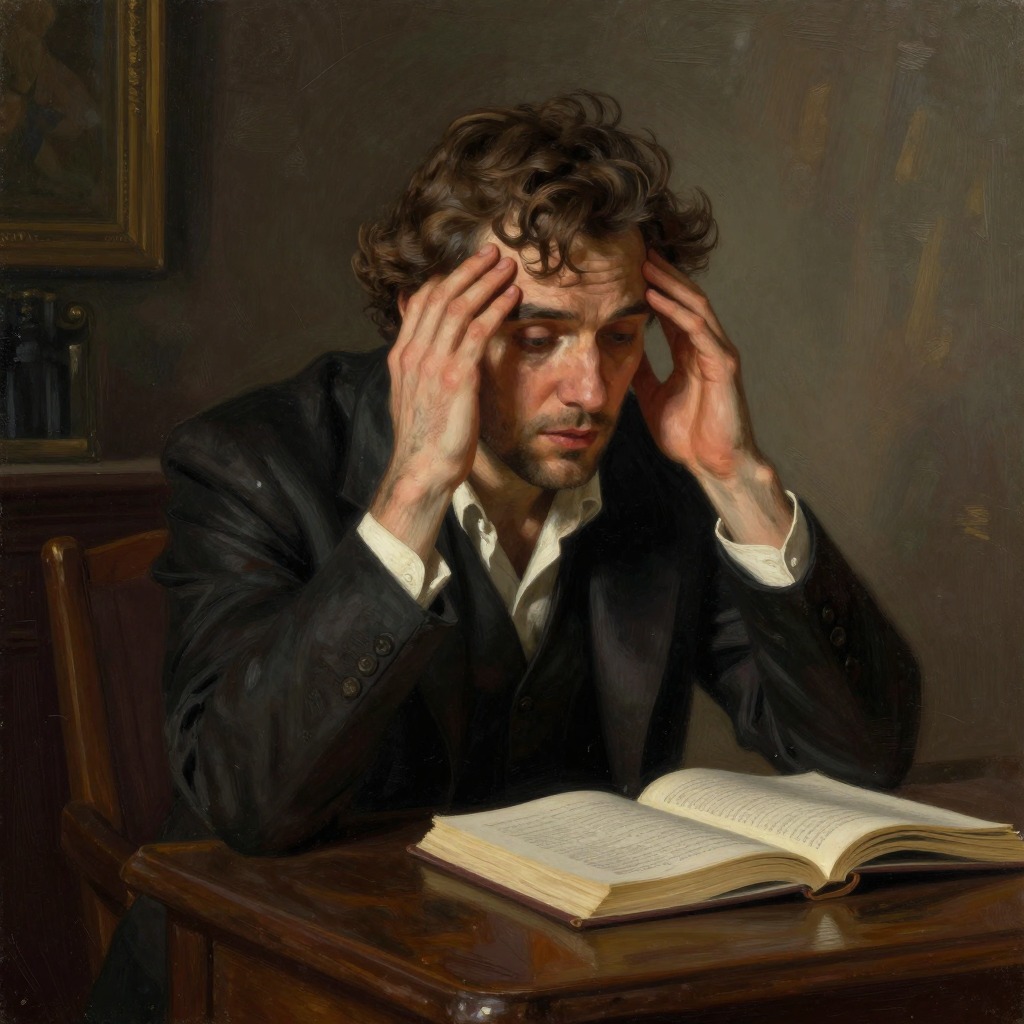
After that evening, Clamence ceased to walk along the Paris quays. When he would ride along them in a car or bus, a sort of silence would descend on him. He was waiting, he believed. But he would cross the Seine, nothing would happen, and he would breathe again. He also had some health problems at that time. Nothing definite, a dejection perhaps, a sort of difficulty in recovering his good spirits. He saw doctors, who gave him stimulants. He was alternately stimulated and depressed. Life became less easy for him: when the body is sad the heart languishes. It seemed to him that he was half unlearning what he had never learned and yet knew so well—how to live. He thought it was probably then that everything began. The laugh continued to drift his way, without his random efforts succeeding in divesting it of its benevolent, almost tender quality that hurt him. The whole universe then began to laugh at him. He realized that he was not simple, and after prolonged research on himself, he brought out the fundamental duplicity of the human being. He discovered that modesty helped him to shine, humility to conquer, and virtue to oppress. The surface of all his virtues had a less imposing reverse side. He excelled above all in scorn. The very people he helped most often were the most scorned. Courteously, with a solidarity charged with emotion, he used to spit daily in the face of all the blind.
The Bridge as a Site of Recurrence
The Pont des Arts became a recurring point of reference in Clamence's memory and confession. The laugh he heard there was not an isolated event but a revelation that echoed through his subsequent life. Years later, aboard an ocean liner, he perceived a black speck on the steel-gray ocean and thought at once of a drowning person. He realized then that that cry which had sounded over the Seine behind him years before had never ceased, carried by the river to the waters of the Channel, to travel throughout the world, across the limitless expanse of the ocean, and that it had waited for him there until the day he had encountered it. He realized likewise that it would continue to await him on seas and rivers, everywhere, in short, where lies the bitter water of his baptism. The bridge thus became the origin of a cry that followed him across the globe, a reminder of his failure to act when a young woman threw herself into the Seine from the Pont Royal. The laugh on the Pont des Arts and the cry from the Pont Royal merged in his memory, forcing him to confront his guilt and his inability to save another human being. In his final confession, he imagines addressing the young woman: "O young woman, throw yourself into the water again so that I may a second time have the chance of saving both of us!" But he knows it is too late. The Pont des Arts, once a place of triumph and self-satisfaction, became the site where his illusion of innocence was first cracked, and from which he could never fully escape.