Tripoli
The FallTripoli, the Libyan city where Jean-Baptiste Clamence was interned in a prison camp during World War II, is the site of his most revealing moral collapse: the episode in which he was elected a mock pope and, ultimately, drank the water of a dying comrade. It is here that the former Parisian lawyer, who had always sought to dominate from heights, first experienced the inversion of his values under the pressure of collective suffering, and where the pattern of his later career as a judge-penitent was prefigured.
Location and Setting
Tripoli appears in Clamence's narrative as the place of his internment near the city, in a camp where prisoners suffered from thirst and destitution more than from brutality. The conditions were defined by the vertical sun, flies, sand, and the constant struggle for water. This setting stands in stark contrast to the elevated places Clamence had always preferred—the bus over the subway, open carriages over taxis, terraces over closed-in rooms, the top deck of a boat, and mountain passes and plateaus over deep valleys. He had always loathed speleologists and their descents into the earth; now he was forced to live on the ground, among the wretched, in a place where the heat seemed to drip molten lead from the tent above.
The Election as Pope
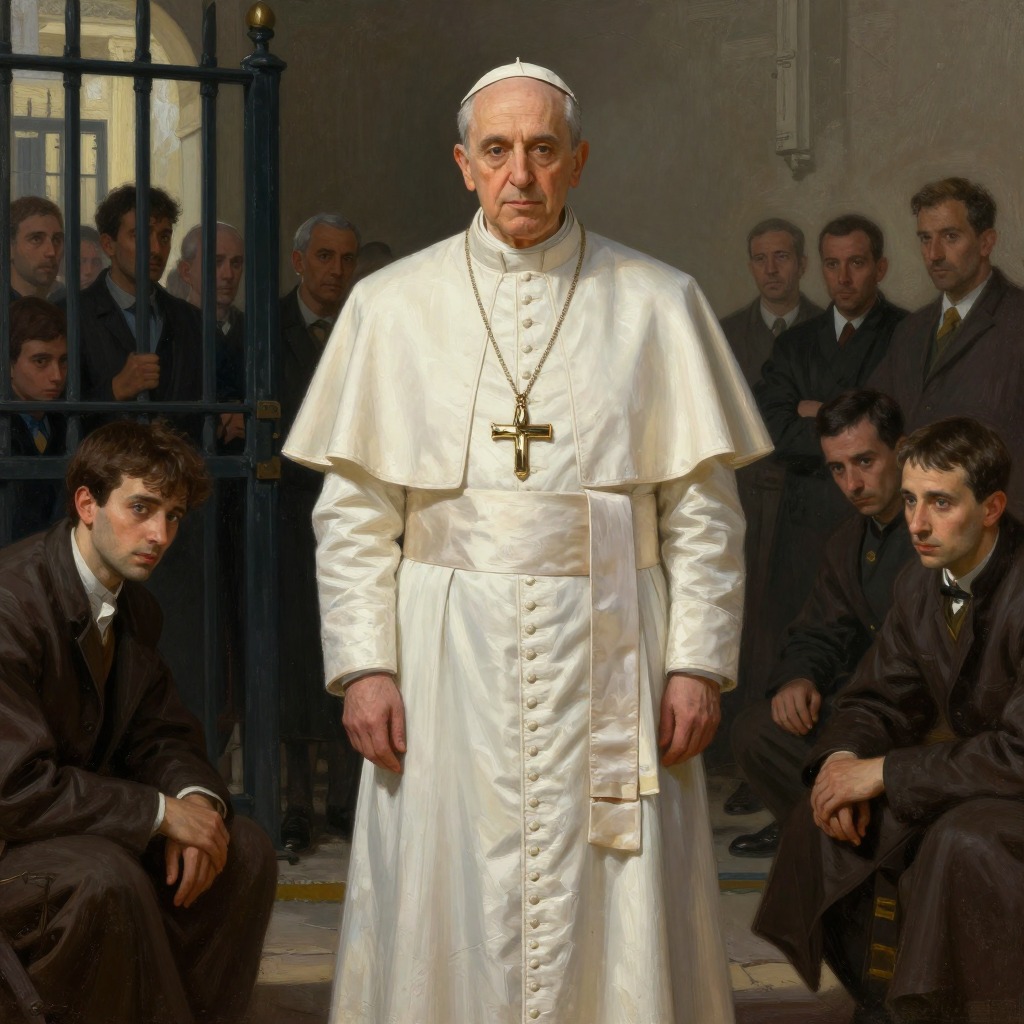
In this camp, Clamence encountered a young Frenchman of the Du Guesclin type, a man of faith who had been interned by the Catholic general in Spain and had developed a profound melancholy. This man, unhinged by the sun and his reflections, declared the need for a new pope who would live among the wretched instead of praying on a throne. He asked the group who among them had the most failings. As a joke, Clamence raised his hand, and was the only one to do so. The others, in fun but with a trace of seriousness, elected him. Clamence exercised his pontificate for several weeks with increasing seriousness, acting as a group leader or secretary of a cell, administering the suffering of Du Guesclin himself.
The Moral Compromise
The central problem in the camp was the water allotment. Clamence was led to favor his own comrades, making distinctions based on their condition or the work they had to do. This small concession to inequality was far-reaching. The decisive moment came when he drank the water of a dying comrade. He convinced himself that the others needed him more than this fellow who was going to die anyway, and that he had a duty to keep himself alive for them. This act, he later reflects, is how empires and churches are born under the sun of death. It was in Tripoli that he closed the circle, learning that one must forgive the pope, for he needs it more than anyone else, and that this is the only way to set oneself above him.
Narrative Significance
Tripoli represents the antithesis of Clamence's cherished heights—a place of confinement, heat, and moral squalor where his pretensions to innocence were stripped away. It is the site of his first explicit exercise of power over others in a context of shared guilt, a rehearsal for the judge-penitent's role he would later perfect in Amsterdam. The memory of the camp, and of the water he drank, haunts him as a foundational crime, one that he cannot fully confess but that underlies his entire subsequent performance. The experience in Tripoli taught him that the essential thing is to be able to permit oneself everything, even if one has to profess one's own infamy, and that the judgment of men is worse than any Last Judgment.