Zeedijk
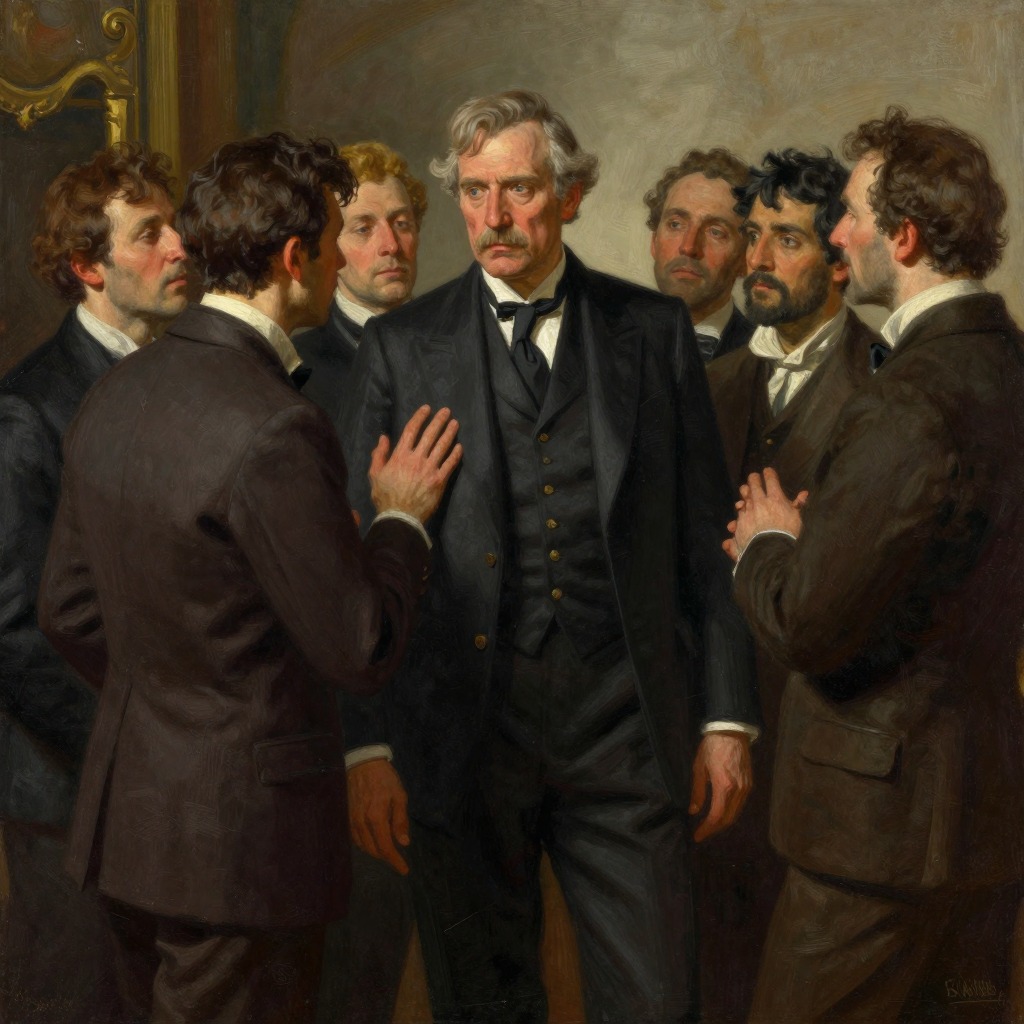
The FallThe Zeedijk is the sailors' quarter of Amsterdam where Jean-Baptiste Clamence establishes his post-Paris life as a judge-penitent, a district of bars, prostitutes, and criminal clientele that serves as the physical and symbolic setting for his new profession and his nightly confessions at the Mexico City bar.
Location and Character
The Zeedijk is a rough waterfront district in Amsterdam, a place of sailors' bars and prostitutes. Clamence describes himself as a frequenter of these bars, and it is here that he has set up his practice as a judge-penitent. He notes that despite his good manners and fine speech, he frequents sailors' bars in the Zeedijk, a fact he presents as a paradox that reveals his double nature. The quarter is part of the city's concentric canals, which Clamence compares to the circles of hell, with the Zeedijk representing the last and darkest circle. He describes the people of Amsterdam as "double," being both here and elsewhere, and the Zeedijk, with its fog, neon, and gin, embodies this dreamlike, suspended state.
Clamence's Practice
Clamence's professional life as a judge-penitent is centered on the Zeedijk. He set up his office in a bar in the sailors' quarter, specifically the Mexico City bar, which he calls his "church." He lies in wait for the bourgeois, particularly the straying bourgeois, and draws his subtlest sounds from them. His method involves public confession, accusing himself up and down, and then constructing a portrait that is the image of all and of no one, a mask that becomes a mirror for his listener. He preaches submission to authority and the comforts of slavery, presenting it as true freedom. The Zeedijk, with its varied clientele of sailors, pimps, and thieves, provides the perfect setting for this practice, as the poor don't go into the luxury districts, but the gentlefolk eventually wind up in the disreputable places.
Symbolic Significance
The Zeedijk is not merely a geographical location but a symbolic space that reflects Clamence's inner state and his philosophy. It is a place of fog, stagnant waters, and a "soggy hell," a negative landscape that mirrors his own moral and spiritual condition. The doves of the Dutch sky, which he describes as waiting to come down but finding no head on which to light, are a recurring image associated with the Zeedijk and the surrounding canals. The quarter is also the site of the Mexico City bar, where the stolen panel "The Just Judges" once hung above the drunks and pimps, a symbol of justice separated from innocence. Clamence's nightly walks along the canals, in the livid sky of dawn, are part of his ritual as a judge-penitent, where he feels himself soaring over the continent, happy unto death. The Zeedijk, in its fog and decay, is the heart of Clamence's "little-ease," the dungeon cell of his own making where he lives on the diagonal, but also the place where he has found a height from which he can judge everybody.