Fairies
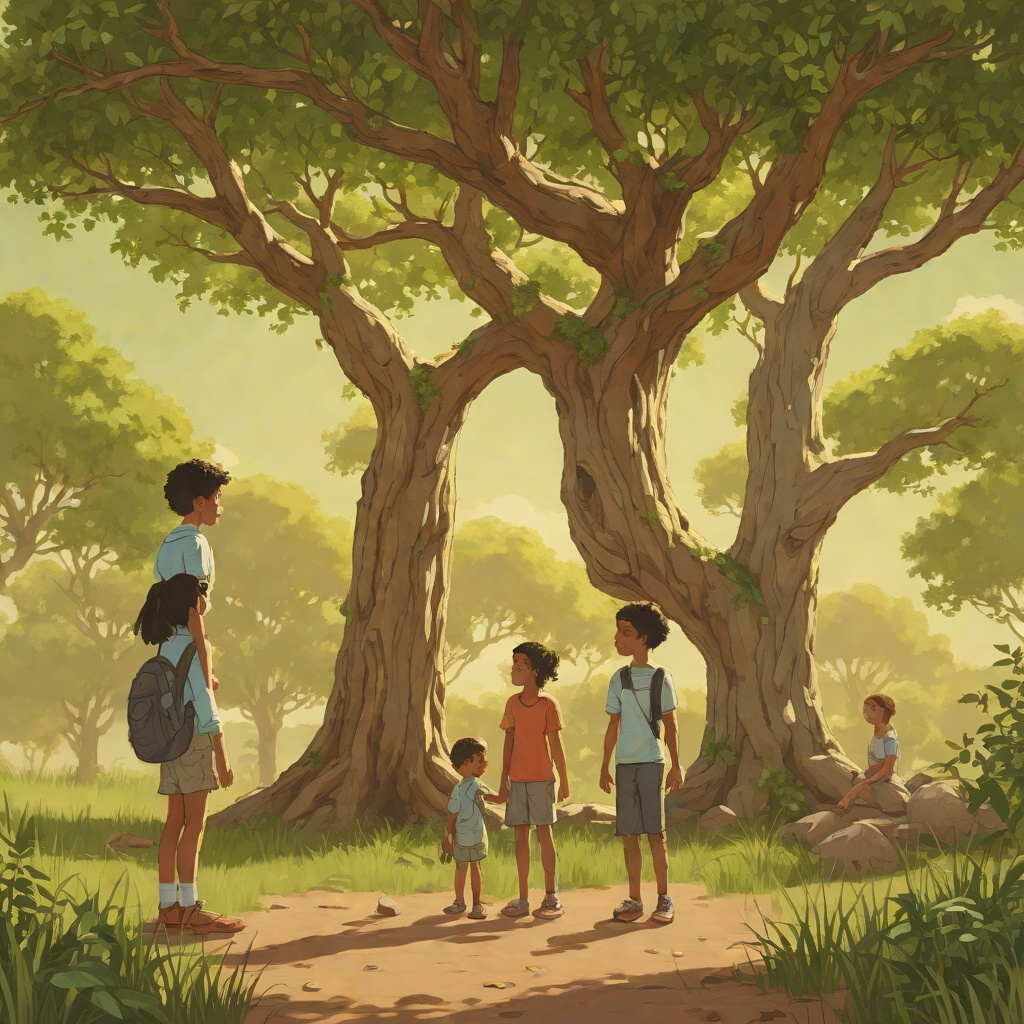
The Faraway TreeFairies are recurring members of the fairy folk associated with the Faraway Tree and its shifting lands. Their decisive significance lies in the way they make the tree’s magical world feel inhabited and collaborative: enchantment is not merely an abstract force or a spectacle for the children, but a social practice carried out by many kinds of nonhuman beings, including fairies.## Identity and Place in the Enchanted World The children first describe the Faraway Tree as a place where “all kinds of queer folk” live in its trunk, alongside their own trusted friends. Among these beings is Silky, identified as a “dear little fairy” whose name comes from her mass of silky gold hair. This introduction gives the fairy category a personal and relational entry point: fairies are not simply strange inhabitants of a remote realm, but beings capable of friendship with Jo, Bessie, Fanny, and Dick. Silky’s presence also establishes that fairy identity can coexist with a distinctive individual appearance and name rather than reducing every magical creature to an interchangeable type.
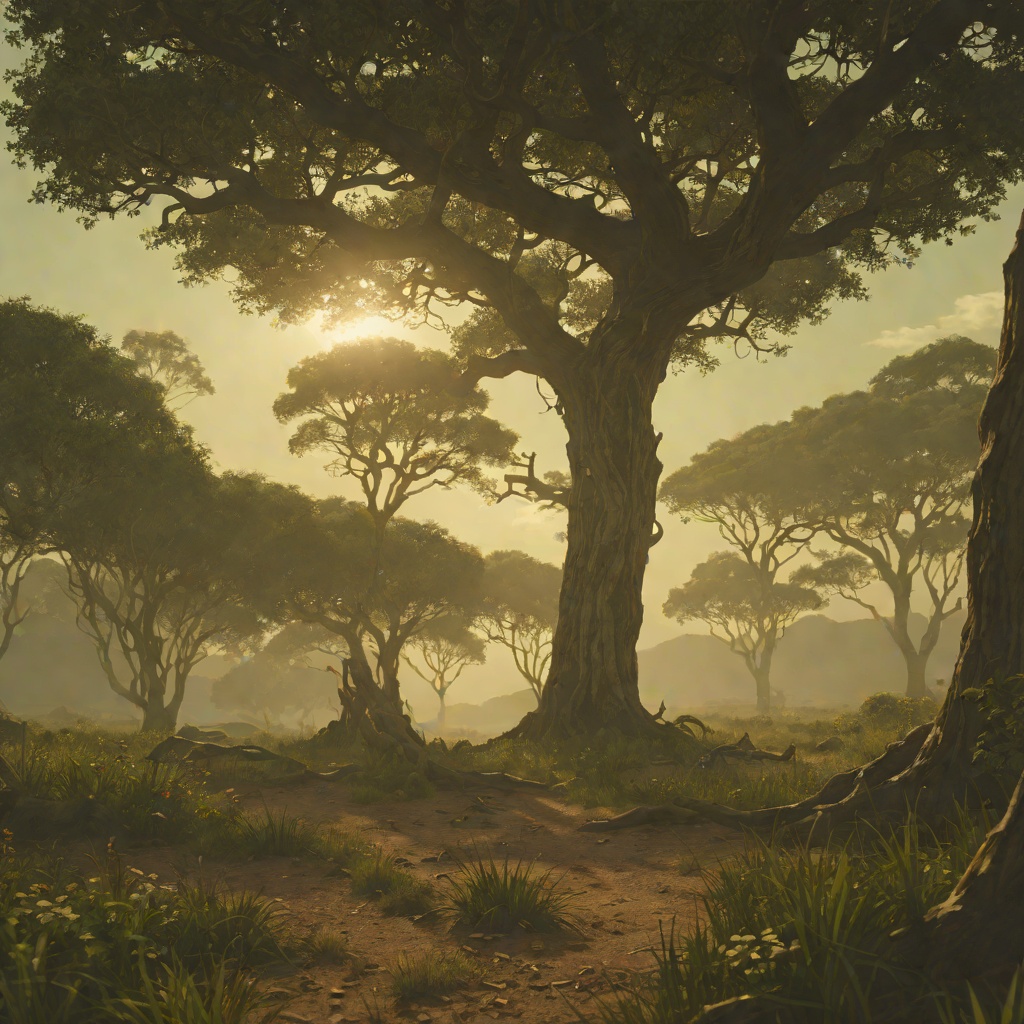
The children’s route to the Faraway Tree begins through the Enchanted Wood. Before any fairy appears in action, the wood itself is presented as communicative: its leaves seem to tell secrets, and the trees whisper “Wisha, wisha, wisha, wisha.” The fairies belong to this larger environment of living, responsive nature. The children must cross a narrow ditch, enter the wood, and learn how to listen by pressing their left ears against tree trunks. In this setting, fairies are part of a world where communication and agency extend beyond human beings, and where access to magical society depends on attentive movement through nonhuman spaces.## Fairies Among the Magical Trades The clearest collective view of fairies appears in the Land of Spells. This land resembles a marketplace filled with shops, stalls, wizards, witches, pixies, gnomes, goblins, elves, and other fairy folk selling spells. Fairies therefore participate in a diversified magical economy rather than occupying a purely decorative or courtly role. The scene emphasizes production, display, and exchange: sellers cry their wares, magic pills are shown in boxes, and bottled substances are offered as practical solutions to particular problems.
A similar division of magical labor appears in the Land of Magic Medicines. When Moon-Face, the children, and the Saucepan Man climb the ladder, they enter what looks like a large factory where pills, medicines, bandages, and related remedies are made. Goblins and gnomes, pixies and fairies work over green fires, stir large pots, pour medicines into shining bottles, and count pills into colored boxes. The fairies are thus included among the workers who transform magical materials into usable treatments. Their presence connects them with skilled, organized labor and makes the enchanted world resemble a functioning workplace as well as a place of wonder.
This factory setting also clarifies that fairy activity is consequential. Magical substances can affect bodies, alter conditions, and become part of the children’s attempts to solve urgent problems. The fairies’ work helps sustain the practical infrastructure of the changing lands, even though the evidence does not assign a particular medicine or individual task to a named fairy. Their importance lies in the collective capacity represented by the group: fairies help make magic available, packaged, and deployable.## Relations with Other Nonhuman Actors The world around the Faraway Tree is organized through cooperation among different species and kinds of beings. A red squirrel, dressed in a jersey, emerges from a hole in the tree to collect cushions that Moon-Face wants returned. After taking them, the squirrel uses a rope lowered from above; three gentle tugs cause the cushions to be hauled back up to Moon-Face. This exchange shows the tree’s inhabitants maintaining practical links across its vertical spaces, with animals performing dependable work within the community.
The rescue in the Land of Dreams provides a stronger example of interspecies cooperation. When the children and their companions fall asleep and cannot be awakened, Silky finds Dame Washalot, Mister Watzisname, and the Angry Pixie and tells them that the sleepers need rescuing. During the confrontation with the Sandman, Dame Washalot throws the water from her wash-tub over his sack, while the Angry Pixie empties a kettle over the Sandman himself. Although the fairies are not assigned the decisive physical actions in this particular defense, the scene places them within a wider network of magical allies whose rescue depends on coordinated roles, improvised tools, and mutual trust.
The woodpeckers offer another model of nonhuman agency. Jo proposes that a woodpecker could peck through the back of a room into the Slippery-Slip, allowing Silky, Moon-Face, and the Saucepan Man to be pulled through. The summoned bird returns with five others, making six strong-beaked woodpeckers in all. Together they stand in a row and peck rapidly until their drumming opens a passage. This episode indirectly illuminates the fairies’ place in the same world: escape is achieved not by human strength alone, but through the combined abilities of magical people, animals, and the living structure of the Faraway Tree.## Movement Through Thresholds and Narrative Function Fairies are associated with movement between ordinary and enchanted spaces. The children cross the ditch into the Enchanted Wood, climb the uppermost branch of the Faraway Tree, pass through a purple hole in the cloud, and use a ladder to enter a land above. One such arrival takes them into the Land of Topsy-Turvy, where houses stand on chimneys, trees grow upside down, and people walk inverted. On returning from another strange passage, Jo expects to find the Faraway Tree but instead discovers a narrow, green-lantern-lit corridor. These repeated transitions make the tree’s vertical architecture a threshold system, and fairies—especially Silky—belong to the society that makes those crossings intelligible and survivable.
Silky’s rescue work makes this role especially visible. After the sleepers are endangered, the rescuers fight off the Sandman and use a tiny amount of Whizz-Away Ointment on the bed. Silky speaks the exact command “Whizz-Away Home, bed!” and the large white bed immediately speeds away through the air, frightening the birds as it travels. It eventually passes through a cloud and returns toward the Faraway Tree, though it catches on a branch and sends the passengers sliding off. The episode combines fairy magic with risk: the remedy provides escape, but the return is not perfectly controlled. Fairies therefore function as agents of passage whose abilities open routes home while leaving the material hazards of enchanted travel intact.
At the end of the documented sequence, the children leave the Land of Presents, descend to the Faraway Tree, say goodbye to Moon-Face and the others, and ride cushions down the Slippery-Slip. Their presents rest on their knees so that they will not break, and they emerge through the front door onto the moss outside. The fairies’ world is consequently not an isolated spectacle but a place the children can enter, depend upon, and leave, carrying the effects of their adventures back toward ordinary life. Fairies help preserve the continuity between those realms: they inhabit the magical side of the threshold, yet their labor and relationships make return possible.