Living Toys
The Faraway TreeLiving Toys are the animated inhabitants of the Land of Toys, where objects normally made for children become mobile, vocal, social beings. They transform the land from a collection of playthings into a complete environment with streets, buildings, soldiers, prisons, shops, and political authority; yet their playfulness is inseparable from danger, because the same toys that laugh and wander can arrest outsiders and pursue them through the Faraway Tree.
Nature and Appearance
The Land of Toys presents Living Toys in a deliberately enlarged form. Dolls’ houses, sweet shops, forts, and railway stations stand everywhere, but they are much bigger than ordinary toys. Among them move golliwogs, teddy bears, dolls of many kinds, stuffed animals, and clockwork toys, all running or walking about, talking, and laughing. The effect is not merely that toys have been made to move: an entire material culture has become animate, with familiar manufactured forms supplying bodies, architecture, and social institutions at once.
Their variety gives the land its visual abundance. Clockwork animals run through the landscape, while dolls, bears, and stuffed creatures participate in the crowds. A large Noah’s Ark can open its lid and release scores of wooden animals walking in pairs, followed by Noah himself humming behind them. This repeated emergence from a toy container makes animation seem ordinary within the land. What would be a static object in the children’s world becomes a source of movement, sound, and organized life.
Society and Authority
Living Toys are not presented as isolated curiosities but as members of a regulated society. Soldiers patrol a red-painted fort whose drawbridge is raised to control entry and exit. When a soldier needs to leave, the bridge is lowered, the soldier crosses, and it is pulled up again. The fort therefore functions both as a toy structure and as a real defensive institution, preserving the visual form of a child’s model while giving it practical authority.
That authority becomes clear when the golliwog explains what happened to the Saucepan Man. The policeman has taken him to prison after he tried to take sweets from a sweet shop. The incident depends on a clash between rules from different lands: the Saucepan Man mistakenly believes that the Land of Toys is the Land of Goodies, where people may take as many sweets as they like. The Living Toys interpret his action as theft, and their policeman applies the local law without accepting his mistake as an excuse.
The fort’s soldiers and the policeman thus establish a boundary between harmless-looking play and institutional power. The toys may be whimsical, brightly colored, or mechanical, but they possess the means to classify conduct, imprison offenders, guard buildings, and resist interference. Their society imitates the structures of the human world closely enough to produce genuine conflict for visitors who treat it as a game.
Encounter with the Children
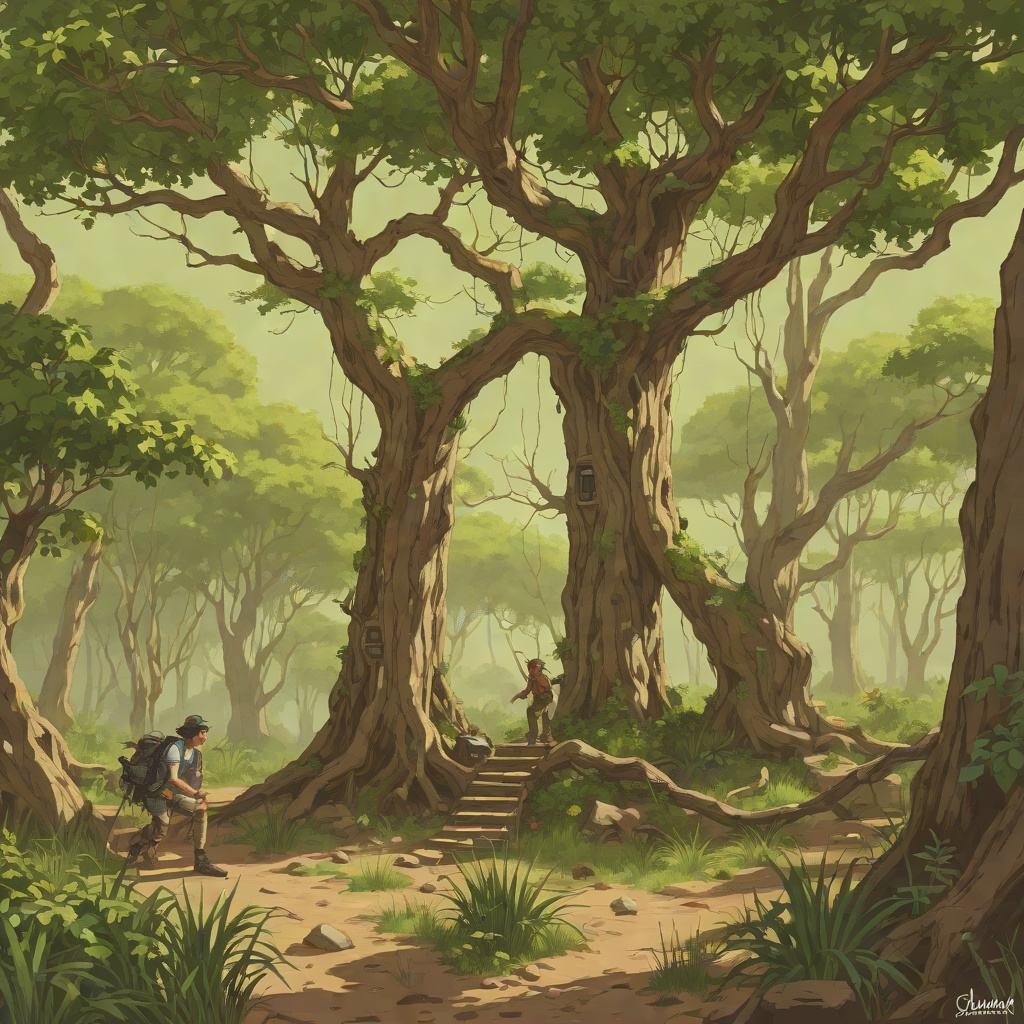
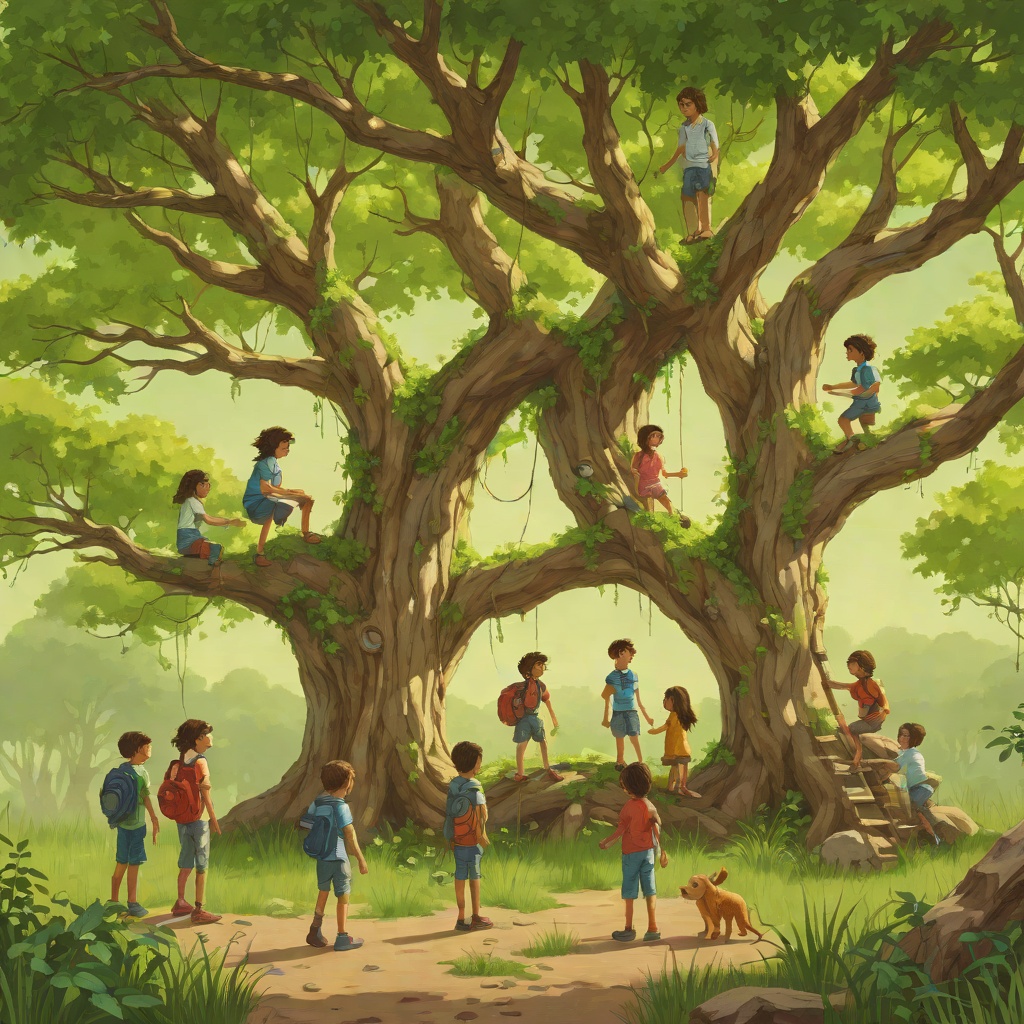
The children initially approach the Land of Toys with delighted expectations. Jo assumes that it cannot be dangerous because only toys come alive, and Silky reassures him that the land is safe. Once they climb the ladder, the scene appears to confirm that optimism: everything is “exactly as they imagined it,” with toy buildings and animated figures making the setting seem like an enormous version of childhood play.
The mood changes when the children begin searching for the Saucepan Man. A big golliwog gives information about his arrest, directing them toward the policeman and the fort. Later, while the children attempt to escape, the Living Toys become active pursuers rather than entertaining scenery. Jo reaches the ladder with the others, but a large golliwog with very long legs nearly catches him and tears his collar while trying to seize him.
The escape exposes the unusual permeability of the land. Once Jo and his companions reach Moon-Face’s round room, the toys do not remain above in their own country. Soldiers, golliwogs, bears, and dolls pour down the ladder after them. The children have not simply left one location for another; they have carried the conflict across the vertical passage inside the Faraway Tree. The boundary between the toy world and Moon-Face’s home proves unable to contain the animated objects.
The Toys’ Invasion and Defeat
Moon-Face responds to the flood of Living Toys with a spatial tactic rather than a fight. Because the opening of the Slippery-Slip lies in the middle of his room, he pushes each advancing toy toward it. One after another, the astonished soldiers, golliwogs, bears, and dolls fall into the opening and slide wildly down the inside of the tree. Jo and the others copy Moon-Face’s action as soon as they understand what he is doing.
The scene reverses the toys’ apparent advantage. Their numbers and pursuit have turned the room into an invasion route, but the same architecture gives the defenders a means of escape and removal. The Living Toys remain physically active throughout the episode, yet their movement is redirected by the Slippery-Slip: the vertical passage that carries travelers between worlds becomes an improvised device for dispersing the invasion.
This consequence also complicates the children’s first impression of the land. The toys are lively because they possess agency, but agency does not make them benign. They can laugh, patrol, enforce rules, chase fugitives, and cross thresholds in a mass. Their animation makes the material world unpredictable: a fort can imprison, a golliwog can pursue, and a toy crowd can spill into a private room.
Narrative Significance
Living Toys give the Land of Toys its central contrast between fantasy and discipline. Their bodies belong to play, but their conduct belongs to society. The Noah’s Ark and its paired wooden animals evoke orderly make-believe, while the fort, policeman, prison, and pursuit reveal a world in which playthings have reproduced hierarchy, property rules, and coercive force.
They also widen the story’s distribution of action beyond the human characters. The children interpret, negotiate, and improvise, but the toys determine whether the Saucepan Man is arrested, whether the fort can be entered, and whether the escape becomes a chase. Their material forms are not passive decorations; they shape the available routes and the dangers of the episode. The final removal of the toys through the Slippery-Slip shows that the same thing-like qualities that make them numerous and mobile can also make them manageable within the Faraway Tree’s strange architecture.
As a result, Living Toys are both spectacle and social force. They make childhood objects vivid by granting them bodies and voices, then unsettle that childhood familiarity by showing what happens when toys possess laws, institutions, and collective will. The Land of Toys is enchanting precisely because its objects live, and threatening for the same reason.