Pop Biscuits
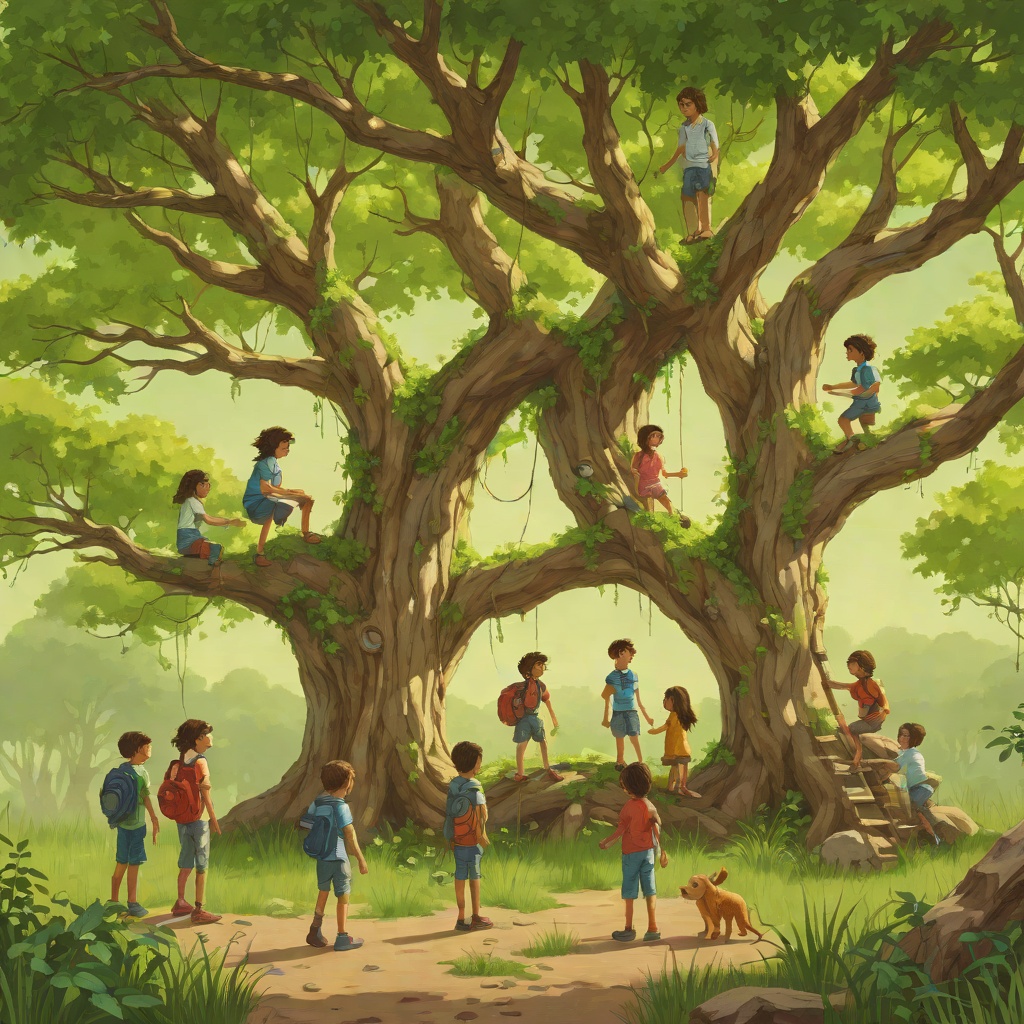
The Faraway TreePop Biscuits are a distinctive food of The Faraway Tree’s magical social world: ordinary-looking biscuits with a startling centre that bursts open when bitten, filling the eater’s mouth with sweet honey. Their importance is not merely culinary. They repeatedly create moments of welcome, comic surprise, and fellowship, linking the children’s domestic life with the hospitality of their friends above the tree.
Appearance and Magical Effect
Pop Biscuits are freshly made treats carried in a bag and offered for communal eating. Their defining property is the sudden “pop” that occurs as the biscuit is bitten. Dick’s first taste leaves his mouth full of sweet honey from the middle, transforming a familiar biscuit into a miniature magical event. The effect is delicious rather than dangerous, and his immediate request for another shows how quickly surprise becomes appetite.
The biscuits belong to a larger pattern of enchanted food in the tree’s world. Google Buns, served alongside them, contain a currant filled with sherbet that froths into bubbles when bitten; Pop Biscuits are therefore part of a playful food culture in which eating involves discovery and bodily reaction. Yet the biscuits remain especially useful as a portable treat: Silky can put them in her bag, and they can be brought from one friend’s house to another.
First Appearance and the Visit to the Topsy-Turvy Land
When the children visit Silky, she decides to accompany them to Moon-Face’s house because she wants to borrow jam from him. She brings Pop Biscuits so that the group can eat them together there. Dick, who has only recently begun exploring the tree, does not know what they are, and Jo allows him to discover their nature rather than explaining it in advance.
The first biscuit becomes a small initiation into the tree’s customs of astonishment. Dick bites it, hears and feels the unexpected burst, and finds honey in his mouth. His delight strengthens his wish to continue upward into the Land of Topsy-Turvy, even though Moon-Face has warned that the land is uncomfortable. In this moment, Pop Biscuits do more than satisfy hunger: they help convert Dick from a cautious newcomer into an eager participant in the children’s adventures.
They also interrupt a possible quarrel. Dick’s name is repeatedly misheard by Moon-Face and the Saucepan Man, who call him “Chick” and “Stick.” Moon-Face is preparing to shout again when Silky quickly hands him her bag of Pop Biscuits and asks everyone to share them. The food redirects the group from irritation to conversation, allowing Moon-Face to tell them which land is at the top of The Faraway Tree. A shared snack thus becomes a practical instrument of friendship and emotional repair.
Hospitality and Friendship
Pop Biscuits recur whenever the tree’s inhabitants receive the children. After one dangerous excursion, Moon-Face invites them back for tea and announces that Silky has Pop Biscuits while he has made Google Buns. The invitation offers comfort after adventure and restores the familiar circle of friends. When the children accept, they sit together on the branches outside Moon-Face’s house, eating both kinds of treat until the food itself gives way to further play, including Moon-Face’s invitation to inspect his new cushions.
The biscuits are therefore associated with informal hospitality rather than private possession. Silky carries them for the sake of sharing; Moon-Face presents them as part of tea; and the children eat them together with their friends. Their value lies in circulation. Unlike a meal governed by household work, they are a ready-made pleasure that permits conversation, reconciliation, and curiosity to continue without interruption.
This contrast is sharpened by the children’s home life. Before setting out for The Faraway Tree, Jo must dig up potatoes with Dick, while Bessie and Fanny must finish their mother’s ironing. The children accept these tasks because everyone in the family has to help, and their promised holiday depends on completing the work. Pop Biscuits belong to the opposite register: not necessary domestic labour but an enchanted reward encountered during permitted leisure. Their repeated appearance marks the social world the children enter once household obligations have been fulfilled.
Food as Rescue and Reunion
The biscuits remain available even when the atmosphere is more serious. While the children are helping in the Land of Magic Medicines, their mother lies ill at home and the family is anxious. Silky undertakes to have Dame Washalot wash the household laundry, since the sick mother worries about it and refuses to let the girls take over the work. Against this background of care, work, and illness, Pop Biscuits continue to represent the friends’ capacity to provide practical and emotional support.
Later, when Moon-Face, Silky, and the Saucepan Man are trapped in The Slippery-Slip, the Angry Pixie prepares for their return through a newly enlarged opening. Jo asks for hot cocoa and something to eat, and the Angry Pixie finds Pop Biscuits and Google Buns in a tin. The food is ready before the rescued friends have fully emerged. It anticipates reunion: the survivors are not merely pulled to safety but welcomed with warmth, drink, and familiar tastes.
Jo’s directions make the biscuits part of an organized rescue response. He notices Moon-Face, then Silky, then the Saucepan Man approaching with a candle, and immediately thinks about what they will need when they arrive. The biscuits consequently connect the physical act of escape with the restoration of community. Their presence in the tin gives the rescue a domestic shape, turning a precarious opening in the slide into a place of shelter and fellowship.
Sharing, Reciprocity, and Narrative Role
Pop Biscuits help establish a moral economy based on sharing rather than selfish acquisition. This principle becomes explicit in the Land of Presents, where objects may be obtained only for other people. Dick is refused a box of chocolates when he says it is for himself, because that land is not a place for taking whatever one wants. He then chooses a blue necklace for Fanny; after she receives it, she obtains the chocolates for him, and Dick offers her one. The exchange turns desire into reciprocity: a gift becomes permissible when it enters a relationship of giving and return.
Pop Biscuits do not obey such a formal rule, but they model the same social logic in miniature. Silky brings them for the group, and their significance increases when they are eaten together. The biscuit is consumed, yet the act of consumption produces a continuing bond rather than exhausting its meaning. In that sense, the burst of honey is both a sensory surprise and a compact image of generosity: pleasure is hidden inside the object until it is opened through shared participation.
Their recurrence also gives the narrative a material refrain. The biscuits appear at introductions, after danger, during invitations to tea, and at a rescue reunion. Each time, the same food carries a slightly different narrative charge: first wonder for Dick, then reconciliation after irritation, then hospitality after adventure, and finally care for friends emerging from confinement. Because the biscuits are portable, surprising, and easy to share, they repeatedly make the magical world feel inhabited rather than merely spectacular.
Pop Biscuits consequently stand at the meeting point of enchantment and ordinary sociability. Their magic is modest—a pop and a mouthful of honey—but that modesty is precisely their strength. They do not transport the children or cure an illness; instead, they make companionship tangible. Across the visits to The Faraway Tree, they turn food into a recurring language of welcome, mutual attention, and the return from danger to the circle of friends.