Support Group
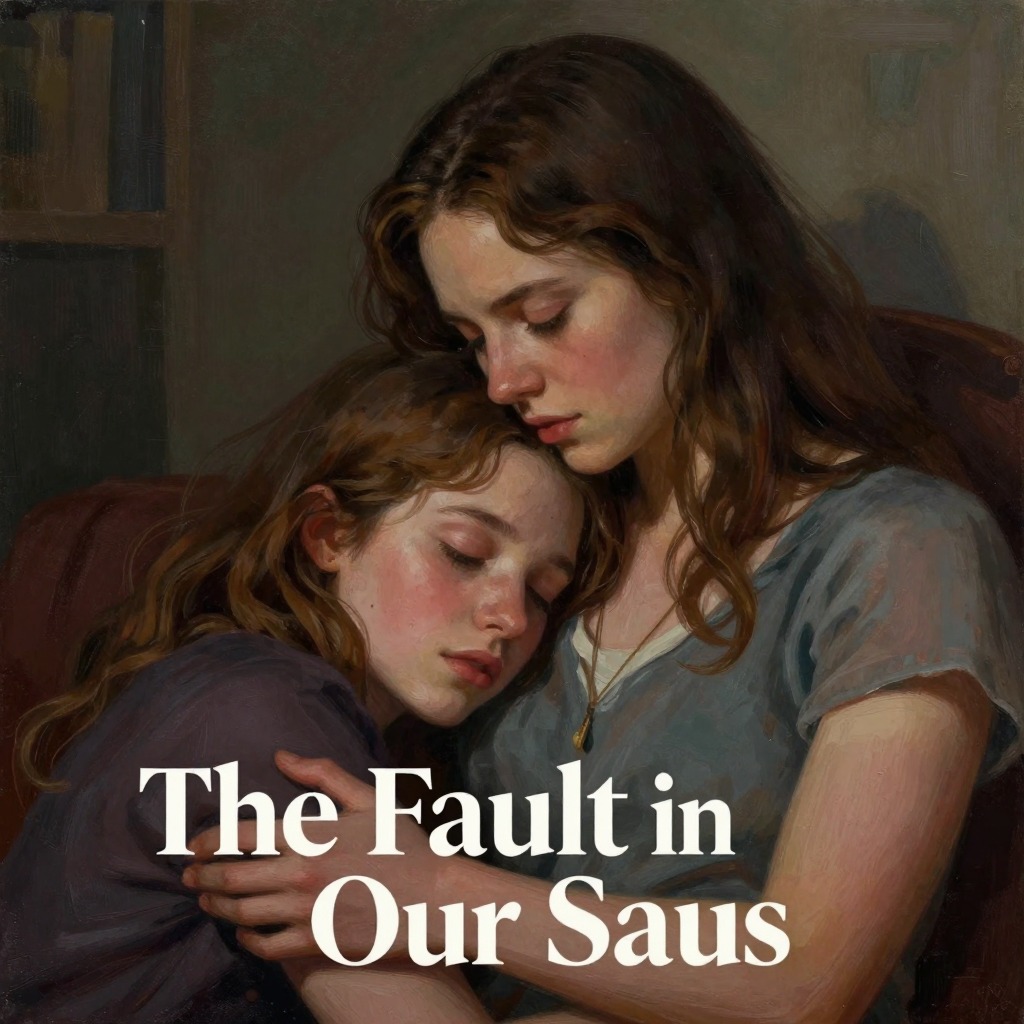
The Fault in Our StarsThe Support Group meets every Wednesday in the basement of a stone-walled Episcopal church shaped like a cross. The chairs are arranged in a circle in the middle of the cross, where the two boards would have met, where the heart of Jesus would have been. The group is led by Patrick, the only person over eighteen in the room, who recounts his own cancer story—how he had cancer in his testicles and survived, but is now divorced, addicted to video games, mostly friendless, and eking out a meager living by exploiting his cancertastic past. The group features a rotating cast of characters in various states of tumor-driven unwellness; the cast rotates because, as Hazel observes, that is a side effect of dying.
Rituals and Structure
The meeting begins with the serenity prayer, followed by introductions: each person states their name, age, diagnosis, and how they are doing today. Hazel, when it is her turn, says she is sixteen, has thyroid cancer originally with a long-settled satellite colony in her lungs, and is doing okay. After introductions, Patrick asks if anyone wants to share, and then begins what Hazel calls the circle jerk of support: everyone talking about fighting and battling and winning and shrinking and scanning. At the end, everyone holds hands and Patrick leads a prayer, listing the names of the dead—a long list that includes Maria, Kade, Joseph, Haley, Abigail, Angelina, Taylor, Gabriel, and many others. The group then recites the mantra "Living our best life today."
Key Participants and Events
The only redeeming facet of Support Group for Hazel is Isaac, a long-faced, skinny guy with straight blond hair swept over one eye, who has eye cancer and communicates with Hazel almost exclusively through sighs. It is at Support Group that Hazel first meets Augustus Waters, who is there at Isaac's request. Augustus introduces himself as a seventeen-year-old with a little touch of osteosarcoma a year and a half ago, and when asked how he is feeling, he says he is grand, on a roller coaster that only goes up. When Patrick asks Augustus to share his fears, Augustus says he fears oblivion, and Hazel responds with a speech about the inevitability of human oblivion, which makes Augustus smile and say, "Goddamn. Aren't you something else." After the meeting, Augustus approaches Hazel, and their relationship begins.
Significance and Thematic Role
The Support Group is a space where the characters confront their mortality and the social isolation of illness. Hazel initially finds it depressing as hell, but it becomes the crucible for her most important relationships. The group's rituals—the prayers, the introductions, the sharing—are both a source of comfort and a reminder of the relentless reality of death. The group also serves as a site for the novel's central themes: the fear of oblivion, the desire for meaning, and the struggle to live fully in the face of certain death. Augustus's prefuneral, held in the same room, transforms the space into a stage for his final act of self-definition, where he asks Hazel and Isaac to deliver eulogies while he is still alive. The Support Group, in its literal and figurative heart, is where the characters learn that pain demands to be felt, and that some infinities are bigger than other infinities.