
The Collision Becomes a Moral Conflict
The ForgivenThis flow traces the conflict between accident and culpability as David’s account, the family’s grief, and Ismael’s testimony reveal different parts of the same night.
increasing Bearing strength in each event
 decreasing
Bearing strength in each eventdecreasingAn Uncertain Moment

Limited Knowledge
The Hennigers encounter two young men displaying fossils in blowing sand. The scene is brief, and the passengers do not have time to establish the boys’ intentions before the car strikes Driss.
Jo tells David to stop, while the car continues forward. The collision is immediately catastrophic, but the precise sequence of movement remains vulnerable to later interpretation.
Accident and Agency
The scene does not erase David’s drinking, speed, or decisions in the hours beforehand. Nor does the collision itself prove that he intended to hit anyone.
The distinction between intent and responsibility becomes central. The question is not only what happened in the instant, but which choices made the instant more likely and what David did afterward.
A Convenient Account
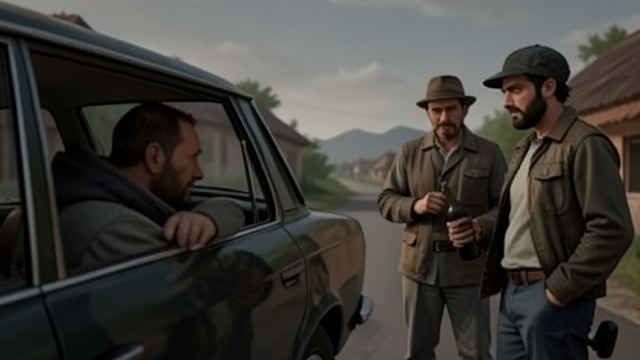
The Driver’s Explanation
David tells Richard and Yassine Benihadd that sand obscured the road and that Driss stepped toward the vehicle. He presents the dead young man as a possible threat and emphasizes the difficulty of seeing.
The explanation contains details consistent with a dark, dusty road, but it also shifts attention away from David’s drinking and his refusal to stop when Jo urged him to.
The Missing Details
Richard notices that David may not be telling everything. The body has no identification, and the circumstances leave room for suspicion even if the collision was accidental.
The account protects David by reducing the event to a sudden mistake. As Jo’s later disclosure and Ismael’s testimony show, the story is not complete.
An Official Resolution
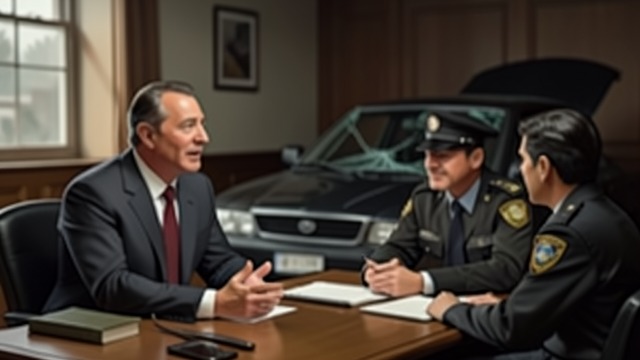
A Case Closed Quickly
Yassine Benihadd questions the Hennigers and eventually says that the death will be recorded as accidental. The police response appears to be brief, and the couple are not detained.
Jo feels relief when the immediate danger of a formal investigation seems to pass. David interprets the outcome as evidence that there is little more to fear.
Resolution Without Knowledge
The administrative conclusion does not establish everything that happened on the road. The identity of the victim is still unclear, and the question of David’s alcohol use is not resolved in the police exchange.
The quick decision gives the guests a practical release but leaves the moral conflict open. A case can be closed before a bereaved family knows the full account.
The Witness’s Account
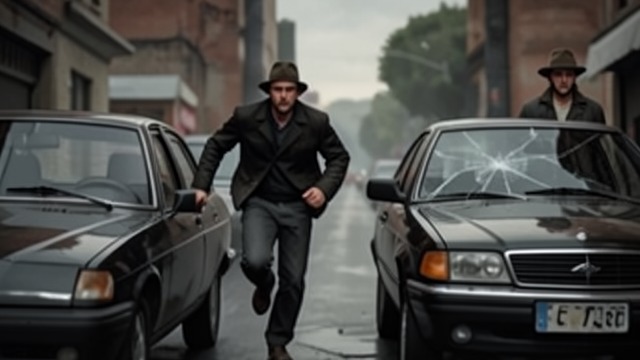
Ismael Fills a Gap
Ismael tells Abdellah that he and Driss intended to stop a passing car and sell or take advantage of the opportunity. He says the Hennigers saw them, and that he ran after the collision.
He also claims that David searched Driss’s pockets and removed the identification. The story gives Abdellah a reason to believe David’s account is not fully truthful.
A Complicated Responsibility
The witness account does not make the collision intentional, and Ismael himself admits to fleeing and participating in a dangerous plan. Several people have contributed to a situation whose consequences no one controls fully.
The revelation sharpens the difference between an accident and a lie. David may not have meant to kill Driss, but his later concealment is a deliberate act that changes the moral stakes.
The Final Ambush
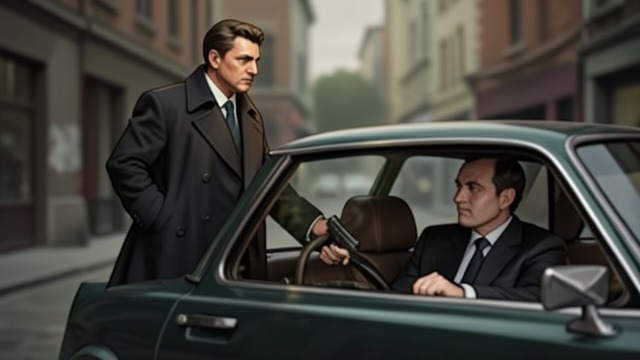
The Road Returns
David and Jo stop near the site of Driss’s death, hoping to pay their respects. Ismael descends from the hill with a fossil and a pistol, reenacting the kind of roadside approach that preceded the first collision.
David recognizes the connection when Ismael moves behind the car. The driver who once failed to stop now faces a deliberate attack by someone carrying his own history of fear and concealment.
Violence Beyond Redress
Ismael kills David, and the narrative leaves Jo at the scene of another sudden catastrophe. The killing does not restore Driss or provide a complete accounting of what happened.
The ending refuses to make justice equivalent to revenge. The unresolved lie and grief have become part of a chain of violence that no official record or private apology could neatly undo.
At the roadside shortly before midnight
The first police questioning at Azna
Late Friday night after the police inspect the car
The night after Driss’s burial
Monday night at the original collision site
