
Privilege Meets Local Grief
The ForgivenThis flow follows the conflict between the wealthy visitors’ control of space and the local community’s demand that Driss’s death be treated as consequential.
increasing Bearing strength in each event
 decreasing
Bearing strength in each eventdecreasingThe Visitors’ Enclave

A Private World
Richard Galloway and Dally Margolis have renovated the old settlement into a luxurious retreat. Guests arrive with imported supplies, hired staff, and expectations that the desert weekend will be shaped around their pleasure.
Local residents know the visitors as wealthy outsiders whose habits and spending bring employment but also appear strange and intrusive. The estate’s hospitality depends on a strong boundary between the party and the surrounding community.
Unequal Access
The hosts can hire workers, arrange transport, and create an insulated environment. The people whose labor and land sustain the retreat have less control over how the visitors use its setting.
That imbalance becomes morally significant once a local young man is killed. The private world will have to respond to a loss it cannot keep outside its gates.
The Body Inside the Estate
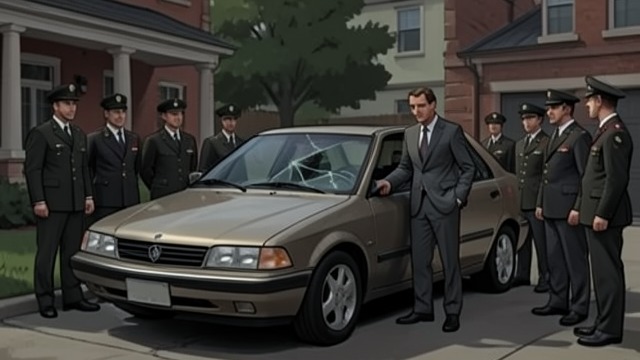
A Death at the Gate
The Hennigers arrive with Driss’s body in the Toyota Camry. The guests are still dining, while staff members and Richard gather around the car and confront the physical evidence of the collision.
Richard seeks to control the immediate response, moving the body to the garage and keeping the party uninformed. The decision protects the gathering’s appearance while placing the dead man temporarily within the household’s authority.
Whose Emergency Counts
For the guests, the collision threatens comfort and reputation. For the staff, it raises questions of justice, burial, and the possibility that a Muslim has been treated as disposable.
The body makes the separation between the estate and the surrounding community impossible to maintain. The hosts can manage a room, but they cannot determine what the death means to Driss’s family.
A Crowd at the Gate
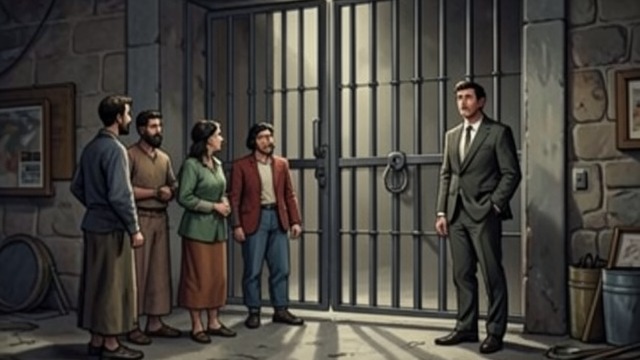
Local Anger Appears
Villagers gather outside the gates after word of Driss’s death spreads. Jo sees them watching the estate and learns from Hamid that they are upset by the events of the night.
The guests experience the gathering as a threat to the party’s calm, while the people outside see a wealthy household whose owners appear to have moved quickly past a local death.
Boundaries Become Visible
Hamid and the staff close and bolt the gates, converting a social boundary into a physical barrier. Jo wants to know what the villagers are angry about, but her questions do not resolve the distance between them.
The scene shows that the estate’s security depends on controlling entry. It also shows that exclusion does not end the relationship between the visitors and the people who live beyond the walls.
Abdellah Crosses the Threshold
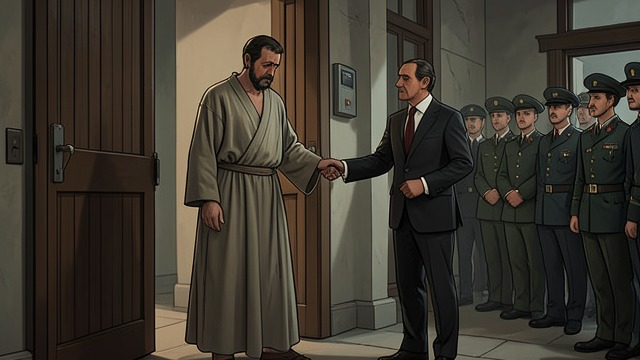
A Bereaved Claimant
Abdellah arrives with Aït Kebbash companions and asks to collect his son. Richard opens the gate despite Hamid’s warning that the men may demand money.
The father’s grief changes how the visitors perceive the encounter. He is not simply a representative of an angry crowd; he is the person who must take Driss home for burial.
Negotiating Without Equality
The family enters the garage, where the staff and the Europeans watch different aspects of the scene. The hosts have resources and property, while the bereaved father has the moral authority of the loss itself.
The confrontation cannot be reduced to a clash between rich foreigners and poor villagers. It reveals how power, grief, custom, and dependence meet at a gate neither side can ignore.
The Roadside Reversal
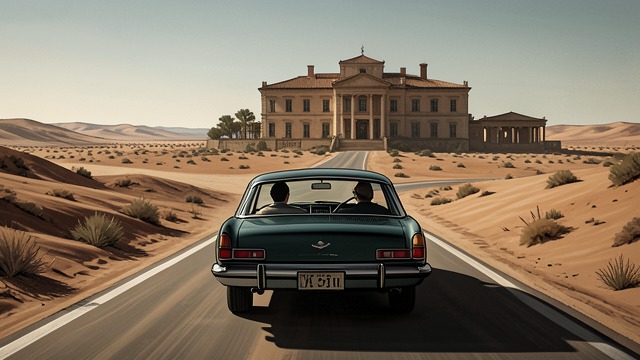
The Estate Behind Them
The Hennigers depart from the party and drive back toward the place where Driss was struck. The hosts and guests are already preparing to put the weekend behind them.
The road draws the couple out of the protected estate and back into the world where the local consequences of the collision remain active. They cannot take the party’s resources with them as a guarantee of safety.
Power Does Not Control the Ending
Ismael’s ambush kills David, showing that money, formal influence, and luxury cannot make the visitors immune to consequences. Yet the violence also does not deliver a simple restoration of justice for the bereaved family.
The final reversal exposes the fragility of the hosts’ confidence. Control over a private enclave does not mean control over the histories that begin outside it.
Before the Hennigers arrive at Azna
After midnight on the first night
The morning after the collision
The afternoon after the villagers gather
The final night after the Hennigers leave Azna
