
Driss and Ismael’s Companionship
The ForgivenThis flow follows how Driss’s experience and ambitions shape Ismael’s admiration, participation, fear, and final action.
increasing Bearing strength in each event
 decreasing
Bearing strength in each eventdecreasingA Childhood Friendship
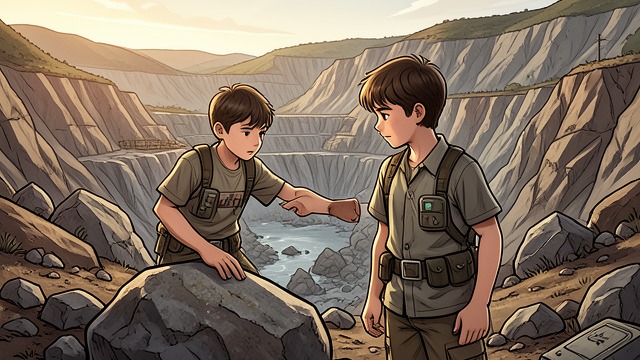
Shared Origins
Driss and Ismael have known one another since they were boys and worked around the same quarry economy. Their familiarity gives Ismael access to stories Driss might not tell a stranger.
The age difference gives Driss a position of authority. Ismael listens while the older boy describes travel, work, and the possibility of escape.
Unequal Admiration
Ismael admires Driss’s apparent experience but also notices that the older boy can be evasive and self-dramatizing. The friendship contains genuine closeness alongside a developing imbalance.
Driss’s ability to hold Ismael’s attention will later help him recruit the younger boy into a dangerous plan. Affection and influence are not separate in their relationship.
Stories of Europe

The Older Boy’s Tales
Driss tells Ismael about crossing into Spain and living among Europeans. He describes both the attractions and disappointments of life abroad, changing the details according to what he wants the younger boy to understand.
Ismael listens with intense attention and sometimes suspects that Driss is exaggerating. The stories nevertheless make a distant world feel imaginable.
A Bond Through Ambition
Their conversations allow Driss to remain important after his return. Ismael’s curiosity supplies an audience, while Driss’s experience gives the younger boy a model for leaving.
The stories carry both intimacy and performance. Driss’s influence depends on Ismael’s trust, but also on the possibility that the older boy is using that trust to strengthen his own authority.
The Invitation to Act

A Plan for Escape
Driss tells Ismael that they can make money and leave for a city. He tells him to shed sentimentality and prove that he can act when a car stops.
Ismael objects that they may be pursued by police, but Driss dismisses the concern. The younger boy insists that he is excited rather than afraid, trying to maintain the standing he has gained.
Friendship Under Pressure
Driss’s confidence pushes Ismael toward a risk he does not fully control. Ismael wants to be a partner and not a frightened follower, even though the plan makes him uneasy.
The relationship shifts from storytelling to complicity. Their shared desire for escape creates a bond, but it also leaves little room for Ismael to refuse without losing face.
The Flight and Its Guilt
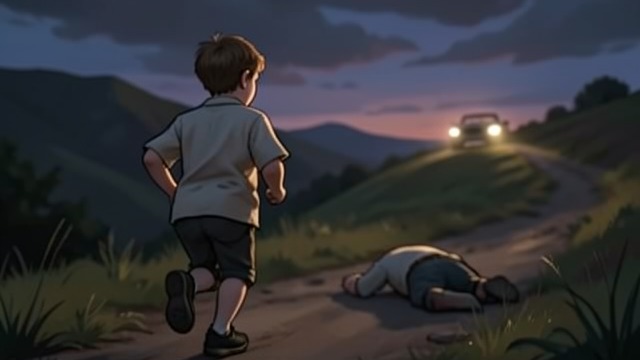
Ismael Runs
After David’s car hits Driss, Ismael flees into the hills. He leaves his friend at the roadside, believing that escape is the only way to protect himself.
He later remembers watching the Hennigers near the body and seeing David take the identification. The observation becomes a burden he carries privately rather than a truth he can easily tell.
Loyalty After Death
Ismael’s fear does not erase his attachment to Driss. The older boy’s death leaves him with an unfinished friendship and a story whose most important facts are known only to him.
When Abdellah questions him, Ismael’s account brings his guilt into the open. His loyalty now has to coexist with his own act of abandonment and his self-protective silence.
The Last Imitation
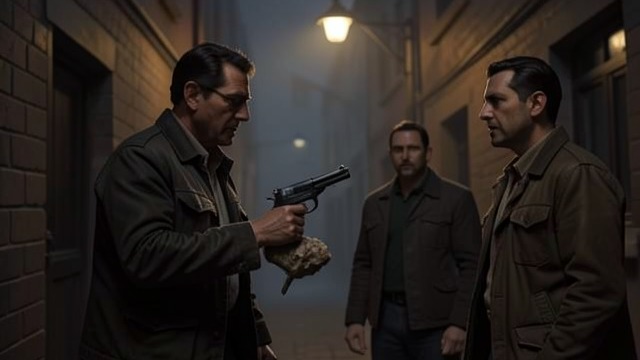
Driss’s Plan Repeated
Ismael waits with a Psychopyge fossil and a pistol, remembering how Driss intended to stop a car. He approaches the Hennigers using the familiar sales gesture that had been part of their earlier plan.
David recognizes that Ismael was present on the night of Driss’s death. Ismael’s memory of the friend who died becomes inseparable from the action he is about to take.
A Bond Turned to Violence
Ismael kills David, completing an act that is both linked to Driss and distinct from the original collision. The younger boy is no longer merely following Driss’s instructions; he acts for himself.
The companionship ends not in shared escape but in a violent repetition of the roadside encounter. Driss’s influence persists, but it cannot determine whether Ismael’s final choice is loyalty, revenge, or something else.
Before Driss leaves for Europe
After Driss returns to the desert
The evening before the fatal collision
Immediately after the collision
Monday night at the roadside
