
The Visitors and the People They Other
The ForgivenThis flow traces reciprocal othering as wealthy foreign guests and Moroccan characters interpret one another through inherited assumptions and unequal power.
increasing Bearing strength in each event
 decreasing
Bearing strength in each eventdecreasingForeigners as Visitors

A Community Names the Outsiders
Residents describe the wealthy foreigners at Azna as visitors whose habits appear strange and whose eventual departure is expected. Their money brings work and wages, but their behavior also makes them seem distant from local norms.
The guests are observed through gossip about their drinking, sleeping, dress, and parties. Their own sense of themselves as adventurous outsiders is not the only account of who they are.
Mutual Distance
The term “visitor” carries both economic value and social separation. The foreigners can inhabit a restored settlement without becoming part of the community that surrounds it.
The novel presents othering as reciprocal but not equal in power. The visitors possess wealth and mobility, while local residents often bear the material and social consequences of the visitors’ choices.
Jo Under the Gaze
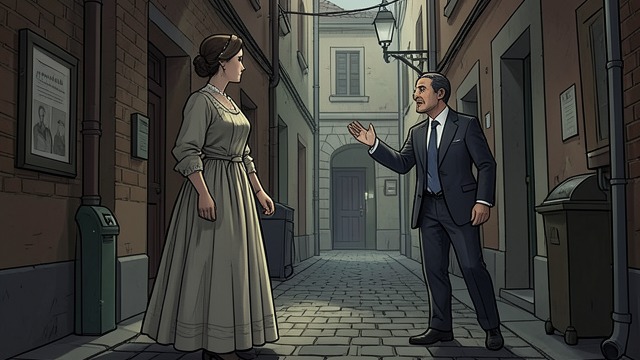
A Woman Seen as Foreign
Jo feels watched in Chefchaouen and interprets the men’s attention as a form of hostility and restriction. David gives her a simplified explanation of how Moroccan men treat women, while she challenges his certainty.
Her discomfort is real, but the conversation also shows how quickly both spouses convert limited observations into broad judgments about a culture.
A Disputed Interpretation
Jo resists David’s claim to know what the people around them think. David uses her discomfort to reinforce his own account of local repression, even as he dismisses her criticism of that account.
The scene shows othering operating inside the marriage as well as between travelers and locals. Each character’s certainty can obscure the complexity of the people being observed.
The Roadside Dehumanization
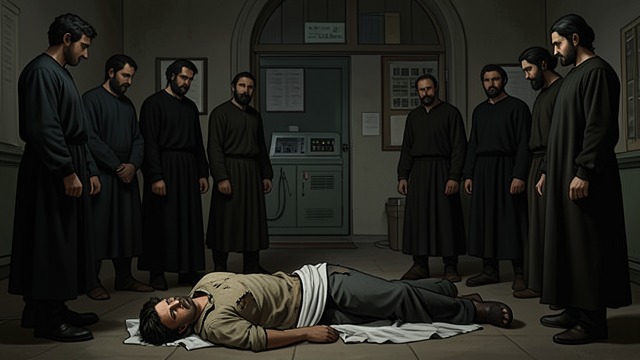
A Death Becomes a Type
After the collision, some staff members say that the foreigners treat Moroccans like flies. Their words express a fear that the visitors can move through local lives without recognizing their value.
The accusation grows as rumors circulate about Driss’s injuries and the police response. The staff interpret the foreigners’ continued comfort as evidence of indifference.
A Charged Image
The image of a person treated like a fly describes dehumanization, but it also risks reducing the visitors to a single moral type. The novel lets the staff’s anger make sense without presenting every rumor as verified fact.
The image matters because it converts a hidden social hierarchy into an everyday sensation. The dead man’s apparent disposability becomes the measure by which the guests are judged.
David’s Colonial Reflex
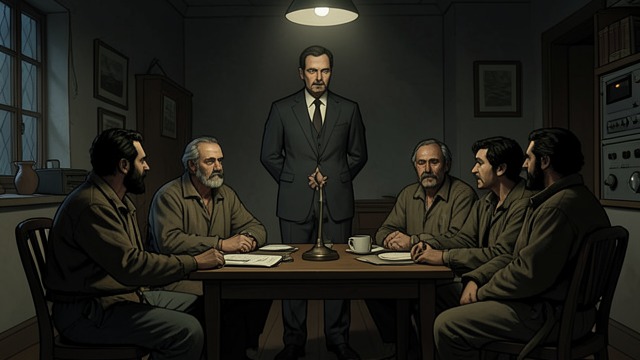
A Defensive Worldview
When asked to pay or cooperate, David begins thinking in racial and colonial terms. He imagines that poor Moroccans are naturally grasping and that wealthy Westerners are being exploited by people who resent them.
His thoughts reveal how quickly fear makes him reach for inherited hierarchies. He may describe himself as tolerant, but his assumptions become harsher when he feels threatened.
Power Recast as Victimhood
David interprets his own wealth as a reason that others might target him, while overlooking how money and influence have already protected him. His language turns a bereaved family into a potential extortion threat.
The novel exposes the self-serving character of this reversal. A person can feel endangered and still possess advantages that shape the encounter more decisively than his fear allows him to admit.
Anouar’s Farewell

A Shared Regard
David and Anouar travel together after Abdellah releases the Englishman. Anouar tells David that he plans to emigrate to France because life in Tafal’aalt offers few prospects.
David has begun to see Anouar as an individual rather than an interchangeable local guide. Anouar, in turn, calls David tolerant, though neither man fully understands the other’s world.
A Small Crossing of Difference
David gives Anouar the money he had carried to the burial, a gesture that may help with the journey but does not erase the unequal conditions between them. Their farewell includes gratitude and uncertainty.
The exchange complicates the novel’s rigid categories of foreigner and local. Recognition is possible, but it remains partial and does not undo the larger structures that shape their lives.
Before the party during local talk about Azna
Friday evening in Chefchaouen
Saturday morning among the staff at Azna
Saturday night before David meets Abdellah
Monday morning as David travels back to Azna
