
Fate and the Limits of Choice
The ForgivenThis flow follows the novel’s recurring question of whether choices, accidents, and remembered possibilities can be separated from the idea of fate.
increasing Bearing strength in each event
 decreasing
Bearing strength in each eventdecreasingThe Map and the Road
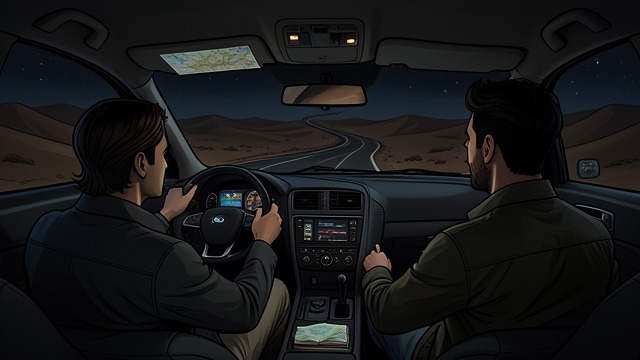
Trusting a Route
Jo follows the map while wondering whether its printed lines correspond to the country around them. David insists on continuing even when the direction toward Tafnet is uncertain.
The map represents a promise that the travelers can plan their way through an unfamiliar landscape. Their dependence on it becomes fragile as darkness and sand make the road difficult to read.
Choice Under Uncertainty
The couple are not able to know exactly what will happen, but they do make choices about when to stop and how to drive. The uncertainty of the route does not erase their agency.
The scene introduces the novel’s central tension between chance and responsibility. Events may be unpredictable, yet the way people respond to uncertainty still matters.
An Impact Too Quick to Think
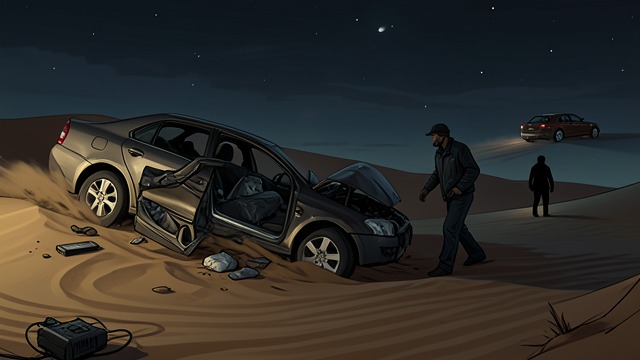
A Sudden Event
The Hennigers see Driss and Ismael near the road, and the collision occurs before anyone can make sense of the encounter. Jo experiences the impact as a moment in which the future breaks open.
The speed of the event encourages the language of fate: the car, the men, the sand, and the dark seem to converge beyond deliberate control.
What Follows the Moment
The collision does not decide every subsequent action. David and Jo choose whether to speak, what to disclose, and how to treat the people whose lives have been affected.
The novel distinguishes between the unpredictability of an event and the choices made after it. The first may be sudden; the second continues across hours and days.
The Road That Made Driss
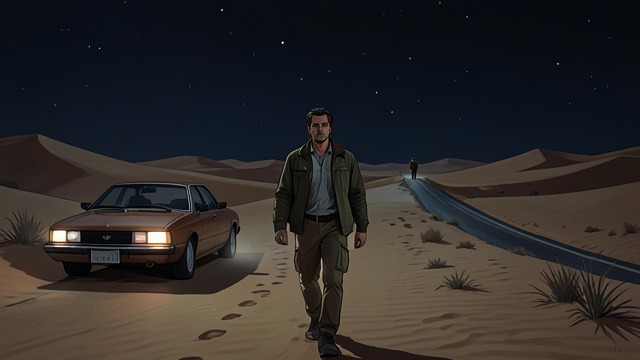
Improvised Departure
Driss leaves the desert and reaches Spain without papers, making decisions as opportunities appear. He tells Ismael that he had no real plan and improvised his way across borders.
His account presents freedom as movement: a person can cross a sea, walk through a marina, and find an unexpected host. Yet every step depends on circumstances and on other people’s choices.
Chance and Agency Together
Driss’s journey is neither pure luck nor complete control. He takes risks, accepts help, and later betrays the people who sheltered him.
His story complicates any simple claim that fate determines a life. Circumstances constrain him, but his actions still shape the consequences others endure.
The Father’s Choice
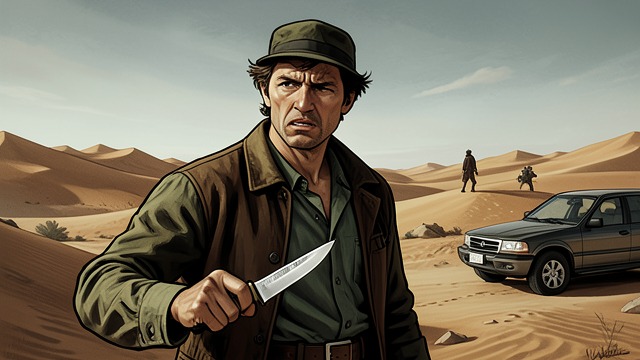
A Knife in Hand
Abdellah confronts David outside Tafal’aalt and has the opportunity to kill him. He has considered revenge, yet in the moment he lowers the knife and orders Anouar to take David away.
The decision feels to Abdellah like an exercise of control over a violent impulse. He is not certain afterward that he made the right choice, and his grief continues to alter his judgment.
Fate Reconsidered
Abdellah’s restraint makes David’s later fate more painful, not less. The father spared the driver, but he could not control what Ismael would do on the road.
The episode shows how one person’s choice cannot govern the full chain of events. Mercy can be real and still fail to prevent subsequent violence.
The Last Choice
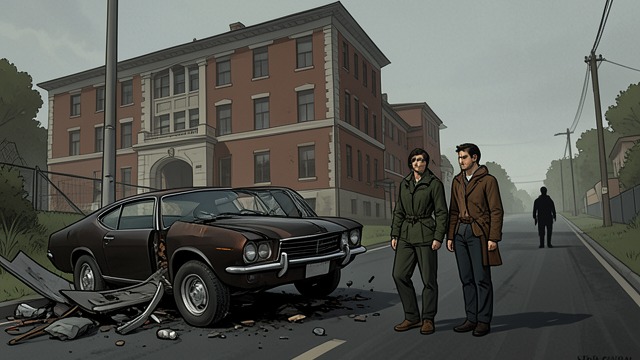
A Moment of Recognition
Jo asks David to stop at the collision site, and he slows the car. For a brief moment, they approach the place with respect instead of speed and evasion.
David may have changed during the journey to Tafal’aalt, but his earlier choices remain part of what brings him back to the road. Ismael waits there with knowledge the couple do not possess.
Freedom and Its Limits
Ismael kills David before the Hennigers can complete their gesture of remembrance. David’s recognition and regret arrive too late to alter the outcome.
The ending does not prove that choice is meaningless. It shows instead that choices occur within chains of action, chance, and other people’s agency that no individual can fully command.
Friday night as the Hennigers search for Azna
Moments before midnight at the collision site
Years before the collision during Driss’s migration
At first light after Abdellah confronts David
Monday night after Jo asks David to stop
