
The Fossil Trade and Its Costs
The ForgivenThis flow follows fossils from children’s labor and local exchange into wealthy visitors’ collections, where the same objects carry radically different meanings.
increasing Bearing strength in each event
 decreasing
Bearing strength in each eventdecreasingWork on the Mountain
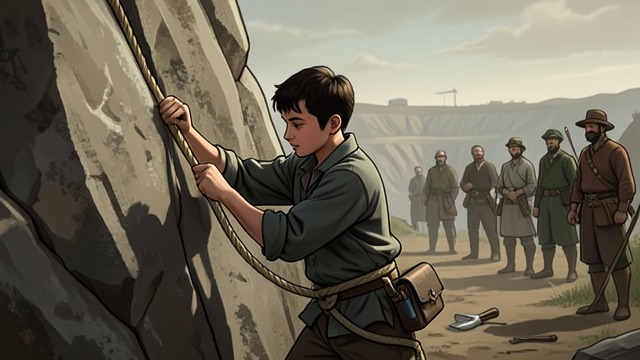
Extraction Begins Young
Driss remembers being taken to work on the cliffs at a young age, tied to a rope and expected to chisel fossils from difficult rock. His childhood labor belongs to the household economy of the remote desert villages.
The work produces objects that can travel much farther than the people who extract them. The value is distributed unevenly among workers, traders, and distant buyers.
The Landscape as Livelihood
The quarries provide income in a region where other forms of work are scarce. Their activity is both necessary for survival and a source of hardship that keeps families tied to dangerous routines.
The fossil trade is therefore not merely picturesque local craft. It links the beauty of a collected specimen to years of labor and to limited alternatives for the people who produce it.
Objects for Visitors
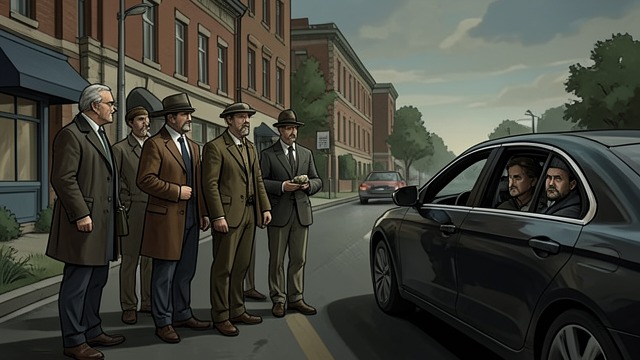
Selling Along the Road
The Hennigers have seen fossil sellers along their route before they reach the site of the collision. The roadside encounter later confirms that the trade reaches beyond shops and formal markets.
The objects are small enough to display as curiosities but depend on difficult extraction and uncertain sales. For the sellers, a purchase can matter to a household; for tourists, it may be an incidental souvenir.
Unequal Attention
David initially sees the roadside men through fear and impatience rather than as people attempting to sell their work. His assumptions contribute to his refusal to stop, although the narrative does not reduce the collision to a single motive.
The fossils expose a difference in how the two groups value the encounter. One side sees a possible sale and a chance at income; the other sees an interruption and a possible threat.
The Hotel Market
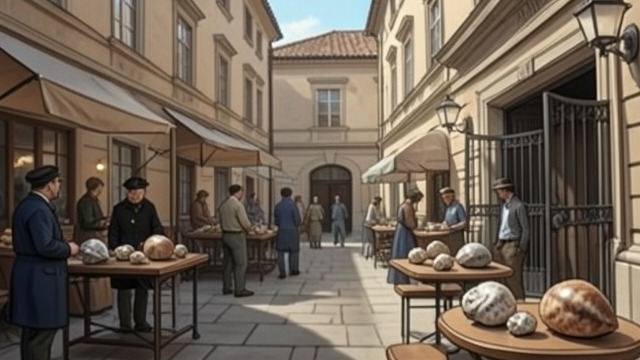
A Trade in Public View
At the hotel in Erfoud, sellers move among tables offering polished ammonites and other specimens to visitors. The market operates as an everyday network of dealers, buyers, and intermediaries.
The hotel manager describes a single fossil as capable of supporting a child for a month. His remark makes visible the economic stakes concealed by the objects’ decorative appeal.
A Commodity’s Afterlife
David sees the fossil sellers as insistent, yet he also begins to understand that a specimen may feed a family in a way its eventual display abroad will not. The objects gather both local necessity and wealthy buyers’ desire.
The hotel scene places the road collision within an existing economy. Driss’s presence with fossils was not an implausible detail; it was part of the trade that structured his life.
The Elvis Revealed
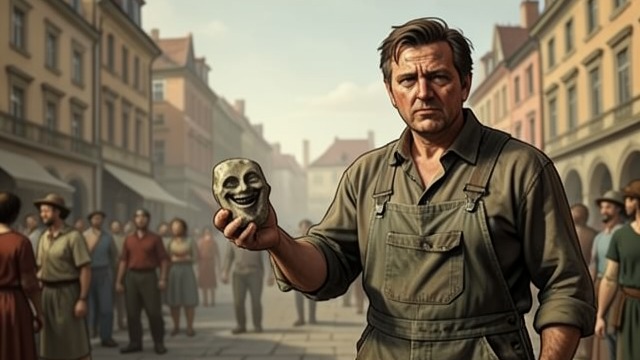
A Stolen Specimen
Abdellah shows David the rare fossil called the Elvis, which Driss had taken from his father. He explains that the young man hoped to sell it and use the money to escape the limits of quarry life.
The fossil’s playful name and commercial value contrast with Abdellah’s grief. He imagines that a buyer might have paid Driss and allowed him to continue his journey rather than encounter the Hennigers’ car.
A Counterfactual Sale
Abdellah does not claim that selling the fossil would have solved Driss’s life. He nevertheless sees the missed transaction as a lost possibility: a small piece of stone might have offered his son a way out.
The Elvis connects the collision to desire, poverty, and chance. Its value cannot restore Driss, but it gives his father a concrete way to describe the fragile hopes that surrounded him.
A Fossil Becomes a Future
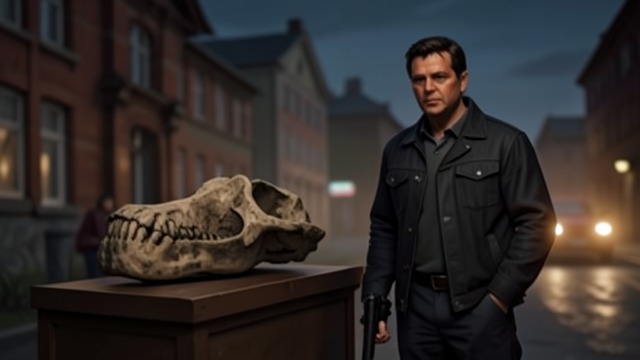
A Familiar Lure
Ismael waits beside the road with a Psychopyge fossil, repeating the strategy he and Driss had planned: use an object for sale to draw a car close. The specimen once meant possible income and escape.
Now it becomes part of an armed confrontation. Ismael uses the familiar roadside display to approach the Hennigers before revealing the pistol.
The Trade’s Dark Echo
The fossil itself does not cause the killing, but its role in the encounter recalls the scheme that placed Driss and Ismael in the road. An object of geological time becomes a brief human lure.
The final scene returns the trade to the site of its most violent consequence. The fossil remains saleable while the lives connected to it are irreversibly changed.
Years before the collision during Driss’s childhood
Friday during the Hennigers’ drive toward Azna
Just before dawn at the Hotel Tafilalet
The night David speaks privately with Abdellah
Before Ismael’s final roadside ambush
