
David’s Exposure and Change
The ForgivenThis flow traces how David’s habitual defensiveness is exposed by the collision, the desert journey, and the truth he still refuses to tell.
increasing Bearing strength in each event
 decreasing
Bearing strength in each eventdecreasingThe Familiar Defiance
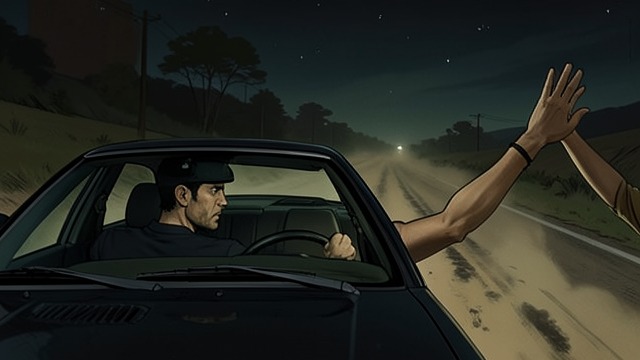
Pleasure Against Advice
David drives after drinking and repeatedly dismisses Jo’s objections about the late hour and the road. He sees himself as the person who must choose the route, while recasting her concerns as needless restraint.
His impatience is not presented as wholly new: it grows from habits already embedded in the marriage. He feels challenged by Jo’s caution and responds by pressing forward.
A Self-Protective Story
David tends to believe that he is more competent and less vulnerable than other people think. He treats alcohol as manageable and his decisions as unlikely to cause serious harm.
That confidence narrows his ability to recognize warning signs. When a crisis occurs, he will initially defend himself before he can meaningfully consider the person who has been injured.
Panic at Azna
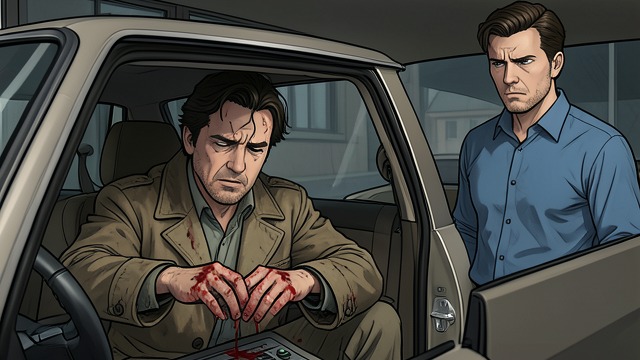
A Shaken Arrival
David arrives at Azna covered in dust and blood, unable to stop trembling. He insists that Driss stepped into the road and tells Richard that he feared a carjacking.
Richard doubts that David has told him everything, particularly because of the alcohol and the unclear circumstances. David responds with defensiveness and shame mixed together.
The Habit of Denial
When urged to explain the event honestly, David gives an account that shifts attention toward what he feared the victim might do. He is not simply inventing a story; he is using an incomplete account to protect his view of himself.
The night begins a confrontation between his claim of innocence and his awareness that his choices mattered. His future actions will turn on whether he can endure that discomfort without retreating into blame.
A Mirror in the Desert
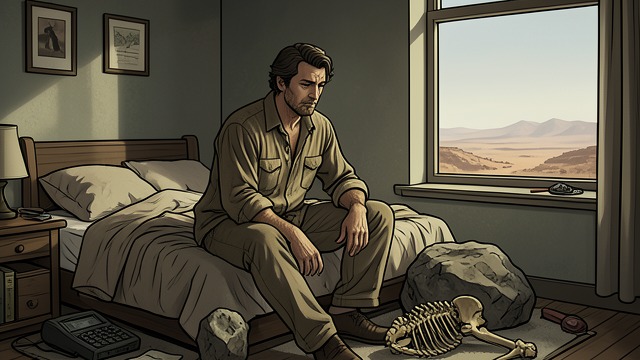
Error and Consequence
Alone in Driss’s room, David reflects on the medical lawsuit he lost after missing a patient’s tumor. He recognizes a possible pattern of mistakes and wonders whether his own unconscious habits have been helping to produce them.
The thought does not resolve his guilt over the collision. Instead, he asks whether accidents are entirely separate from the small neglects and decisions that precede them.
Intimacy with Another Life
Driss’s room makes the abstract discussion physical: a mattress, personal objects, and fossils mark the life that David’s driving ended. David must confront a young man’s ordinary presence rather than the stereotype of an unknown roadside seller.
The scene gives David a chance to reflect, but not yet to tell the truth about taking the identification. His growing self-awareness remains incomplete while he continues to protect himself through omission.
Truth Withheld
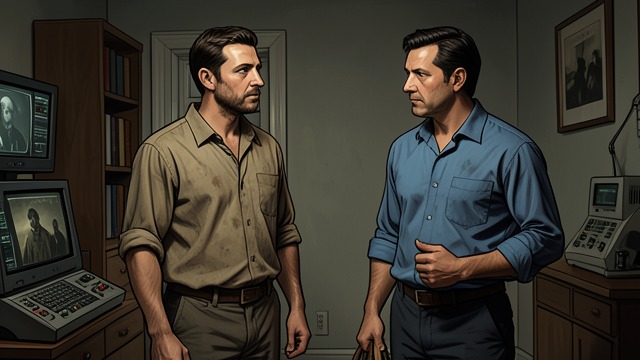
A Direct Question
Abdellah asks whether Driss was alone when the car struck him. David answers automatically that he saw no one else, although he knows that Ismael had been there.
The father has asked for the truth as a condition of how he will judge David. The lie is therefore more than a detail withheld from the police; it is a deliberate answer to a personal moral question.
The Limit of Change
Abdellah nevertheless allows David to leave. David experiences this as forgiveness, but the reader knows that the release follows an incomplete account.
David has endured danger and gained a less dismissive view of the family, yet his defining habit of self-protection survives. His transformation is real but cannot be mistaken for full honesty or moral repair.
An Uneasy Gift
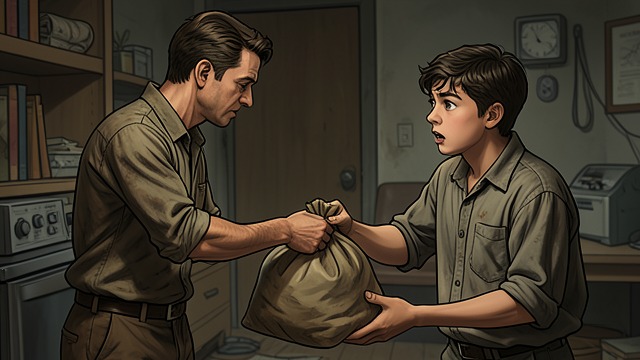
Giving Away the Money
David gives Anouar the two thousand euros he had taken to Tafal’aalt. He says the money is a gift and asks Anouar to wait until they are away before opening the bag.
The gesture reflects David’s wish to turn his ordeal into something that might help another person. Anouar is surprised and does not immediately know how to receive the offer.
Relief and Resentment
David feels he has earned small comforts and imagines that his journey has made him stronger. At the same time, he remains bitter toward the party guests and insists to himself that the collision was not really his fault.
The gift does not settle the contradictions in David’s character. His generosity and his denial coexist, just as his wish to be forgiven coexists with his unwillingness to supply Abdellah with the whole truth.
Friday during the drive toward Azna
The first night after Driss is struck
Sunday afternoon in Driss’s room
The night Abdellah asks about Driss’s companion
Monday morning on the return drive to Azna
