David Henniger’s alcoholism
The ForgivenDavid Henniger’s alcoholism is more than a private weakness: it helps cause Driss’s death and remains visible in the aftermath, even when David is trying to leave Morocco behind. The narrative sets his craving for Scotch against the harm drinking has done, making dependence at once bodily, moral, and social.
Dependence and bodily signs
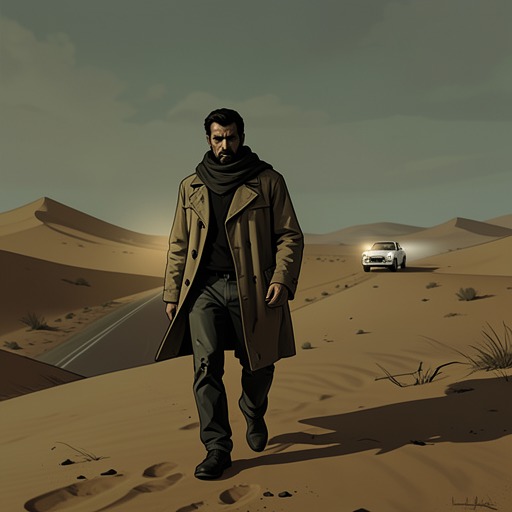
After many hours without a drink, David wakes in Driss’s dusty room and finds that his mouth craves a stiff Scotch rather than water. The craving is striking beside his surprise that he has gone so long without a drink; he has slept and feels physically refreshed, but alcohol remains the first thing he wants. His brief escape into the moonlit garden does not resolve that need. The scene instead places his dependence alongside the memory of Driss, whose few belongings remain in the room and whose labor in the caves ended in a grave behind the gardens.
Later, David’s hand is visibly shaking. Jo notices his distress, and Richard also sees the tremor as David prepares to leave. The bodily sign cuts through David’s attempt to present himself as merely unlucky: his hand makes the addiction apparent to the people around him, even when he does not explain it himself.
The collision and shared responsibility
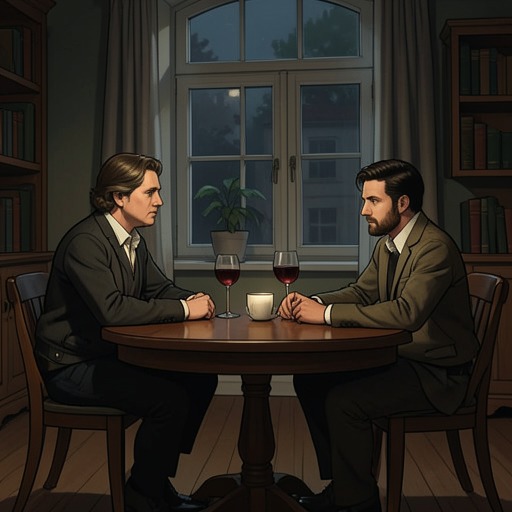
Jo identifies alcohol as part of the cause of Driss’s death. She acknowledges that she and David are both drinkers, while distinguishing his more severe drinking, and says that the drink made him drive badly. In her account, Driss had done nothing wrong beyond stepping into the road to make them slow down; David was drunk and afraid of the local people. She calls the fatal collision entirely their fault, while also anticipating that David would argue it made no difference now. Her confession does not undo the death, but it refuses to let the couple’s responsibility disappear into the language of accident.
The admission also complicates the couple’s shared guilt. Jo includes herself as a drinker and as one of the people involved, yet describes David’s intoxication as the immediate danger behind the driving. Her disclosure to Richard is an attempt to get the responsibility off her chest, not a claim that the past can be changed.
Other people’s judgments
David’s drinking shapes how others interpret his response to the crisis. He describes the country as jinxed and says that nothing like this has happened to him and Jo before; his hand is shaking as he speaks. Richard rejects the idea that Morocco itself is cursed. To him, the problem is David’s drinking, and he answers with a cutting reminder of it: David’s car has been loaded with a picnic hamper and nonalcoholic cider. The practical detail turns the departure into an uncomfortable acknowledgment that alcohol remains relevant even as David leaves.
At the railing, David’s humiliation and desire for revenge coexist with renewed physical alertness, but the shaking hand remains in view. Hamid, too, sees the tremor. The contrast between David’s recovered spring and the betraying movement of his hand suggests that apparent readiness is not the same as recovery. Richard’s judgment is deliberately sharp, but the novel has already supplied the evidence behind it in Jo’s confession and David’s own craving.
Consequences and significance
Alcoholism links David’s private dependence to a public, irreversible consequence: Driss is dead, and Jo recognizes the role drinking played in the collision. The later tremor carries that history into the departure scene, where David’s attempt to leave is accompanied by nonalcoholic cider and Richard’s rebuke. The available scenes show no cure or settled change. Instead, they leave David caught between bodily signs of addiction, the guilt attached to Driss’s death, and the other characters’ unwillingness to accept his account of himself as simply a victim of circumstance.