France
The ForgivenFrance is the destination Driss imagines as an escape from the work and limited prospects of Morocco, but his account gradually dismantles that promise. His journey there is shaped by undocumented status, guarded movement, and improvised transport; his life in Paris brings neither secure employment nor belonging. In the story, France is not simply a place on a map but the test of whether leaving home can deliver the future Driss hopes for.
France as an imagined destination
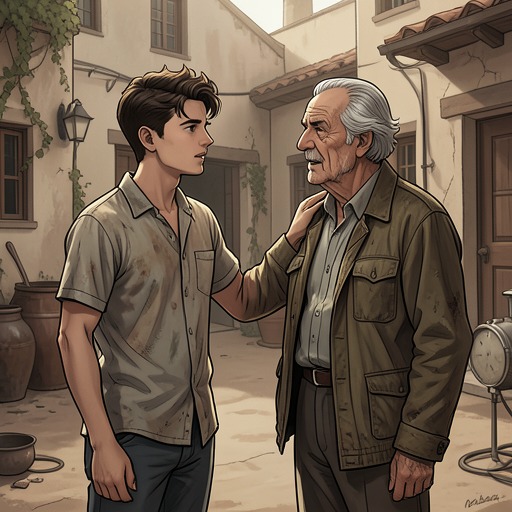
Before Ismael knows the details of Driss’s migration, France already represents a world beyond the quarry. Driss has argued with his father and traveled through Midelt, Azrou, and Fez, where he found no work beyond the tanneries. He asks Ismael whether he has ever gone farther than Midelt, treating the younger boy’s limited experience as evidence of how little he has seen. For Driss, movement itself seems to promise a way out of a life spent preparing fossils, even though he admits that he has no clear plan.
The imagined West is assembled from stories and pictures as much as firsthand knowledge. Ismael recalls images of Sweden that Driss’s father kept on the walls of his house: a green, wet country, protected by clouds. Driss corrects the fantasy by saying that the clouds make it gray. The exchange captures a recurring uncertainty in his thinking: a place can look like an answer from afar and become something else in experience. He insists that the desert is worth more than another country’s comforts, but then challenges the claim himself, pointing out that he has already left and discovered that the foreign destination is not what people at home imagine. His warning to Ismael is founded on experience, but it also leaves open how much of that experience he is willing to disclose.
Routes, borders, and restricted movement
Driss’s migration is not a direct passage from Morocco to France. He recounts jumping from a ship and swimming ashore near Sotogrande, then walking unnoticed through the marina and onward toward San Martín. Angela Bloodworth and Roger Bloodworth take him in and offer him work as a gardener, with board, lodging, and three hundred euros a month. Their offer provides shelter and income, but it does not give him free movement: they tell him to remain on their property because Spanish police look for undocumented workers. He spends weeks pruning fruit trees and hedges, hidden beneath a straw hat, and refuses the wine they offer.
The arrangement makes the difference between being sheltered and being free particularly sharp. Driss can telephone his family, but the prospect of calling home does not resolve his isolation. He resents the Bloodworths’ pity and the way their kindness makes him feel treated as a dependent rather than an adult. When winter comes, tourists disappear, part of the house is boarded up, and Driss becomes increasingly impatient. The Bloodworths seem lonely and want him to stay; he, by contrast, thinks about reaching Paris. He asks Roger about the roads through the mountains into France, knowing they are expensive, and considers hitching a ride with Moroccans who use them. His intended route therefore depends not on the open highways as an abstract promise, but on finding someone able to carry him along them.
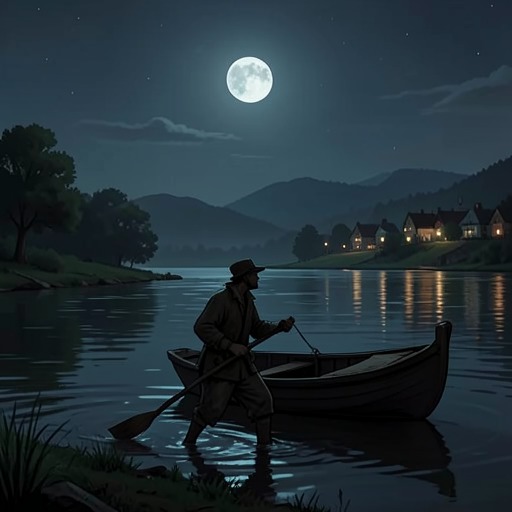
Driss eventually describes another part of the journey: a family from Essaouira drives him through the night and into France, stopping at motorway service stations along the way. He and the father take turns at the wheel. Near Perpignan, Driss remembers cattle standing in morning mist and concludes that the crossing was not as difficult as he had expected. Yet reaching France is only a change of location; it does not settle the question of whether he can make a life there.
Paris and the failure of the promise
Driss’s account of Paris is specific about where he lives and walks. He spends weeks on the rue du Faubourg-Saint-Denis, behind the Gare du Nord, in an Indian neighborhood of tandoori restaurants and sari shops. He goes to a hammam on the rue d’Aboukir and spends long nights alone at the Brady cinema on Sébastopol. He searches for work through newspaper advertisements but finds no job, not even as a janitor or supermarket stocker, occupations others had presented as attainable. The small economies of daily life do not make the city affordable: even buying a sandwich, he tells Ismael, costs as much as a week of tagines at home.
Walking gives his account its map of Paris and its measure of disappointment. He crosses the railway bridge between the Indian and North African neighborhoods, then passes along the boulevard de la Chapelle, under the Métro, toward Barbès and the Tati store, where he buys cheap shirts. The rue de la Goutte-d’Or reminds him of a Moroccan town; the rue de la Charbonnière gathers Muslim restaurants and conversation. These familiar points do not make the city his own. As he walks farther through the surrounding streets, he concludes that life is elsewhere and that Paris is not a place where he can settle. His loneliness and unsuccessful search for work turn the city from an imagined destination into an environment he cannot enter on equal terms.
Return to the desert and the meaning of France
Driss tells Ismael that he does not describe everything about Paris because the place is better left partly mysterious. He emphasizes its failure, but withholds details, and Ismael suspects that Driss’s stories of migration may be exaggerated. The account is thus both testimony and performance: Driss has traveled farther than Ismael, yet controls what the younger boy can know about that experience. His omissions do not erase the concrete evidence of his disappointment—the unsuccessful job search, the costly food, the lonely walks, and the sense that he is drifting rather than establishing a life.
In the account of his return to Morocco, Driss is again working at the Mirzan quarry, lodging in Erfoud and preparing fossils as he had before. That return does not make his time in France meaningless, but it exposes the limits of migration as an imagined solution. France offered roads, cities, and the possibility of leaving; it did not provide the work or independence he sought. His experience also complicates his pride in the desert. He has criticized those who never travel, but his own journey teaches him that departure alone cannot guarantee a future elsewhere. For Ismael, France consequently arrives as both a real place Driss has seen and a warning against treating distant countries as ready-made answers.