Guilt, culpability, and self-forgiveness
The ForgivenGuilt, culpability, and self-forgiveness are defined by the unresolved aftermath of Driss’s death. Jo acknowledges that she and David were responsible for the collision, while Abdellah’s grief makes forgiveness impossible and David comes to believe he no longer needs it. Their incompatible responses expose the distance between admitting fault, being forgiven by others, and absolving oneself.
The collision and shared responsibility
Jo links the collision to the couple’s drinking and to David’s impaired driving. She says Driss had done nothing wrong beyond stepping into the road and trying to make them slow down, and accepts that the event was entirely their fault. Her account makes culpability specific: Driss was not responsible for the danger that killed him, and the couple’s conduct—not an abstract misfortune—caused his death.
Jo also recognizes that David was especially frightened of the local people and had been heavily intoxicated. She tells her confidant because she believes he will not report them to the police, while acknowledging that disclosure may no longer change anything. Her confession therefore does not erase the consequences or promise legal accountability; it is an attempt to speak plainly about responsibility she has carried.
Confession and the need for forgiveness
Jo’s admission is followed by a changed understanding of her own guilt. She says she no longer feels guilty and does not need anyone’s forgiveness. The movement is not from innocence to exoneration: she has already named the couple’s fault. Instead, the scene distinguishes owning responsibility from remaining dependent on another person’s pardon. Her confidence is presented as difficult to believe, even to herself, and marks a change in how she intends to live with the past.
Abdellah’s grief and refusal to forgive
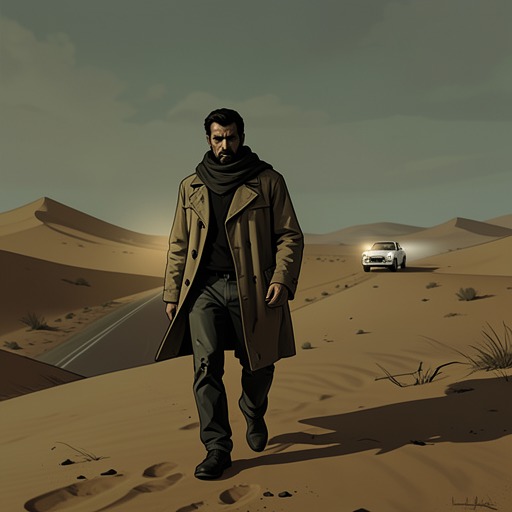
Abdellah’s response is different. During the night, he regrets sparing David, though his anger does not rest on certainty that David was guilty. He cannot forgive him for Driss’s death, and he thinks that failing to punish the unbeliever has left Driss’s life and death without redress. At the grave, however, Abdellah recognizes that his desire for vengeance was bound up with a deeper grief: he had never truly known his son.
That grief cannot be resolved by assigning blame. Abdellah recalls Driss’s private habits and remembered details, yet understands that his son’s past remains inaccessible to him. The collision has made that distance permanent. His inability to forgive David is thus joined to bereavement and to the loss of any chance to understand Driss, not simply to a settled judgment about the driver’s guilt.
Self-forgiveness and its limits
At the end, Ismael recognizes David as the man who buried Driss’s identification and approaches the Hennigers. David understands the reason for Ismael’s hostility, but the narration makes clear that David has already forgiven himself; it never occurs to him to ask why Abdellah has not forgiven him. His private absolution therefore coexists with another person’s grief and anger rather than settling them.
David tries to express remorse in the final moment but cannot form the words. The ending gives self-forgiveness no power to undo the collision, restore Driss, or secure reconciliation with those who remain. Across Jo, Abdellah, and David, the concept remains divided: confession can acknowledge culpability, forgiveness can be refused or relinquished, and neither response can make the loss reversible.