Ismael
The ForgivenIsmael is a young quarry worker whose friendship with Driss becomes the route from a life of repetitive labor toward an attempted escape—and, after Driss’s death, toward violence. First the eager listener to Driss’s stories of travel, he becomes his accomplice in a plan to rob passing motorists; later, guarding the secret of that plan, Ismael ambushes David Henniger and Jo Henniger on the road. His arc binds the novel’s account of constrained ambition to its grim cycle of concealment and retaliation.
Identity and Life at the Quarry
Ismael is younger than Driss and, like him, has worked in fossil preparation since childhood. He sees Driss at work near Erfoud’s telecommunications tower, where Driss chips meticulously at black-market Tridents, his head covered against the sun. Ismael watches him return from France thinner, irritable, badly dressed, and apparently disappointed by his time abroad. Driss’s changed manner seems to confirm Ismael’s belief that such transformations happen among unbelievers, but their shared past makes him curious rather than distant: they had grown up together and started at the quarry together.
The quarry is both Ismael’s workplace and the limit against which he measures his hopes. When Driss tells him he has never left the local area, Ismael answers that money is the obstacle. His ambition is real, but his question—how anyone can live without money—makes clear how little freedom he believes he has. The fossil trade offers one narrow prospect of movement, and the prospect of city life becomes more compelling when Driss presents departure as a goal they might pursue together.
Driss’s Confidant and Audience
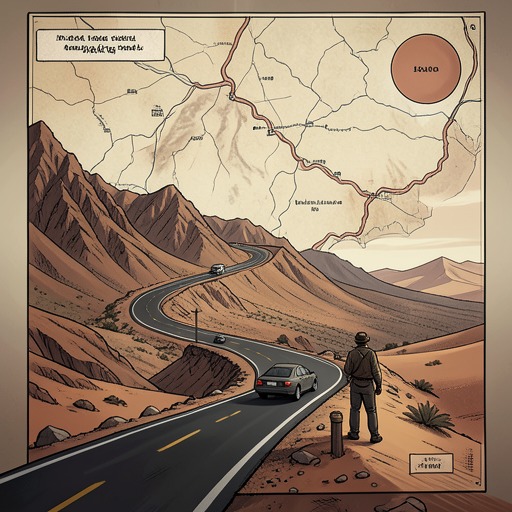
At the quarry, Ismael listens as Driss recounts his travels and disappointments. Driss describes hitching rides to Midelt, Azrou, and Fez, where the work available in the tanneries repelled him. Ismael has not been farther than Midelt; Driss mocks his inexperience, but continues talking to him because they have known each other since childhood. Their intimacy gives Ismael a place in which to hear what Driss apparently has not told others.
Ismael also presses Driss about how he reached Spain without money or papers. The other boys say Driss crossed by illegal boat, but Ismael wants the account directly from him. The narrative makes clear that the tale is difficult to verify: a returned migrant can embellish a journey beyond the reach of listeners who have not been there. Driss tells Ismael that he jumped from a ship and swam ashore near Sotogrande, then walked along the coast and through the marina without being seen. Ismael listens with fixed attention, trying to decide whether Driss is telling the truth or exaggerating.
The telling itself matters as much as its factual reliability. After describing how he found Moroccan families near San Martín and paid for a place in a car going to Paris, Driss leaves Ismael convinced—or at least apparently convinced—that the tale is true. He enjoys the boy’s reaction and loves telling stories. When Ismael calls him cold, Driss answers with the language of necessity. His shifting accounts of escape therefore give Ismael both an image of a life beyond the quarry and a model of storytelling as a way to command an audience.
From Companionship to a Shared Scheme
Ismael’s interest in leaving is not merely admiration for Driss’s travels. Driss proposes that they make money and go to the city, correctly recognizing Ismael as ambitious. The plan grows out of their shared circumstances: both know the quarry, while Ismael’s repeated concern is how to obtain the means to live elsewhere. The prospect gives their old companionship a new purpose, but it also redirects their hopes toward crime.
After Driss has been buried, Ismael tells Abdellah that he and Driss left together carrying Psychopyge specimens wrapped in paper. They were headed to Midelt to sell them to a German dealer. This account confirms that Ismael was not merely an audience for Driss’s plans; he accompanied him on the fossil-selling journey that preceded the fatal encounter. He is nervous when Abdellah summons him to explain what happened, arriving concealed beneath black rags. Abdellah reassures him that he is not being accused, while Anouar encourages him to speak. Ismael apologizes for missing the funeral, then recounts their departure and intended sale.
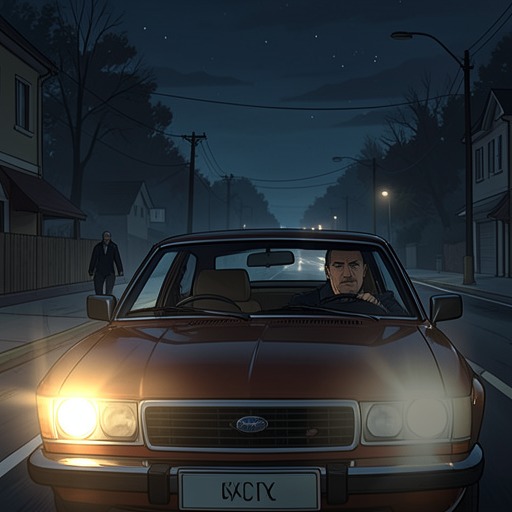
The full purpose of their journey, however, is more violent than the fossil sale suggests. In his private recollection, Ismael remembers that he and Driss waited by the road after hitching a ride from Erfoud with the Elvis fossil and other specimens. Driss, angry after quarrelling with Abdellah, proposed stopping the first car, reasoning that its occupants would have cash and would be too soft to resist. Ismael asked what would happen if they did resist. Driss assigned him the shooting as an initiation, promising that they would be in the city by morning. Ismael’s later testimony to Abdellah gives only the journey and the intended dealer; he withholds the robbery plan.
The Ambush and David Henniger’s Death
Ismael keeps the Friday-night events to himself and later waits for David Henniger and Jo Henniger near the road. He spends much of the day on a stony hillside, watching cars from Azna pass and repeatedly descending to check whether they are the people he seeks. As night falls and traffic thins, he prepares the heavy pistol Abdellah gave him. His patient vigil contrasts with the impulsiveness of the young man who had once treated leaving as a distant possibility: now he has a weapon, a target, and a plan rooted in the memory he has concealed.
When the Hennigers approach, Ismael runs down the hill holding up a Psychopyge specimen. The fossil serves as the familiar roadside lure: David stops, and Jo lowers her window with a sympathetic expression. Ismael has the revolver in his other hand. He recalls Driss’s instruction that the shooting would be his initiation, but approaches the car without the hesitation he had expressed when Driss first proposed robbing motorists. He addresses the couple courteously, then drops the fossil and raises the revolver.
Ismael’s recollection of David includes a detail that gives the confrontation its personal charge: he remembers David burying Driss’s identification card in a small hole. He reads that act as something characteristic of a gaouri, and his memory of it sharpens his cruelty as he moves around the car. David recognizes what is happening, but the scene offers him no effective response. He tries to speak, then closes his eyes as his final moment is rendered through the image of a turbine. Ismael’s ambush kills him; Jo is present at the attack, though the account centers on Ismael’s remembered encounter with David.
Change and Narrative Significance
Ismael’s movement from listener to accomplice to attacker is also a movement from imagined escape to a repetition of the violence that destroyed his closest companion. His early attention to Driss’s stories is shaped by deprivation and curiosity: he wants to know how someone without money or papers could reach Spain, and he has not yet traveled beyond Midelt. The city is a shared ambition, but the scheme meant to finance it makes him the designated shooter before either young man has arrived there.
The difference between what Ismael tells Abdellah and what he remembers for himself exposes the cost of that ambition. He admits that he and Driss traveled together to sell fossils, but conceals that they planned to rob a passing car and that Driss chose him to fire the weapon. The concealed account returns in the roadside attack, where the Psychopyge in his hand recalls their fossil work even as he abandons its harmless commercial use. Ismael’s final action does not recover Driss or deliver the city they imagined. It instead carries their failed plan forward into another death, making the boy who once asked how one could live without money the agent of a violence that leaves no escape at all.