Jbel Issomour massif
The ForgivenJbel Issomour massif is a remote source of trilobites and a central resource for the people of Tafal’aalt village, whose livelihood depends on quarries circling the mountain. Set amid a drying oasis and an advancing desert, it links the region’s demanding landscape to a fragile fossil trade that reaches far beyond it.
Geographic Setting and Terrain
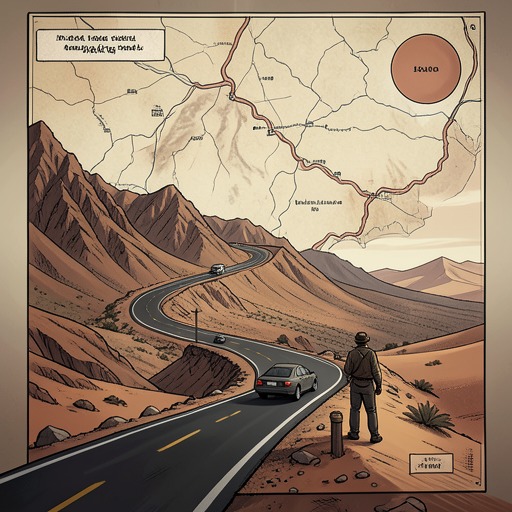
Tafal’aalt village lies on the far side of the Tafilalet, beyond Alnif and near the Algerian border. The village has about one hundred residents and stands where the oasis edge is drying and the desert plain is advancing. Jbel Issomour massif is described as a lonely mountain near the village, with quarries around it where local people make their living. Hmor Lagdad, known as the Red-Cheeked One, is another landmark in the surrounding landscape, visible from a great distance and familiar to people working the quarries outside Erfoud.
The mountain belongs to a wider terrain of steep tracks, rock, water, and scattered cultivation. Above Tafnet, a precipitous road follows a river through sandstone cliffs and irrigated gardens; the surrounding landscape is shaped by the practical needs of settlement and water, rather than by grandeur. This regional setting gives the mountain’s mineral wealth a stark context: it lies in a place where both water and reliable sources of income are scarce.
Quarries and Fossil Trade
The quarries around Jbel Issomour massif yield trilobites, the fossils on which Tafal’aalt’s economy depends. Anouar describes the mountain as Africa’s richest source of trilobites and says that traders from Germany, France, and the United States pay substantial sums for well-preserved Comura specimens, some selling for hundreds of euros. The account sets the value these objects acquire in distant markets against the labor and poverty of the people who extract them.
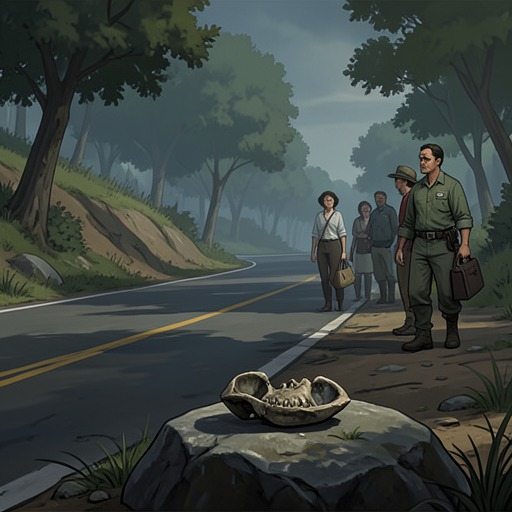
Fossil work is also visible at Mirzan quarry, near Hmor Lagdad, where trenches cut into red rock expose traces of ancient aquatic life. Ragged children stand there with chisels and hammers, and a quarry worker’s young daughter offers David a fossil, which he buys for a few dirhams. The scene makes the trade tangible at its point of extraction: fossils move from worked stone into visitors’ hands, while the local children and families remain part of the laboring community around the quarry.
Communities and Competing Livelihoods
The novel distinguishes the men of Tafal’aalt from the Aït Atta, whose prospectors ride into the desert in search of aquifers and crinoids. Tafal’aalt’s men, by contrast, deal only in trilobites, leaving fossilized marine plants to their rivals. These separate specialties show how communities divide access to the desert’s resources and how the region’s economic life depends on what can be found and sold there.
Hamid’s reflections on the Aït Kebbash place fossil digging within a broader pattern of subsistence. He sees them as people who prepare and trade trilobites, often carrying their wares from table to table in the tourist shops and hotels of Erfoud and Rissani, with little assurance of making a sale. As Bayoud disease contributes to the decline of the oases, the trade in fossils becomes one of the few remaining sources of income. The mountain’s resources therefore sustain a livelihood, but do not remove the poverty that structures it.
Narrative Significance
Jbel Issomour massif is more than a landmark: it is the material basis of life in Driss’s home region and the source of the fossils that circulate through the book’s encounters between local workers and foreign visitors. The mountain’s wealth is real, but its benefits are unevenly distributed. Fossils prized by international buyers emerge from quarries worked by people living at the edge of a failing oasis, making the gap between market value and local security part of the landscape itself.
The mountain also anchors the novel’s connection between environmental change and human movement. In a region where the desert advances, the oases decline, and fossil digging offers only precarious returns, the search for a different life is set against the difficult persistence of those who remain. Jbel Issomour massif thus stands at once for a source of work, a contested resource, and the limits of what that work can provide.