Jo Reveals the Fatal Collision at Dinner
The ForgivenJo Henniger’s disclosure at dinner turns a vague account of a difficult journey into an acknowledgment that David Henniger and Jo had struck and killed a Moroccan man on the road. The significance of the scene lies not only in the fact she reveals, but in the way she interrupts David’s explanation and unsettles the guests’ assumptions about the couple. A private death enters a polished social gathering, where the story they had been telling about themselves can no longer pass as an ordinary travel mishap.
The Road as an Incomplete Explanation
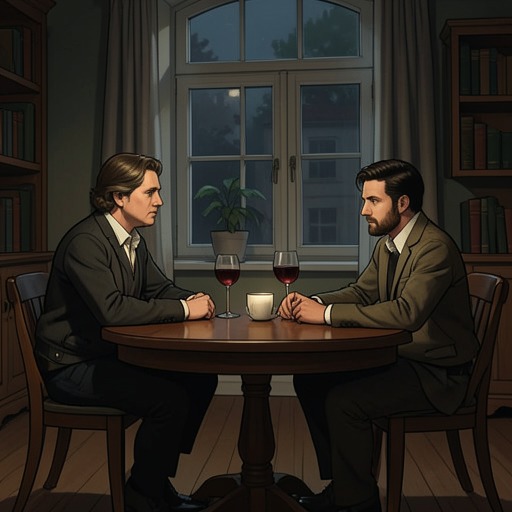
The conversation begins with the road they had taken. Day remarks that it was the road most people had come by, and David agrees that he and Jo had not known the route. He describes unfamiliar roads, darkness, and a sandstorm that left them unsure which turning to take. The account makes their delay sound like a problem of navigation. When a guest asks whether they had a flat tire or were simply lost, David confirms the latter explanation.
That exchange matters because it gives the guests a plausible, limited account before the fatal collision is named. David does not initially describe the encounter with the man; he frames the difficulty as being unfamiliar with the roads and unable to find the right turn. Jo’s cold correction—her refusal to let the explanation stand as it is—marks the scene’s decisive change. What had been presented as confusion becomes a question of what the couple has chosen to leave out.
Jo’s Disclosure and the Room’s Reaction
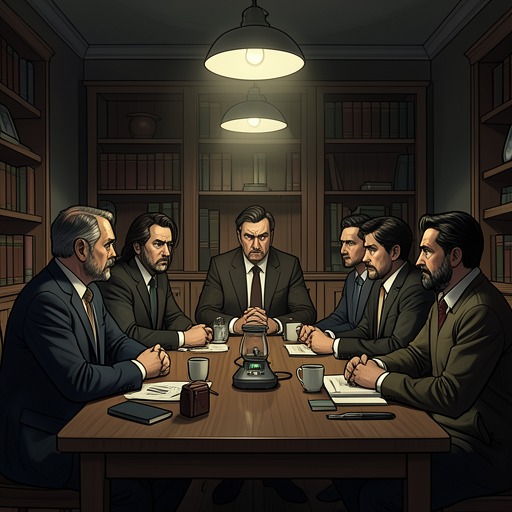
Jo states that the account is not exact and tells the table that, on the way there, they had an accident: their vehicle hit a Moroccan man and he died. The disclosure stops the conversation. David turns toward her, his blush deepening, and the guests stare. Their response registers the distance between the light, social setting and the gravity of what they have just heard. The man’s death is no longer an unspoken circumstance behind the journey; it is the subject around which the gathering falls silent.
The revelation also alters how the guests read Jo and David. Before she speaks, the women at the table take their tension for a marital quarrel, perhaps the sort of roadside disagreement that might look amusing to passers-by. The men attend to Jo differently, wondering whether her manner suggests detachment from her glowering husband. These reactions are not knowledge of the collision, but competing interpretations of the couple’s visible strain. Once Jo names the death, the earlier quarrel can no longer be treated as merely comic or domestic friction.
Jo covers her mouth with her hand, and the guests soon understand that she is laughing, though the narration marks the laughter as abnormal. The gesture does not soften what she has disclosed or turn it into a joke. Instead, it leaves the company with a difficult response that cannot be comfortably categorized: she has made the fact public, but her laughter does not provide an explanation for how she feels about it. The room’s silence and the guests’ staring remain the immediate response to her words.
David’s Explanation and Jo’s Conduct
David answers that the death was an accident and says that the man stepped in front of them. His defense follows Jo’s disclosure rather than preventing it: she has already made the fatal outcome public, and he now supplies his account of how it happened. The scene distinguishes what the couple did not initially say from David’s explanation of the collision. It does not establish further details about the man or the circumstances beyond their having hit him on the road and his death.
After speaking, Jo eats while the room remains quiet. She uses her fingers and no longer cares what the guests think; the narration also states that her body craves food. This continuation places an ordinary physical need beside the social shock of the disclosure. Jo does not leave the table or restore the gathering’s former ease. Her attention shifts to eating and to the room around her, while the guests are left with the fact she has brought into the open.
Narrative and Social Significance
The scene is structured around a correction. David’s explanation offers a manageable story of getting lost; Jo’s brief intervention changes the subject from a delayed journey to a fatal collision. That shift exposes the limits of the account the couple has allowed the guests to hear and makes their different positions visible: David supplies a defense of the event as accidental, while Jo refuses to preserve the simpler account of their delay. The evidence does not specify why she chooses this moment to speak, but her stated refusal to lie anymore gives the disclosure a clear relation to concealment.
The setting intensifies the contrast without resolving it. The gathering includes dinner, conversation, and an oud player who leaves unnoticed as the room’s mood changes. After the revelation, Jo notices the paintings’ gold frames and Egyptian glassware, yet neither the setting nor the guests’ attention makes the death less real. The disclosure does not settle blame or explain the collision; it changes what the room knows. By speaking where others can hear, Jo breaks the social cover of a travel explanation and makes the couple’s encounter with death part of the evening’s shared knowledge.