Les visiteurs (the visitors)
The ForgivenLes visiteurs (the visitors) names the affluent foreigners whose arrival at Azna reshapes an old fortified settlement into a stage for private leisure. To the local residents, they are at once a source of wages and improvement, an unsettling presence, and people presumed to be temporary. The term therefore holds together the economic benefits of their presence and the cultural distance that makes them seem almost otherworldly.
Local Meaning and Ambivalence
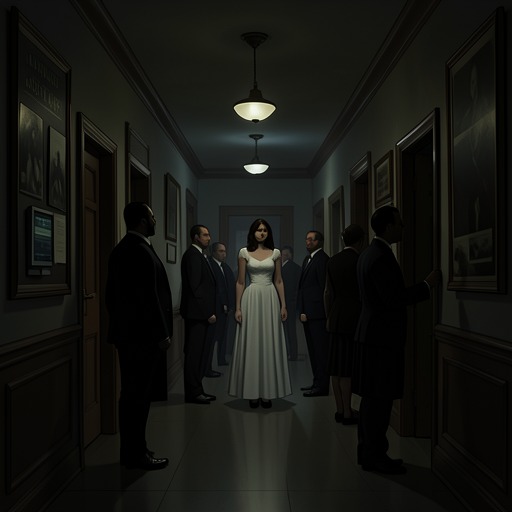
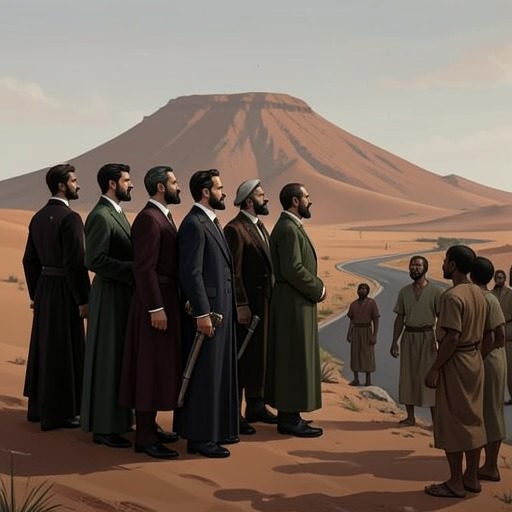
The visitors appear in the account as wealthy outsiders with tastes the people of Azna find difficult to understand. They hire servants and staff, pay extravagantly, and are not said to work those employees hard; residents recognize these benefits even while judging the foreigners’ behavior as strange and, in some respects, demonic. Their conspicuous drinking, sleeping through the day, watching stars from rooftops, and walking old trails at twilight with flowers and ice buckets all mark them as people living by unfamiliar rules. Their inability to drink local water and their use of swimming pools, including the pools of La Source des Poissons, further set their practices apart from local expectations about the spring.
The designation visitor also carries an expectation of departure: the foreigners are imagined as people who will leave as suddenly as they arrived. That assumption gives the name a double edge. It makes their presence seem provisional, even as their money, employment, and refurbishment of the settlement produce visible changes. Residents can disapprove of the visitors’ conduct, gossip about the relationship between Dally Margolis and Richard Galloway, and still admire their cosmopolitan style and the goods their wealth brings. Oranges flown in from Spain, butter from a shop in Paris, and drinking water shipped from Meknes become signs of a world of consumption otherwise remote from the village.
Wealth and the Altered Settlement
The foreigners’ spending is not abstract prosperity but a force that reorganizes daily life and space. Their parties require hired workers, elaborate preparations, and supplies brought from elsewhere. One evening, staff struggle to string fairy lights through tamarisk trees according to designs requested by the hosts; the electricity fails, the generator is restarted, and small tangerines wrapped in silver foil are added to the display. The scene places local labor, birds, and the machinery of the party beside one another, while the foreign guests’ celebration takes shape against the old settlement and the desert beyond it.
The house and its grounds also turn the settlement into an elaborate setting for visitors. After dinner, guests move through a recently built patio, a tea room decorated with desert imagery, a reading room furnished without books, and an upstairs lounge combining antique telescopes and globes with a high-definition television. The fortified buildings, once built to repel the outside world, now accommodate guests invited to explore. The contrast makes the visitors’ influence visible not only in their spending but in the way old architecture is adapted to serve leisure and display.
Parties as Cultural Display
The gatherings combine hospitality with carefully arranged spectacle. Dally Margolis and Richard Galloway expect around forty people for one weekend; guests arrive by car, and staff greet them at the gate in outfits designed for the occasion. Lights and flowers decorate the approach. Inside the courtyard, fruit punch, iced rose water, figs, and honey accompany a performance by a Gnawa group. The hosts lead the applause and address their guests as if presiding over a formal occasion. The performance is presented as an encounter with local culture, yet the narration notes that the music is already familiar to many guests from commercial recordings and their reading of Paul Bowles. The scene exposes the distance between the appearance of discovery and the cosmopolitan consumers’ prior familiarity with the experience being offered.
That staging continues in Dally Margolis’s picnics. He devotes considerable attention to food, serving arrangements, and the possibility that dust might spoil the presentation; photographers, meanwhile, prefer to photograph him in a straw hat or posing beside the waterfalls. He has organized the Sunday event for four consecutive years. A newspaper caption frames the gathering as an attraction in a remote setting, describing guests, tea, breakfast treats, and a drive to Hadda waterfall, while local villagers appear as bemused onlookers. The visitors’ experience is thus shaped both for the people attending and for an outside audience that encounters it through photographs and captions.
Contradictions and Narrative Significance
The visitors’ claims to ease and cultural openness coexist with habits that residents consider intrusive or improper. The older people’s accounts of the parties mix disapproval with fascination, while the gatherings depend on workers who prepare the grounds, serve the guests, and maintain the theatrical setting. The visitors can admire local music, architecture, and scenery while turning them into components of a private weekend and a public image. Their presence is not simply an encounter between cultures: it is an unequal arrangement in which wealth helps determine who organizes the space, who performs or works within it, and who is framed as part of the view.
The term also gathers together the story’s recurring tension between the local gaze and the foreign guests’ self-presentation. The residents interpret unfamiliar behavior through their own beliefs and judgments; the visitors, in turn, consume a version of place made legible as atmosphere, entertainment, and photographic subject. Les visiteurs is therefore both a name for the foreigners and a compact description of their temporary privilege: they arrive, spend freely, and make the old settlement serve their pleasures, while the people who remain watch, work, benefit, and judge.