Moroccan Police
The ForgivenThe Moroccan Police enter the story after a fatal collision at Ksour Azna, where their handling of the scene turns a private account of the accident into an official record. They preserve evidence, seek David’s account, and question whether anyone else was present; ultimately, they classify the death as accidental. The sequence presents police procedure as both practical investigation and the point at which the Hennigers’ version of events acquires institutional authority.
Call and Initial Instructions
When the collision becomes an emergency, the immediate response is to call the police in Taza. Richard Galloway contacts Yassine Benihadd at Ksour Azna and reports that a man has been hit by a car, asking him to come at once. This report establishes the matter as a serious incident requiring an official response, though the account does not describe a wider search or identify any other responding agency.
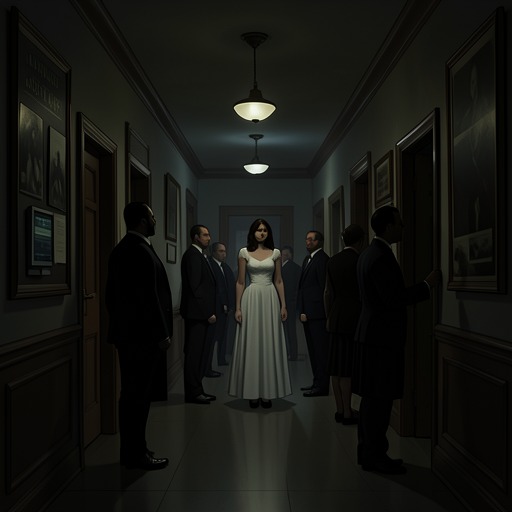
Before arriving, Benihadd gives Richard two clear instructions: keep everyone at the scene and put the body somewhere cool. He then adds that it must not be touched. The directions make preservation of the scene an early priority. They also define what Richard and those with him are expected to do while waiting for the police: remain available, keep the body undisturbed, and avoid interfering with what the officers may need to examine.
Examination at Ksour Azna
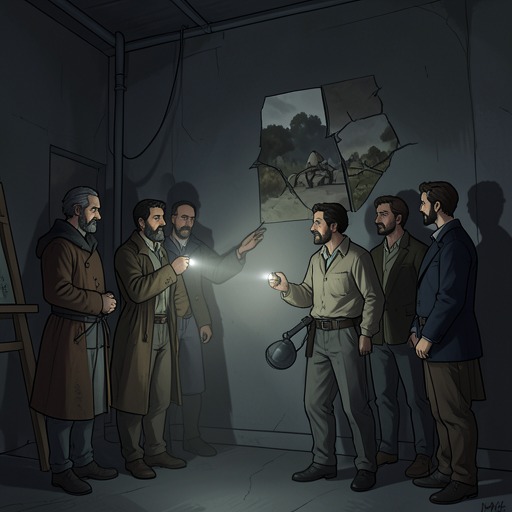
When the police are present, lamps have been placed around the car. Officers photograph its fenders and wheels, kneeling close to the vehicle as they document it. The gate floodlights are off; the stars and intermittent camera flashes provide the scene’s contrasting points of light. These details show the investigation centered, at least in the passage, on recording the car and its condition rather than immediately accepting a verbal account as sufficient.
The photographs matter because they make the vehicle itself part of the official inquiry. The officers attend to its exterior and wheels, preserving visual information about the collision. The account does not specify what the photographs reveal or describe a technical conclusion drawn from them, so their evidentiary meaning remains open. What is clear is that the police create a record before the captain asks David to recount what happened.
Benihadd’s Inquiry
At the open gate, Benihadd stands with Richard and a jug of iced lemonade when David and Jo arrive. He looks David over with skeptical detachment, then approaches Jo, kisses her hand, and addresses her courteously. He asks the couple to walk with him along the road outside, the route on which they had driven a few hours earlier. His manner is formally considerate: the invitation is made as though refusal would be acceptable, and he begins with casual questions intended to put them at ease.
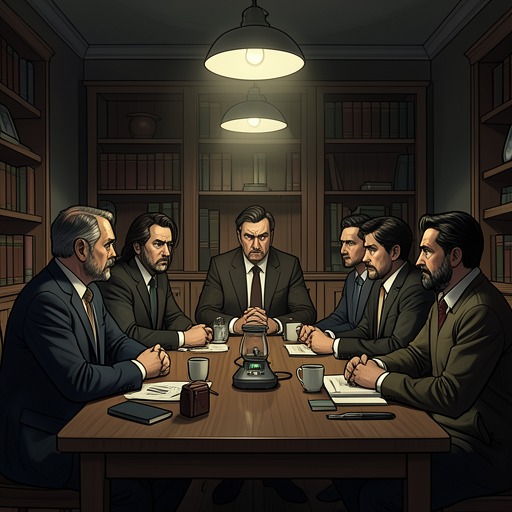
That social ease does not replace the investigation. As the group walks along the road, Benihadd asks David about his practice in Chelsea and makes a polite remark about the neighborhood. He then makes David go through the details of the accident. The shift from small talk to a full account places the questioning within a calm, controlled encounter, while the walk itself returns the Hennigers to the location of the collision. The police captain’s courtesy and skepticism coexist; neither cancels the other.
Benihadd’s most pointed question comes after David has described the event. He says that an accident is an accident, but asks whether David is sure there was only one man. The question introduces a specific uncertainty into the inquiry: the police are not merely recording David’s explanation but testing whether it accounts for everyone who might have been present. The passage does not provide an answer that establishes another person’s presence, nor does it explain what prompted the question. Its importance lies in the pressure it places on the completeness of David’s account.
Official Classification and Narrative Role
Benihadd tells the Hennigers that the death will be recorded as accidental and hopes they can enjoy the remainder of the weekend after what has happened. The decision gives the incident an official classification and appears to close the immediate police response. Yet it follows both the photographing of the car and the captain’s question about whether there was only one man. The juxtaposition leaves a difference between the inquiry’s moment of doubt and its eventual administrative conclusion: the question is raised, but the death is still recorded as an accident.
The Moroccan Police are therefore represented through a tightly bounded set of actions rather than through a broader account of the institution. They receive the call, issue instructions to preserve the scene, photograph the car, hear David’s account, and determine how the death will be recorded. Their presence gives the collision a procedural aftermath, but the text does not detail a prosecution, a formal forensic finding, or any later reopening of the case. The official designation settles the immediate matter without resolving every implication of Benihadd’s question, making police procedure part of the story’s tension between an accident as an event and the account by which it is understood.