Police Record Driss’s Death as an Accident
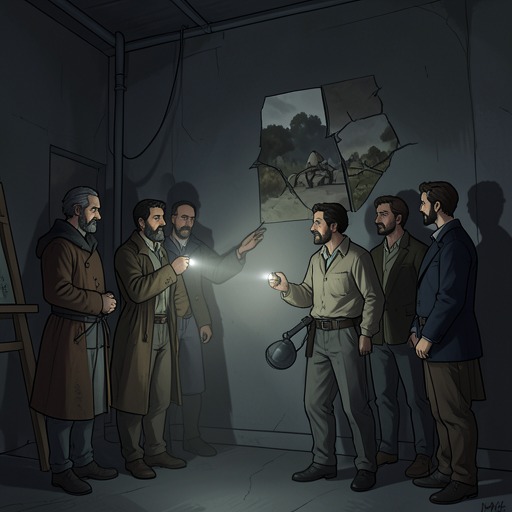
The ForgivenThe police decision to record Driss’s death as an accident closes the immediate inquiry into the road incident without resolving the unease surrounding David Henniger’s account. Captain Yassine Benihadd questions David about what happened, asks whether another man was present, and then tells the couple the death will be classified as accidental. The outcome brings Jo Henniger relief, but her suspicion that corruption may have made it possible gives the apparent resolution an uneasy, morally compromised edge.
The Inquiry on the Road
David is drenched in sweat when he reaches the open gate, where Yassine Benihadd and Richard Galloway are standing with a jug of iced lemonade. After looking David over with skeptical detachment, Yassine greets Jo with courtly politeness and invites the couple to walk with him along the high edge of the road. They had driven there a few hours earlier; the setting keeps the interview close to the site of the death rather than removing it into an impersonal office.
As they walk, Yassine makes casual conversation before asking David to go through the details of the accident. David says a sandstorm came up suddenly and that they became lost. His explanation is set against the clear moonlight: he is exasperated by how plainly he can now see, as if the present visibility makes his account harder to convey. Yassine listens, and after David finishes, looks down at his boots. The small gesture gives the questioning a pause of scrutiny without stating what conclusion Yassine draws from it.
The Question of Another Man
Yassine first acknowledges that the dead man’s family is poor and that David is sorry. David says he and Jo are devastated. Yassine then shifts from sympathy to a precise question: is David sure there was only one man? David answers that there was one, and when asked again, insists he could not be surer. The repetition makes the number central to the exchange. Rather than merely recounting the weather and the loss of control on the road, David is required to affirm who was present.
Yassine’s manner remains composed. He opens his arms as though the matter has been settled, and tells the couple that the death will be recorded as accidental. The scene does not show an explicit payment or explain the basis for the decision; its uncertainty is carried instead by the contrast between the pointed questioning and the swift announcement that follows. The official classification is clear, but the exchange does not establish that every doubt has been cleared.
Relief and Suspicion
Jo experiences the announcement with incredulity. She wonders whether this can really be the end of the matter and thinks of corruption as marvelous in its speed and necessity. That thought is hers, not a confirmed account of what the police have done. The distinction matters: the scene presents the official outcome and Jo’s suspicion side by side, leaving the reader to feel the relief that the decision brings while noticing the moral discomfort attached to it.
As David expresses gratitude to the policemen, Jo hangs back and notices the ravine, the palm grove, a faint scent of jasmine and animal manure, and jagged ridges beyond the river with tents moored by long ropes. The landscape opens out just as the inquiry closes. Jo feels alone and unsure where she is, while Richard turns back, takes her arm, and recognizes that she is covering something up without pressing her to explain. His quiet attention contrasts with the brisk resolution of the police encounter: one uncertainty is administratively closed, while another remains between Jo and Richard.
The Meaning of the Classification
The accident ruling changes the immediate stakes for David and Jo: the police will treat Driss’s death as accidental, and Yassine tells them they may enjoy the rest of the weekend. Jo does not answer with relief or gratitude; she says she wants to sleep. The bluntness of that response registers the strain beneath the official closure, while the captain’s finger-wagging gesture dismisses even that immediate wish.
The episode therefore offers a resolution in procedure rather than a full moral reckoning. David’s account has been heard, his insistence about the number of men tested, and the death assigned an official category. Yet Jo’s response, Richard’s perception that she is concealing something, and the scene’s unresolved gap between scrutiny and decision keep the classification from feeling like proof that the past has become simple. Its significance lies in that double movement: the inquiry ends, but the characters’ private knowledge and unease continue.