Psychopyge
The ForgivenPsychopyge is a trilobite fossil whose recurring appearances connect the labor and poverty of Tafal’aalt to the wealthy market for prehistoric remains, then bring that trade into the final confrontation between Ismael and the Hennigers. Dug from the cliffs by Driss, carried toward a possible sale, and finally raised as bait on the road, it changes from an object of work and exchange into an instrument of violence. The novel’s shifting uses of the fossil make visible the human cost and moral entanglements concealed by its polished, collectible surface.
Fossil, specimen, and commodity
David encounters Psychopyge among the trilobites kept in newspaper packages. Their labels flutter in the hot air entering through a glassless window; the scientific names, including Psychopyge, seem to him almost like incantations. The fossils are not presented as soothing remnants of a distant past. Their armored, spined forms look fierce and disturbing, prompting David to imagine the ancient Sahara as a nightmare ocean and to understand why people might treat such remains as demonic.
The specimens also bear the marks of painstaking human preparation. David sees their polished surfaces and thinks of wealthy collectors who buy fossils at exorbitant prices through auctions such as Butterfields in San Francisco, then display them in homes from Palo Alto to Manhattan and Venice Beach. He reflects that the cost of one executive’s bathroom renovation might sustain a village like Tafal’aalt for a year. The contrast places the small fossil within a much larger economic circuit: labor in the desert supplies luxury elsewhere, while the people who extract and prepare the material remain economically exposed.
Anouar explains that collectors and dealers pay more for specimens with especially detailed corrugated eyes and extravagant spines. These details turn the fossil’s physical features into measures of market value. For David, the packages disclose what had occupied Driss’s working life for more than twenty years: digging, trading, and preparing remains from another geological era. The object is therefore both evidence of an ancient world and evidence of the present labor organized around selling it.
Driss’s work and the attempted sale
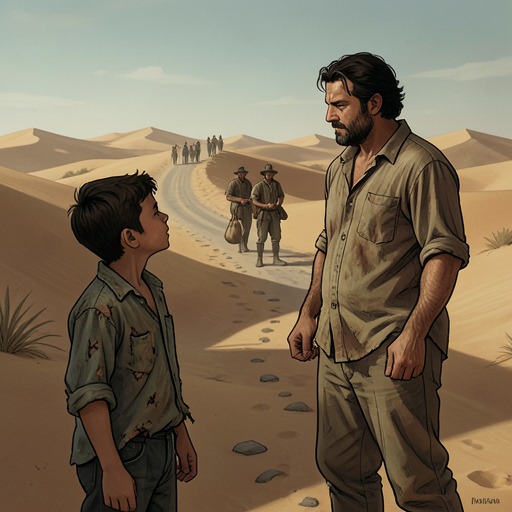
Driss and Ismael leave together carrying Psychopyge specimens wrapped in paper, intending to sell them in Midelt. Ismael recalls that a German dealer there might buy them. The fossils thus travel not as museum pieces but as goods whose sale could offer a return on the work of finding and preparing them. Their fragile wrapping contrasts with the hard, armored forms inside, while the hoped-for transaction depends on transporting the specimens to a buyer beyond their home community.
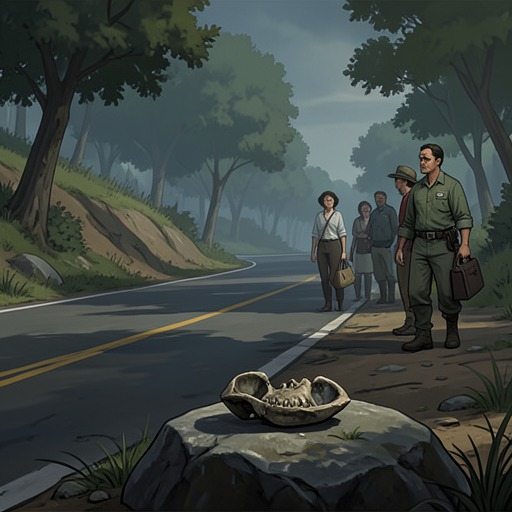
That trade also carries a darker risk. Ismael tells Abdellah that he and Driss tried to stop a motorist by displaying the Psychopyges, expecting the driver to lower his window and pay far more than the fossils were worth. The man did not stop. What the two men saw as a possible sale was, to the passing motorist, a threat; in Abdellah’s interpretation, the travelers recognized the fossils as demons. The episode joins the commercial value of the specimens to the danger of selling them beside the road, where the distinction between bargaining and robbery can collapse.
The same roadside economy appears later in a degraded form. As David is driven past Rissani, fossil preppers emerge from roadside hovels displaying fake Psychopyges and Comuras embellished with car-repair resin. Anouar mocks the frauds. These counterfeits echo the real specimens’ market appeal while exposing how poverty can produce imitations for an uncertain stream of passing buyers. The fossil’s value sustains trade, but the trade does not guarantee security or honest profit.
The fossil in the final ambush
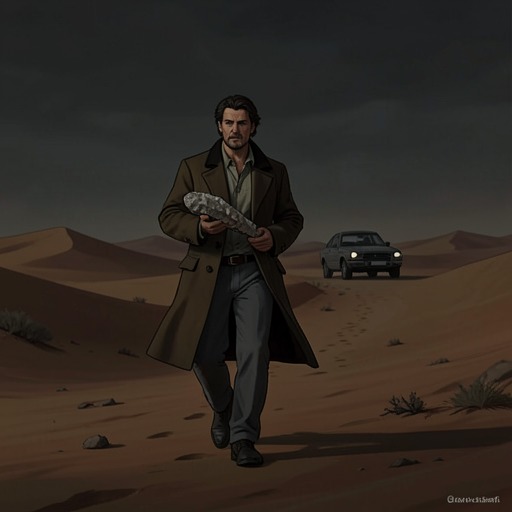
Near the end, Ismael waits for the Hennigers’ car with a small Psychopyge in one hand and a loaded revolver in the other. He has been watching the road and repeatedly checking passing vehicles for the two people he seeks. When David slows the car at Jo’s request, the fossil becomes Ismael’s means of approaching them: he walks forward carrying it, and the Hennigers respond with apparent trust rather than immediate fear.
As Ismael reaches the car, he drops the fossil and raises the revolver. The gesture changes the Psychopyge’s function once again. It is no longer a specimen being offered for sale or a sign of the pair’s failed roadside scheme; it has served as a lure that makes the approaching stranger seem less threatening. David recognizes Ismael and understands the connection to Driss’s death and the burial of Driss’s identification. The fossil’s smallness against the weapon sharpens the reversal: an object associated with patient extraction and trade has helped bring a planned attack within arm’s reach.
Narrative significance
Psychopyge gathers the novel’s intersecting economies of survival, belief, and violence into a single recurring object. Its ancient appearance encourages fear and superstition, while its preparation, labeling, and sale make it a commodity whose price depends on fine physical detail. Its counterfeit versions reveal the precariousness of the local trade; its appearance in Ismael’s hand shows how readily the same object can be repurposed as bait.
The fossil also links David’s belated attention to Driss’s labor with the violence that follows. In the packages, David sees the sustained work that had filled Driss’s waking life; on the road, Ismael turns a Psychopyge into part of an ambush shaped by the history David has tried to put behind him. The object does not resolve the unequal conditions surrounding its trade or explain away the characters’ choices. Instead, its repeated passage between hands makes those connections tangible: the deep past is mined in the present, sold across distances, and drawn into the consequences of human action.