Richard Galloway
The ForgivenRichard Galloway is a British host, former Christie’s wine specialist, and longtime friend of David Henniger. At his remote Moroccan house, he moves easily among luxury, guests, and local staff; when David’s fatal collision with Driss turns the party into a place of reckoning, Richard becomes both a practical intermediary and a narrator of carefully managed reassurance. His part in the aftermath is not simply benevolent: he helps David accept a demanding obligation, but later acknowledges that he concealed the truth to make that acceptance possible.
Identity and Social Position
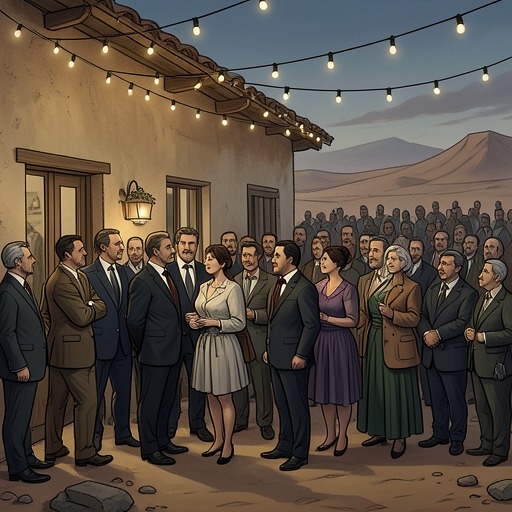
Richard’s command of his house is visible in its objects and arrangements. The kasbah is entered through hand-carved doors studded with iron; its vestibule displays Berber armor, swords, and firearms alongside paintings of battles, including The Battle of the Three Kings. Richard has an eye for Islamic art, and his former work in the fine-wines division at Christie’s places him within a world of cultivated taste and considerable money. The setting makes his hospitality more than a personal manner: he presides over a carefully equipped retreat, with a cooled dining room, a library, and rooms prepared for a large party.
The social ease of this world has limits. Tom Day, arriving among affluent visitors drawn to the remote house by adventure and wealthy company, senses that the other men are not really his kind of people and that they might look down on him. Richard, by contrast, is among those who make the place run. He is seen in formal evening dress, drinking steadily while carrying a painted paper lamp and electrical pliers into the library. The combination of tuxedo, alcohol, and practical tinkering gives his authority an informal, slightly disorderly edge: he is host, but not a distant one.
Host and Witness at Ksour Azna
Richard’s connection to David predates the crisis. They knew each other from school in London and kept in touch over the years. Richard remembers David as witty, handsome, loyal, and cruel in youth, and as an adult whose blustering, drunken dinner-party persona could be both entertaining and revealing. He recognizes David’s drinking problem and describes him to himself as a moneyed Englishman whose buffoonery is cruder than it admits. Yet this judgment coexists with genuine affection: Richard likes David and enjoys his company, even when he finds his arguments tiresome.
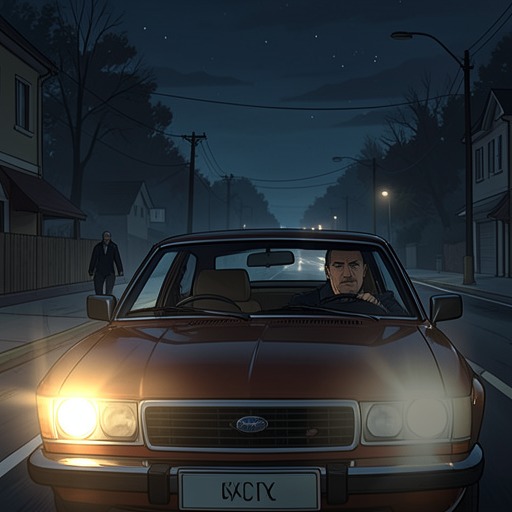
After the collision, Richard examines the damaged car. The dent on the left fender and broken headlight make the vehicle’s involvement unmistakable to him; looking across the moonlit road and surrounding landscape, he concludes that the boy had crossed from the left and that the car had been moving at speed. He wants to hear David and Jo’s account directly rather than rely on Hamid, whose initial description of the dead man as an outsider leaves Richard dissatisfied. He then contacts the authorities at Ksour Azna. The episode puts his practical judgment beside his uncertainty: he recognizes that the physical evidence matters, but initially hesitates over what he should disclose.
When Richard goes to Jo and David, he finds them amid the immediate disorder of the event. Jo is on the bed, while David remains in clothes marked by dust and another man’s blood. Richard tells them to change and shower, and says the police will arrive after seeing the body. He presents the event as an accident and assures them that the officer has told him to reassure them, emphasizing that they are not going anywhere and that the matter will be sorted out. His intervention restores the familiar rhythms of the house—washing and going down to dinner—but it also places Richard between his friends and the consequences they have not yet faced.
Negotiating David’s Obligation
The arrival of Driss’s father, Abdellah, changes Richard’s role from host to intermediary. While Abdellah speaks with Hamid, Richard can see that a complicated proposal is being made and that Hamid is accepting its force. Hamid then explains that Abdellah wants David to return with them to Tafal’aalt and bury Driss. The request is presented as customary and proper: the person responsible for the death should accompany the dead man home. Richard is struck by the demand’s authority, which cannot be answered through the ordinary objections he might make on David’s behalf.
Richard understands that the journey offers David something different from official exoneration. David fears being unforgiven and believes that only Abdellah can release him from that burden. Richard reads his friend’s face and feels relief when David understands what he must do. He nevertheless tries to make the journey sound manageable, suggesting it could be an interesting trip and that David would be back in a couple of days. That lightness sits uneasily beside the seriousness of the father’s request. When David raises the possibility that the family may intend to take his money and treat him badly, Richard calls the plan less than ideal but says it will be interesting. His response reveals how readily he translates a moral ordeal into the language of an excursion.
Richard also participates in the practical preparations. At the gate, two boys bring minted iced lemonade for him and the departing couple, while a third carries David’s two bags. Richard gives David a sleeping bag because the floors at the destination are stone. The farewell is an act of hospitality and an admission of inadequate regret, but it cannot make the journey comfortable or resolve what David owes. The gate lights and the provisions frame the departure as an organized passage out of the party’s protected world.
Friendship, Concealment, and Narrative Role
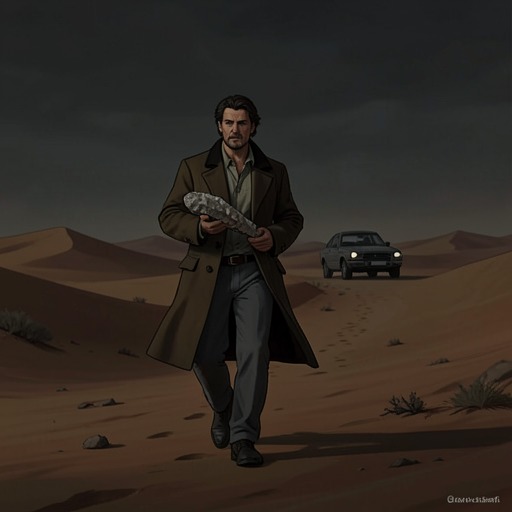
Richard’s friendship with David combines candor and management. He knows David’s weaknesses and recognizes his capacity for loyalty, but he also treats him as someone whose behavior must be steered. Later, while watching the party continue, Richard worries about Jo and cannot find her; meanwhile David is driving through the desert. Richard thinks explicitly that he has lied to David about everything and regards the deception as necessary because David would not have gone without euphemisms. The admission recasts his earlier reassurances. They were not merely attempts to calm a friend: they helped move David toward the journey by withholding or softening what awaited him.
This mixture of care and control defines Richard’s importance in the aftermath. He takes concrete steps—examining the car, contacting the authorities, reassuring Jo and David, helping communicate Abdellah’s demand, and equipping David for the road. Yet his conduct does not amount to transparent moral guidance. He wants David to go, and he shapes David’s understanding to secure that outcome. The narrative therefore presents hospitality as an ambiguous power: Richard’s wealth and social authority allow him to arrange the scene and its transitions, but the truth he manages cannot be made harmless by good manners, a sleeping bag, or a promise that the journey will be brief.