Toyota Camry
The ForgivenThe Toyota Camry is both the Hennigers’ means of travel and the material trace of the fatal collision that changes their journey. First presented as an old rental car, it carries David Henniger and Jo Henniger toward Chefchaouen; after it strikes a young fossil seller, its bloodied interior and damaged front end make the accident difficult to contain as a private secret. The shift from transport to evidence gives an ordinary vehicle a central place in the novel’s account of responsibility and concealment.
Appearance and Early Journey
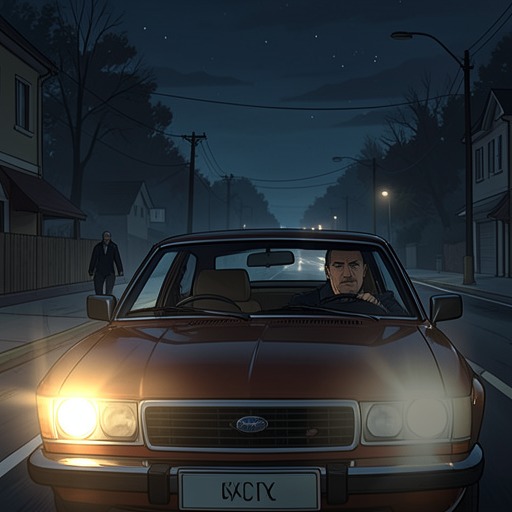
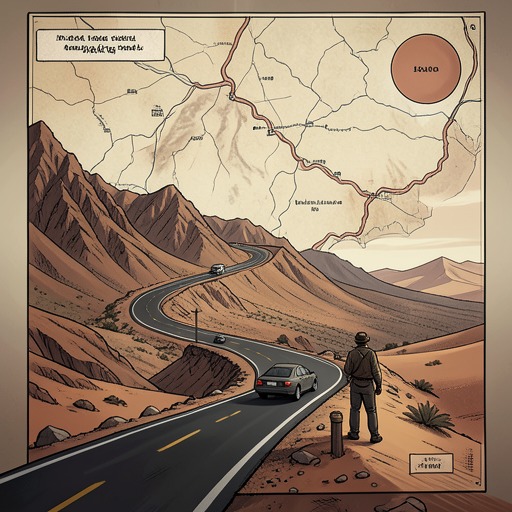
Rented from Avis Tangier, the Toyota Camry is described as old, with soft brakes and torn red leather. These faults are practical details before they become consequential: the car is a familiar machine that David must handle on an unfamiliar road, not a pristine or dependable vehicle. His perforated driving gloves and nervous driving accompany a journey on which he is already wary of the roadside. The car’s condition establishes it as a physical presence in the scene rather than an invisible means of moving the characters from place to place. David and Jo travel in silence on the road to Chefchaouen. The route runs past stones and orange trees, hillside slums, apartment blocks, and antennas; later, dust, glare, animals, children, trucks, and old cars crowd David’s attention. The narrative places the Camry within a busy and difficult landscape, where driving requires continual judgment. David is determined to get out of the city quickly, but the road’s hazards and the couple’s strained interaction make the journey less controlled than that intention suggests.
The Collision
As David and Jo argue, Jo catches his arm and the car veers through a moment of confusion over the brake. A gust carries sand across the road and dims visibility. Jo then sees two men on the roadside, one holding a cardboard sign advertising fossils, and calmly tells David to stop. The Camry continues forward and strikes one of them. The scene is presented as a sudden collision, not as a planned encounter: Jo understands the event as a conflict of wills, while the narration emphasizes that there is scarcely time for thought before impact. The car’s movement makes it the immediate instrument of the accident, but it does not settle how responsibility will be understood. David and Jo have seen the roadside sellers, and the sign identifies the young man as a fossil seller. Their later decisions about what to tell others therefore take place in the shadow of what happened in the car. The vehicle links their private experience to the public account that will be given afterward.
From Transport to Evidence
Rather than leave the victim on the road, the Hennigers take him with them to the house at Azna. The Camry arrives with him in the back seat and blood on the upholstery; the staff gather around the parked car, while the couple are taken into the house. Faced with uncertainty about whom to contact in a foreign country, the Hennigers have brought the victim with them. What had carried them through the landscape is now the setting in which the consequences of the collision are confronted. Richard Galloway examines the Camry before hearing the Hennigers’ full account. Its left fender bears a large dent, the headlight is shattered, and the fender is almost detached. From the damage, he infers that the young man crossed from the left and that the car was moving at speed. He also looks out toward the road under a full moon, considering how clearly the surroundings can be seen. The inspection makes the car’s physical marks part of Richard’s effort to test the story, rather than merely accepting the couple’s explanation. Richard decides not to clean the vehicle and says that the police in Taza must be called. Later, Moroccan Police officers photograph the fenders and wheels while lamps are arranged around the car. The examination turns its damaged exterior into a record available for scrutiny. As the Hennigers discuss whether to say there had been two people, the Camry remains in view, bearing evidence that their account cannot simply erase.
Narrative Significance
The Camry’s role changes in stages: rental car, vehicle in the collision, container that brings the victim to Azna, and object inspected by Richard and the police. Each change narrows the distance between the couple’s version of events and the physical circumstances of the accident. Its soft brakes and worn interior establish its ordinary material condition; its damaged front end later gives that materiality evidentiary force. The car does not speak, but its marks complicate attempts to make the incident disappear. Richard’s inspection and the police photographs place it between the Hennigers’ account and other people’s judgments. In that way, the Toyota Camry is more than a background prop: it is the recurring object through which a journey becomes an accident, and an accident becomes a question of what can be denied.