
Naming and Dominion
The FriendThis flow traces the book’s challenge to human control of animals through names, training, ownership, and the limits of domestication.
increasing Bearing strength in each event
 decreasing
Bearing strength in each eventdecreasingAdam Names the Animals
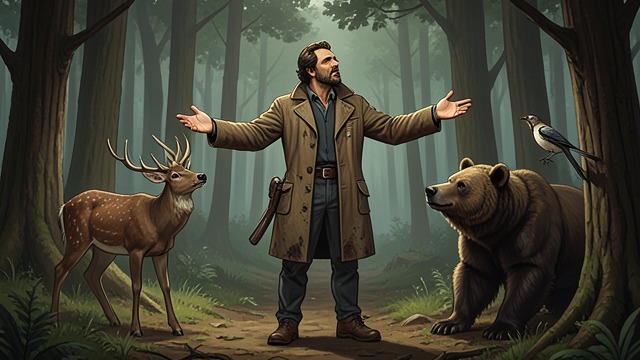
Adam Names the Animals
Naming as authority
The Narrator recalls the account in which Adam names the animals as the first sign of dominion. Naming helps humans arrange the world, but may also separate people from the beings they name.
A question about existence
The Narrator considers the idea that animals did not exist for humans until named. The thought exposes how easily human descriptions can be mistaken for complete knowledge.
Eve Returns the Names
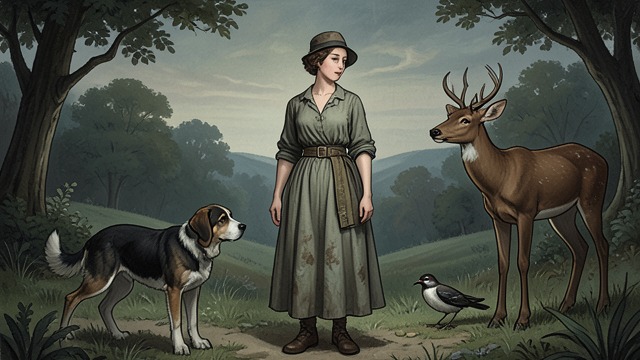
Eve Returns the Names
Undoing a division
In Ursula K. Le Guin’s story, Eve persuades animals to give back their names. She experiences a new closeness and equality after undoing a human system of labels.
Language left behind
The act also means leaving Adam and the language they shared. The story links naming, separation, and control, while suggesting that intimacy may require accepting what language cannot possess.
The Dog as Property
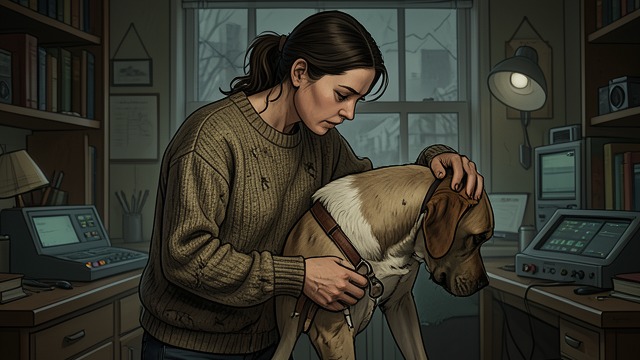
The Dog as Property
A difficult vocabulary
The Narrator considers objections to calling an animal a pet or a person its owner. Such language may imply dominion over creatures bred to obey human demands.
Responsibility without innocence
She recognizes that dogs have been shaped for human use, even when a caretaker acts lovingly. Caring for Apollo does not erase the power humans hold over his living conditions.
Training and Submission
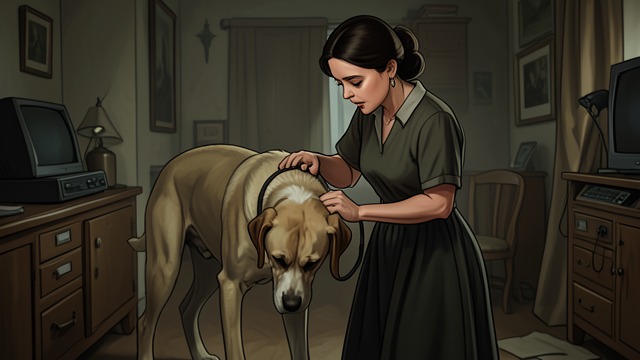
Training and Submission
The veterinarian’s hierarchy
The veterinarian advises the Narrator to maintain authority over Apollo, keep him off the bed, and prevent him from becoming the alpha. His instructions treat training as a contest over control.
The Narrator’s hesitation
She does not fully accept that obedience is the measure of a good relationship. Apollo’s grief and size make practical boundaries necessary, but domination alone cannot tell her what he needs.
Care Beyond Control
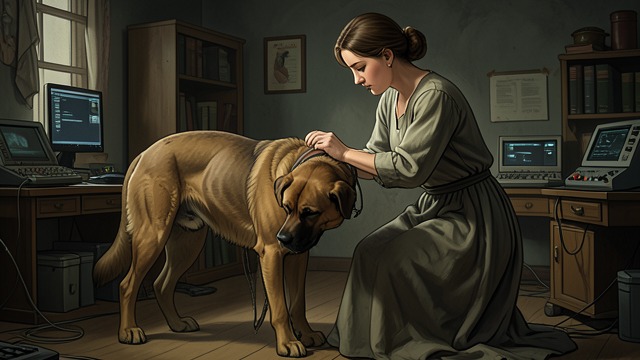
Care Beyond Control
Limits on human certainty
The Narrator increasingly doubts that she can know Apollo’s thoughts or feelings. His behavior may reflect memory, fear, comfort, or simple bodily need, and she cannot reliably separate them.
A negotiated bond
She continues to protect him without claiming complete understanding. The relationship suggests that ethical care depends less on possessing an animal than on attending to a being whose inner life remains partly inaccessible.
In the Narrator’s reflections on pet names
During the discussion of Ursula K. Le Guin’s story
After the Narrator adopts Apollo
During the first veterinary examinations
Near the end of the book
