Deceased Friend
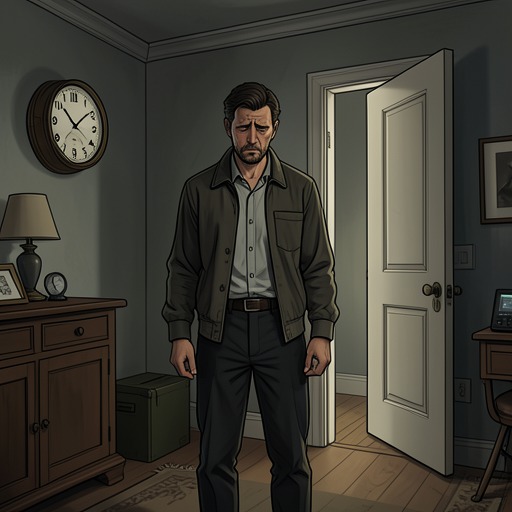
The FriendThe Deceased Friend is the narrator’s dead intimate friend, an author whose absence becomes the book’s central, unresolved presence. Although his name and the circumstances of his death remain unstated in these passages, the narrator’s relationship to him emerges through remembered time together, a therapist’s belief that she loved him as a lover might, and a persistent second-person address that makes the dead seem at once absent and uncannily near. His defining place in the narrative is not as a fully reconstructed biography but as the person around whom memory, longing, and the limits of explanation continually gather.
Identity and Shared History
The friend was a writer: during a long weekend in Berlin, he was passing through after the German translation of his latest book had appeared, while the narrator was living there on a fellowship. Their time together included a proposed visit to the grave of a writer who had died by suicide in 1811, aged thirty-four. The narrator knew the story associated with the grave: the writer had long wanted to die, did not want to die alone, and had sought a partner for a shared death. A woman with terminal cancer eventually accepted his proposal. The recollection establishes a concrete scene in the friends’ life together while also placing death, intimacy, and the wish not to be alone within the material they shared. It does not establish that the Deceased Friend explained his own feelings through this story; its significance lies in the narrator’s later return to the memory.
The relationship’s emotional character becomes clearer in therapy. The therapist tells the narrator that he believes she has always been in love with the Deceased Friend, and that she is mourning him as a lover or wife would. The narrator presents this as the therapist’s judgment, not as a settled definition of their relationship. Its force is to name an intimacy that the narrator’s grief makes difficult to classify, without reducing their history to a conventional romance.
Death, Absence, and the Conditional
The narrator recalls that, after first hearing the news, she sometimes believed there had been a mistake: the friend was missing, not dead, and so could come back. These moments of disbelief turn death into a temporary absence and give hope the shape of a mistaken report being corrected. The imagined return is not sustained as a factual possibility; it is part of the mind’s response to a loss that cannot be assimilated all at once.
The book gives this persistence a grammatical form. The narrator reflects that the dead dwell in the conditional, the tense of what did not happen and what might have been. In the same passage, grief takes on an uncanny reversal: she imagines that the friend has become omniscient, able to know what the living think and feel and even to read words before they are written. The passage does not claim that he literally observes her. Instead, it shows how address and imagination keep him present as the intended reader of a text composed after his death.
The narrator also wonders whether the friend had persuaded himself that those left behind would eventually be all right: shocked, grieving, and then moving on as life continued. She offers this as an idea about what he may have believed, not as knowledge of his thoughts. She can accept the possibility that such a belief might have eased his suffering and guilt, while still refusing the implication that her own grief should simply conclude. Her understanding of him therefore remains compassionate but incomplete: she can imagine what might have made his burden lighter, yet cannot claim access to his final reasoning.
Apollo and the Continuing Bond
On the anniversary of the friend’s death, the narrator marks the day by watching an online video of him giving a reading. She has never seen Apollo respond to an image on a screen and doubts that the dog can focus on one, even when it shows another dog. Sound seems different: she thinks Apollo might recognize the friend’s voice. She does not test that possibility because she fears that hearing the voice could distress him or make him seem trapped inside the screen. Apollo is now her dog, but she does not believe he has forgotten the friend. The video becomes an occasion for care as well as remembrance: the narrator’s uncertainty about Apollo’s experience leads her to withhold the sound rather than satisfy her own wish to know.
The narrator’s care for Apollo is also entangled with an imagined exchange between loss and return. She asks whether loving and making sacrifices for the dog could somehow lead to waking one morning with the Deceased Friend back in his place. She presents the thought as a question about the madness at the heart of her attachment, not as a belief she can verify. Apollo’s aging and melancholy presence cannot restore the friend; nevertheless, caring for him keeps the friend’s former bond with the dog active in the narrator’s daily life.
The anniversary video recalls a story about Judy Garland’s children watching The Wizard of Oz while their mother was away. Recognizing her as Dorothy, they imagined that she had been carried off by the flying monkeys and wept. The story sharpens the narrator’s fear that Apollo might interpret the friend’s recorded voice as evidence that he is somewhere inside the screen. The analogy does not tell the reader what Apollo understands; it reveals the narrator’s effort to imagine the emotional consequences of a recognition she cannot confirm.
Writing, Address, and the Unfinished Farewell
The narrator states plainly that she misses the friend every day and misses him very much. Yet writing about him offers no simple cure. She worries that putting experience into words may help someone grasp its meaning or resist its disappearance, but may also cause the memory of writing to displace the memory of the person. In her comparison, recollection can become like remembering a place chiefly through photographs taken there: the record risks standing between the person and the past it was meant to preserve. Writing keeps the friend in view while raising the possibility that representation can also bury what it records.
The book’s recurring address makes that tension formal. The narrator asks whether she is speaking to the dead friend or to herself, admitting that the boundary has blurred. The second-person address can sustain the shape of a conversation, but it cannot produce an answer. At the close, she wants to call the friend’s name, but the word dies in her throat; the cry that follows turns back toward him as an expression of friendship and grief. That failure to speak the name is not a completed farewell. It leaves the friend present in the very act of acknowledging that speech cannot reach him.
The Deceased Friend consequently remains both particular and partly unknowable. The narrative preserves details of a Berlin weekend, a newly translated book, a voice on video, and a relationship whose intimacy exceeds easy labels. At the same time, it refuses to claim that memory or literary form can recover his inner life or explain his death. His continuing presence is made of conditional possibilities, repeated acts of address, and the narrator’s unresolved wish to remember without letting the act of remembering replace him.