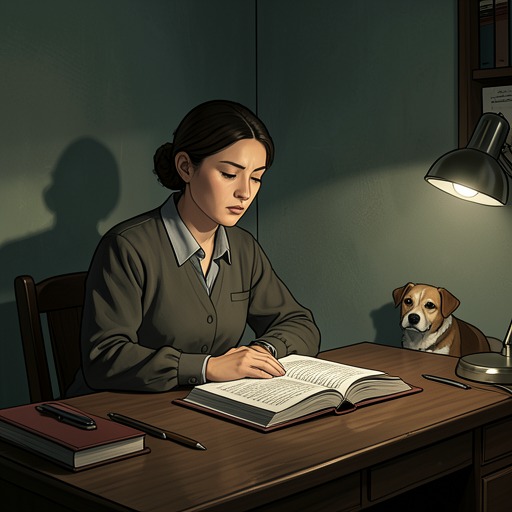
Fiction, autobiography, and the transformation of life into story
The FriendFiction, autobiography, and the transformation of life into story concern how writers make narrative from lived experience—and what that act changes or takes from the people represented. The book sets the idea beside both the conventions taught in writing workshops and a woman’s decision to fictionalize a friend’s suicide attempt. Her story alters names, bodies, and identities, yet retains a consequential detail from life; the friend’s response makes clear that transformation does not dissolve the relationship or the writer’s responsibility to it.
Narrative Habits and the Shape of Story
The book first approaches the relation between life and story through familiar workshop habits. Student stories often begin with someone getting up in the morning, while endings more commonly turn on a death than on someone going to bed. Funerals recur at the beginnings or endings of student stories, and characters thinking are frequently put into motion—usually in a car or plane—as though thought must be made visible through travel. These conventions reveal how readily narrative turns inwardness into an observable event and gives it a recognizable shape.
A workshop exchange makes the mechanism comic and precise: a character is sent on a trip to India, although the journey has little connection to the rest of the story, because the writer wants to show him worrying. The trip supplies a visible device for an interior state. The example does not treat fiction as a transparent record of experience; it shows a writer choosing an invented circumstance to make feeling legible. Storytelling begins in selection and arrangement, not simple transcription.
Life and Story as a Course
The woman teaches a course called Life and Story, organized around fiction as autobiography and autobiography as fiction. Its named writers—Proust, Isherwood, Duras, and Knausgaard—place the question within a literary tradition in which personal experience and written form are difficult to keep separate. The course title gives the concept its compact formulation: life may become material for fiction, while autobiographical writing is itself shaped by choices about what to tell and how to tell it.
In conversation with a man, she says that she has dropped a piece she had been working on. She explains that she became distracted and started writing something else, about him. The shift from the abandoned piece to this new subject is not described as a planned project: it begins as an obsessive response to something that happened in his life. That movement—from an actual crisis, through persistent thought, into a story—makes the transformation of experience into narrative a plot event as well as the book’s subject.
From a Suicide Attempt to Fiction
At Christmas, while watching It’s a Wonderful Life with Jip in her lap, the woman thinks of the man after hearing what happened to him. The film’s premise—that an angel shows George Bailey the loss the world would suffer if he had never existed—sets off her own counterfactual imagining. She wonders what would have happened if the man had not been found in time. She describes the attempt as a close call, and cannot stop thinking about the possibility that his life might have ended. The film does not provide the real event; it gives her a structure through which to imagine its alternative outcome.
She turns that recurring thought into fiction because, as she explains, a writer who is obsessed with something may make it into a story in the hope of laying it to rest or understanding what it means. She also acknowledges the limit of that hope: experience suggests that writing almost never settles the matter. The story is therefore not presented as a cure or as a definitive explanation of the man’s crisis. It is an effort to give the possibility a form, undertaken in the knowledge that narrative may fail to quiet what prompted it.
Invention, Recognition, and the Cost of Representation
When the man learns what she has written, he is shocked. She calls the work fiction and says that she disguised everyone, but he recognizes the act of changing a person’s name as insufficient protection. In fact, she says, she used no names for the people except the dog’s. The distinction matters: removing names marks the work as invented, but it does not prevent the person who supplied its central material from recognizing himself in it.
The fiction also changes concrete particulars. It keeps the man’s discovery of a dog in a park, but the dog becomes a Great Dane named Apollo rather than Jip, and the man becomes English. She says she made him more of a womanizer than he really is; in the exchange, he objects that she has made him neither Italian nor Jewish. These alterations show the work drawing on life without reproducing it intact. Some details survive, others are remade, and the combination leaves the fictional figure recognizable enough to provoke a personal response.
The woman invokes Christopher Isherwood’s account of fictional characterization: like a beloved, a fictional character is made extraordinary rather than treated as merely another person. A writer leaves out the ordinary features shared with everyone else and enlarges what seemed exciting or intriguing in the first place. Her explanation clarifies the artistic logic of selection and exaggeration, but it also sharpens the ethical problem. What makes a character vivid may be precisely what makes a real person feel exposed or distorted.
The man calls the writing a betrayal and focuses on its timing: she was producing pages while he was in the hospital, at the lowest moment of his life. His objection is not answered by the claim that the work is fiction. Instead, the conversation leaves the gap between the writer’s need to make a story and the subject’s experience of being made into one in full view. The concept thus holds two truths together: lived experience can be transformed through invention, and invention does not erase the claims of the life from which it began.