Greyfriars Bobby
The FriendGreyfriars Bobby, a Skye terrier associated with a celebrated fourteen-year vigil at his dead master’s grave, appears in the book as both a figure of canine loyalty and an image through which human grief is contemplated. His story offers no explanation for a dog’s persistence after death; instead, its force lies in the unanswered question of what such fidelity means, and in the mourners who make a legend of it.
Identity and Historical Account
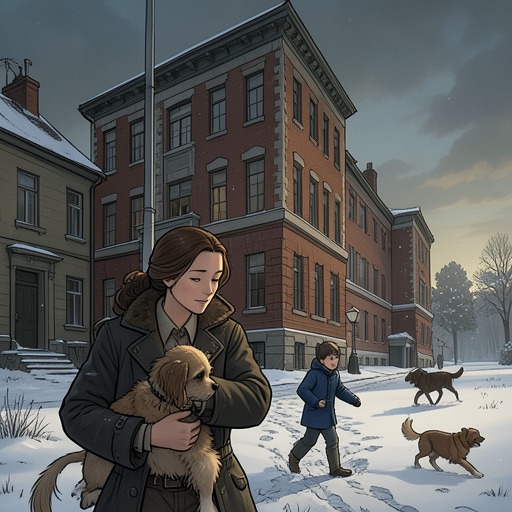
The Narrator identifies Greyfriars Bobby as a Skye terrier whose master died in Edinburgh in 1858. For the last fourteen years of his own life, Bobby reportedly spent every night at the grave. The account gives the vigil a precise duration and setting, but does not claim access to the dog’s thoughts or explain his behavior. Bobby’s defining act is therefore plain, while its inner meaning remains beyond human certainty.
The Legend of the Vigil
Bobby’s story appears alongside accounts of other dogs who continued to wait for dead masters. Hachikō returned to Tokyo’s Shibuya Station for nearly ten years after his master’s sudden death, while Fido waited for fourteen years at a bus stop for the master killed in an air raid during the Second World War. The comparison makes Bobby’s devotion part of a larger pattern of human stories about animals who persist in waiting. The public response, the Narrator observes, has been to treat such behavior as extreme loyalty rather than stupidity or mental defect. In Bobby’s case, remembrance took the form of a legend; the account notes that a statue was erected to Hachikō, not to Bobby.
Bobby and Apollo
Bobby returns as an image in the Narrator’s description of Apollo. Apollo’s expression does not change, and the Narrator says it resembles the look imagined in Bobby’s eyes as he lay on his master’s grave. The comparison does not establish that Apollo behaves like Bobby or that the two dogs share a history. Rather, Bobby’s remembered vigil supplies a visual language for reading Apollo’s stillness: the Narrator has yet to see him wag his tail, and his cropped ears are uneven, one left slightly smaller than the other. Bobby’s story makes that unreadable expression suggestive of waiting and loss, without proving what Apollo feels.
Narrative Significance
The Narrator’s response to stories of loyal dogs is not uncomplicated admiration: after doubting a report of a dog said to have drowned itself from bereavement, the Narrator says such tales are one reason for a preference for cats. Bobby nevertheless remains a powerful figure in the book’s meditation on animal mourning, because the remembered vigil holds open the possibility of attachment that outlasts its human object without making the animal’s experience fully knowable. That uncertainty resonates with the Narrator’s grief for the Deceased Friend. The dead are imagined as dwelling in the conditional, in the realm of what might have been; the Narrator repeatedly expresses missing the absent friend, and near the book’s close wants to call the friend’s name but cannot get the word past the throat. Bobby’s vigil does not explain that grief or resolve it. It gives the persistence of mourning an animal image, while leaving both the dog’s inward life and the mourner’s loss partly beyond explanation.