Human–animal bond
The FriendThe Human–animal bond between the narrator and Apollo is not presented as a simple exchange in which a dog comforts a grieving person. It is made through practical care, mutual protection, and a persistent effort to meet across the limits between human and canine experience. The narrator depends on Apollo for emotional support, but Apollo also appears to depend on the narrator; their closeness rests on this reciprocity, even as his thoughts remain inaccessible.
Care and Mutual Protection
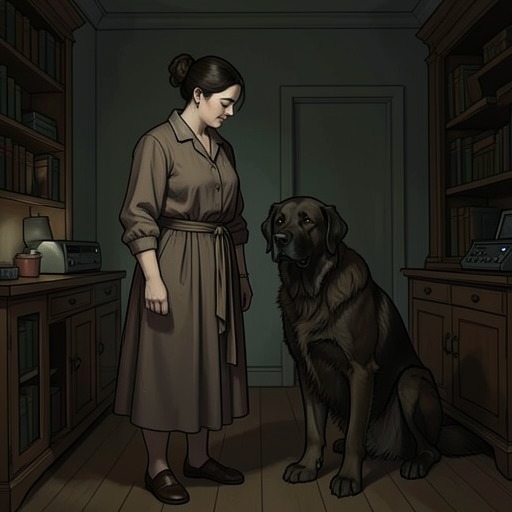
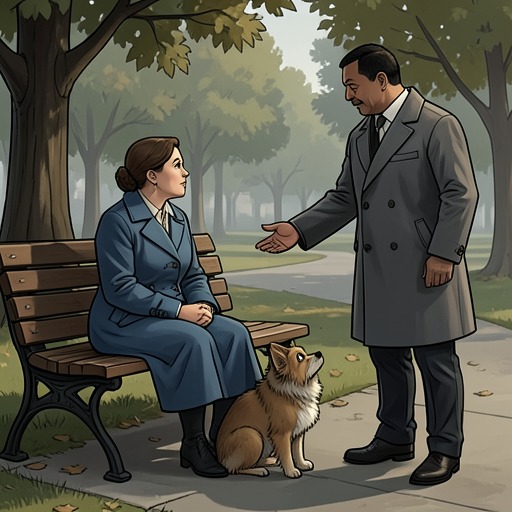
A scene of Apollo sleeping gives the relationship its clearest everyday form. His flank rises and falls peacefully; he is full, warm, and dry after a four-mile walk. The narrator has watched over him when he squats in the street, guarding him from passing cars. In the park, Apollo has barked and blocked a texting jogger who was about to run into the narrator. Protection moves in both directions, though not in identical ways: the narrator manages the hazards of the street, while Apollo intervenes when a person threatens her safety.
The day’s other routines are equally specific. The narrator has played tug-of-war with Apollo, spoken and sung to him, read him poetry, trimmed his nails, and brushed his coat. These tasks make companionship an enacted responsibility rather than a feeling alone. Watching him rest after this care brings contentment, followed by a deeper feeling the narrator takes time to name. The account does not supply a simple label for that feeling. Instead, the next reflection defines the pair as distinct beings who protect one another, maintain their own boundaries, and greet each other. Their bond joins intimacy to separateness: Apollo is close, but not reducible to a human confidant.
Bereavement, Support, and Public Recognition
Apollo’s importance is intensified by the narrator’s bereavement. A therapist documents that the narrator suffers from depression and anxiety aggravated by loss, and that losing the dog’s support could harm her mental health and might be life-threatening. The bond is thus recognized in clinical terms, yet the narrator’s account also shows why those terms cannot contain it. Apollo is not merely an instrument prescribed to alleviate symptoms; his care, habits, and responses make him a participant in the relationship.
The narrator is attentive to the ethical and social stakes of claiming an animal-support status. She recognizes the anger of people with genuine need toward those who pass off ordinary or exotic pets as service animals, recalling reports of a skunk in a college dormitory, an iguana in a restaurant, and a pig on an airplane. She promises not to take Apollo where dogs would not ordinarily be allowed. Although she sends a copy of the certificate to the building’s management agent, she plans to leave both the certificate and her National Service Animal Registry badge at home. The distinction matters: accepting support for a real need does not, in her view, justify treating access rules casually.
The relationship also attracts jokes from other people. Sitting with Apollo beside her in the therapist’s office, the narrator thinks the arrangement resembles couples therapy, then notes that the two of them get along. A woman passing them offers a joke that favors a dog over a bad husband. Another person turns the expected roles around, teasing that Apollo is the one who cannot cope and that the narrator is his emotional-support human. The humor registers a genuine ambiguity in the bond: the dog is officially understood as supporting the person, but the person also organizes care around the dog’s needs.
Conversation Across a Boundary
The narrator’s efforts to talk with Apollo are mostly questions, rather than declarations. She asks about his nap, what he might have chased in a dream, whether he wants to go out or eat, whether he is happy, and whether his arthritis hurts. She also wonders why he will not play with other dogs, asks whether he is an angel, and offers to read or sing to him. The questions move from immediate bodily needs to affection and self-conscious humor: whether he loves her, whether he will love her forever, whether he wants to dance, whether she is the best person he has had, whether he can tell she has been drinking, and whether her jeans make her look fat.
This list gives the bond a conversational shape without pretending that a conversation is literally shared in human language. The narrator’s questions acknowledge Apollo as a possible subject of feeling and preference, while their unanswered form preserves the difference between them. She wonders whether he anticipates the future, remembers the past, feels yearning or regret, or experiences memories prompted by scent. These are presented as questions, not certainties. The desire to know Apollo’s mind is part of the attachment; so is the recognition that his mind cannot simply be translated into human terms.
His behavior nevertheless changes how the narrator experiences that uncertainty. At first, Apollo sometimes watches her and turns away when she looks back. Later, he often rests his large head on her knees and looks up with an expression the narrator finds communicative. That shift does not prove what he means, but it marks a developing pattern of bodily trust and attention. The narrator responds by continuing to address him, making speech itself one of the practices through which their relationship is maintained.
Scent, Knowledge, and the Limits of Understanding
The difference between human and canine perception becomes especially intimate in the narrator’s reflections on smell. She remembers Apollo waking her in the middle of the night, inhaling over her as she lay on the floor as if gathering information about who she was and what she might be concealing. He still sniffs her, but no longer with the same investigative intensity. The recollection places an animal sense at the center of their shared history: Apollo’s knowledge of the narrator begins not with her explanations but with her scent.
The narrator considers how much a dog might learn from that sense, including what someone has eaten, where clothing and sandals have been, and changes in a person’s surroundings or habits. She imagines that scent could also reveal the narrator’s anxiety about classes beginning again, emotional wounds, hidden fears, loneliness, anger, and continuing grief. These are not presented as a supernatural diagnosis. Rather, they describe the narrator’s sense that Apollo may perceive bodily and emotional signs she cannot easily communicate or interpret herself. She even entertains more speculative possibilities, such as a dog detecting changes not yet recognized by medicine, while leaving them as questions.
The relationship therefore holds two truths together. The narrator believes Apollo may read her with extraordinary acuity, yet she cannot know precisely what he thinks, remembers, or understands. His attention is neither a human explanation nor a blank screen onto which every human feeling can safely be projected. The bond remains powerful because it does not erase that limit: care and recognition pass between them through walks, touch, scent, vigilance, and repeated address. In the promise that nothing will separate them, devotion becomes a commitment to stay with an animal whose inner life is partly unknowable—and whose presence, in turn, helps the narrator endure her own.