If I can’t walk, I can’t write
The Friend“If I can’t walk, I can’t write” is the Deceased Friend’s account of how bodily movement and literary work depend on one another. First a practical description of his routine, the phrase returns in the context of depression and injury, then resonates with the book’s meditation on loss: walking can restore a writer’s rhythm, but no rhythm of language can undo a death or fully voice the narrator’s longing.
The writer’s walking practice
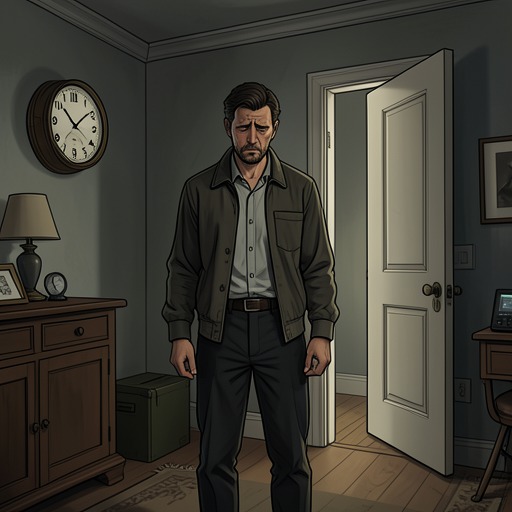
The phrase describes a recurring interruption to the Deceased Friend’s workday. He would write in the morning until he reached a point at which he could no longer manage even a simple sentence. Instead of forcing the work forward at his desk, he went outside and walked for miles. A real storm might keep him in, but cold and rain usually did not. After returning, he sat down to write again, trying to retain the rhythm established on the walk; the more successfully he held on to it, the better the writing went.
For him, walking was not merely exercise or a break from work. It was part of the process by which writing became possible again. He explained the connection through rhythm: “Because it’s all about the rhythm, you said. Good sentences start with a beat.” The maxim joins a physical action to a formal principle. The walk gives the stalled writer a beat to carry back to the page, making bodily movement a condition of renewed composition.
Injury, depression, and return
The phrase takes on a more painful force in a later recollection of the Deceased Friend’s depression. During the six months before his death, he had been so depressed that he could hardly get out of bed in the morning and wrote nothing. The account also makes clear that this crisis had eased: by the summer he was in better spirits, working each morning on a project that excited him, reading extensively, socializing again, and becoming physically active.
A back injury had helped deepen the earlier depression. He had hurt himself moving boxes and could not exercise for weeks; even walking was painful. In recalling that period, the narrator connects the injury to his maxim, “If I can’t walk, I can’t write.” The words thus describe more than a method for overcoming a difficult morning: losing the ability to walk meant losing a central support for both his physical activity and his writing. When the injury healed, long walks and running in the park returned alongside his work.
The phrase within bereavement
After the Deceased Friend’s death, the line’s conditional form gains another register. The book observes that “The dead dwell in the conditional, tense of the unreal,” where what might have happened persists without becoming present again. The walking maxim is therefore not only a statement about the conditions of writing. Read within the narrator’s mourning, it belongs to a language of possibility: the life in which the friend could walk, write, and return from a walk is recalled precisely because it can no longer continue.
The narrator’s repeated words of longing refuse to turn remembrance into resolution. The declaration “I miss you. I miss you every day. I miss you very much” appears again later, altered only in its address: “I miss him. I miss him every day. I miss him very much.” The movement from speaking to the absent friend as “you” to naming him as “him” does not diminish the feeling. Instead, the repetition shows how the language of grief circles back to the same simple fact without making it less true.
Rhythm, repetition, and silence
The maxim’s recurrence links the practical rhythms of the friend’s working life with the broken, repetitive rhythms of mourning. During his life, the walk carried him away from sentences that would not come and returned him to the desk with a rhythm he could use. In the narrator’s account, repeated sentences of missing him likewise return to a truth that cannot be made easier by saying it. The parallel does not equate writing with recovery: the narrator explicitly preserves the feeling rather than wanting it gone.
At the book’s close, longing reaches the point where speech fails. The narrator wants to call the friend’s name, but the word dies in the throat; the address then breaks into “Oh, my friend, my friend!” The ending brings the phrase’s concern with movement and composition into a stark contrast with grief’s interruption. A walk once helped the friend regain the beat of a sentence; the narrator’s final address cannot cross the distance created by death. The maxim remains a record of how the friend worked, while its return in the book’s wider pattern of conditional thought and repeated missing gives it an elegiac afterlife.