Lilja Jumps from a Bridge to Her Death
The FriendLilya’s jump from a bridge is the culmination of a promised escape that turns into confinement and exploitation. Recounted through the narrator’s memory of a film, the event exposes the distance between the new life Lilya is offered and the danger she encounters, while the account’s basis in a real girl’s letters gives the scene an unsettling documentary resonance.
The Promise of a New Life
A handsome, soft-voiced young Swede named Andrei tells Lilya that he can help her move to Sweden and begin again. She falls in love with him and accepts the offer, despite what leaving will mean for Volodya, her only friend. Volodya responds to her departure by killing himself; the film continues to show him as an angel. The promise of rescue is therefore bound from the start to separation and loss.
Lilya arrives in Sweden alone, expecting Andrei to join her later. At the airport, a man who has been presented as someone who will look after her drives her to a tower apartment and locks her inside. He is the first person to sexually assault her. Her supposed fresh start becomes a life of sexual exploitation: day after day she is sent to clients, who disregard both her youth and the fact that she does not wish to be there.
The Escape and the Jump
Lilya tries to escape twice. On her first attempt she is caught and beaten. The second takes her to an expressway bridge. A policewoman is nearby, but Lilya panics and jumps before help can reach her. The narrative presents the death not as a calm or fully explained decision, but as the outcome of entrapment, repeated exploitation, and a desperate attempt to get away.
The Real-Life Basis
The account links the film’s fictionalized story to the life and death of a real girl. After the girl jumped, letters she had written were found on her body; those letters became the means by which her story came to be known. This detail shifts the scene beyond an invented plot while leaving the girl’s experience irreducible to a neat explanation. The letters preserve a trace of her voice, but do not turn her death into something the book claims to solve.
The Scene in the Narrator’s Memory
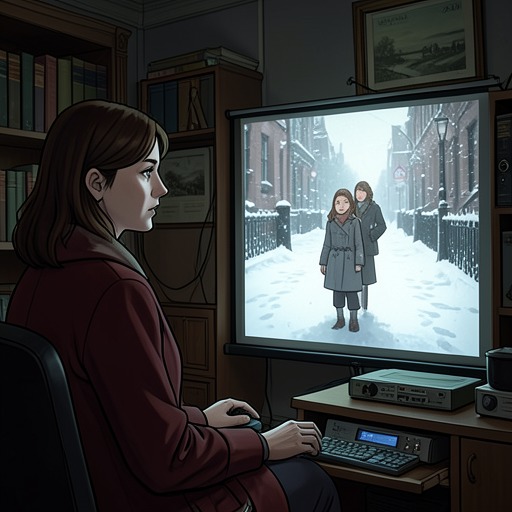
The narrator recalls watching Lilya 4-Ever alone on a weekday afternoon in a small neighborhood art house, where only a handful of people were present. After the film ended, the narrator waited to compose herself before leaving. A woman several rows ahead was also alone and continued to sob. The narrator remembers feeling humiliated for her as well as for herself, registering how the film’s account of exploitation and death had left both viewers exposed in a nearly empty theater.
Placed among the book’s reflections on suicide, the scene resists treating a death as self-explanatory simply because suicide is discussed, anticipated, or later interpreted by others. Lilya’s jump is shown within the concrete conditions surrounding her, while the letters and the narrator’s shaken response emphasize both the need to bear witness and the limits of what witnessing can explain.