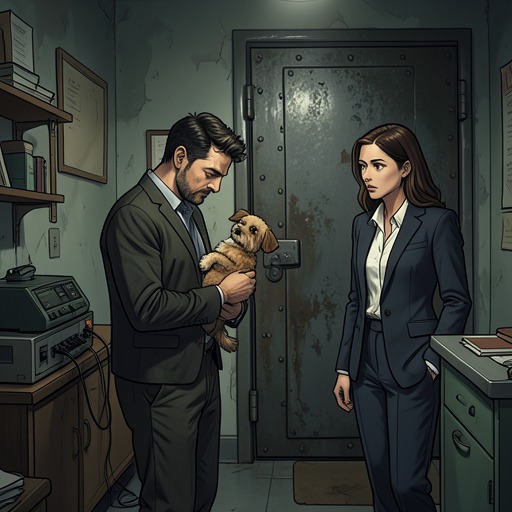
Narrator’s social withdrawal
The FriendNarrator’s social withdrawal is a condition shaped by bereavement and fear, not simply a preference for solitude or a temporary reluctance to socialize. In a conversation with the Current Therapist, the narrator corrects his gentle interpretation of the narrator’s holiday behavior and identifies a sharper distinction: other people are not merely unwelcome but frightening. The passage then separates that withdrawal from concern about Apollo, acknowledging that the wish to be alone would persist even without worry about leaving him.
A Holiday Conversation
The subject emerges when the Current Therapist asks what the narrator did for the holidays. He suggests that not wanting to be with other people may be one way the narrator’s loss has affected them. His manner is described as gentle, and the observation gives the narrator an opening to refine what the retreat means. The response is not spoken aloud: the narrator thinks that hatred of other people would be the wrong description, because the feeling is terror.
That distinction matters to the account of the withdrawal. Dislike would make company an irritation; fear makes it a source of distress. The narrator does not explain that fear by naming a particular social encounter or presenting a single cause beyond loss. Instead, the exchange records the difficulty of putting the state into words, even in therapy: the therapist offers a plausible interpretation, and the narrator privately revises it with greater precision. The gap between his formulation and the narrator’s unspoken correction leaves the feeling partly concealed within the conversation.
Loss, Apollo, and the Wish to Be Alone
The narrator also considers whether concern about Apollo explains the wish to avoid other people. The qualification is explicit: even without worrying about leaving Apollo, the narrator would have wanted solitude. This makes the withdrawal more than a practical consequence of caring for him. Apollo may be part of the narrator’s immediate circumstances, but he does not account for the deeper preference to remain alone.
Elsewhere, the narrator reads aloud to Apollo from Rainer Maria Rilke’s Letters to a Young Poet. Apollo settles against the narrator’s legs and responds to the reading, while the narrator finds the act soothing. The scene offers a contrast to the frightening prospect of human company, without implying that Apollo resolves the narrator’s isolation or that the narrator has ceased to need human relationships. Here, companionship consists of reading aloud and staying together; its comfort does not depend on another person understanding every word. Set beside the holiday conversation, the scene shows that solitude and connection are not presented as simple opposites.
The Figure of the Stray
The narrator recalls a writer’s term for people who, despite earlier wishes or relationships, never quite become part of life as most people do. The description includes people who may have partners, friends, or broad social circles, yet never marry or have children; they continue joining other people’s families or groups for holidays until they admit that they would rather stay home. The narrator asks the Current Therapist whether he sees many people like that. He answers that he does not.
The exchange expands the account beyond one holiday. The figure of the stray names a pattern of partial participation: outward involvement can coexist with a lasting sense of not belonging, and repeated attendance at other people’s gatherings need not erase the desire to withdraw. The narrator introduces this description rather than directly declaring that every part of it applies. Its proximity to the admission of wanting to be alone nevertheless makes it a frame through which the narrator’s retreat can be considered, not a diagnosis supplied by the therapist.
Narrative Significance
The withdrawal is conveyed through a sequence of distinctions rather than a full explanation. A therapist’s compassionate interpretation is adjusted by the narrator’s private recognition of fear; concern about Apollo is acknowledged but shown not to be the whole cause; and the idea of the stray offers a broader vocabulary for social estrangement without settling the narrator into a fixed category. What remains clear is the difference between being among people and feeling at ease with them.
The passage also places this difficulty of contact beside forms of expression that permit a different kind of closeness. The narrator can read to Apollo, and elsewhere the book describes writing shared in carefully bounded workshop settings. Those scenes do not establish that expression cures withdrawal. Instead, they distinguish particular conditions of exchange from the ordinary social company the narrator finds frightening. The retreat is therefore presented neither as simple misanthropy nor as complete incapacity for connection: it is a bereavement-linked state whose limits and possible forms of contact remain uneven.