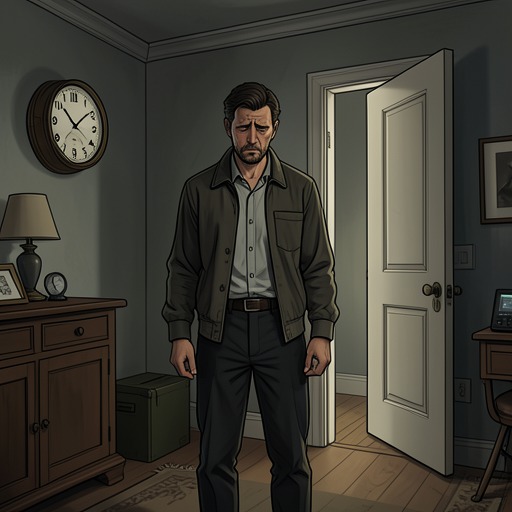
Silence and the unknowability of suicide
The FriendSilence and the unknowability of suicide names a central tension in the narrator’s mourning: the urge to explain the Deceased Friend’s death meets the possibility that the friend’s silence should remain intact. The book tests explanations—personal, social, and moral—without claiming access to the friend’s final thoughts, and turns the limits of knowledge into a form of attention to the dead.
The demand for an explanation
The narrator recalls having mistaken the friend’s frequent talk about suicide for evidence that the friend would not act. The friend was not the unhappiest or most depressed person they knew, and did not seem the most suicidal. The timing, near the start of the year, even made the death seem capable of being mistaken for a resolution. These retrospective comparisons expose how readily familiar signs and relative judgments can become false assurances; they do not provide a reliable explanation of the death.
The friend had also predicted a coming wave of suicides among writers in what was probably the friend’s last interview. Asked when it would happen, the friend answered, “Soon.” The narrator had been surprised that the friend did not mention the interview, which another friend later forwarded. The friend explained that the prediction had felt embarrassing after a few drinks and might sound melodramatic or self-pitying. The interview makes the friend’s public speech newly difficult to interpret: it records a striking prediction, but cannot settle what the friend knew or intended about their own death.
Public judgments and private limits
The narrator’s attempts to find a shared language for suicide bereavement include listening to a radio program that invited listeners to comment on suicide loss. Callers cast moral accusations, describing suicide as sinful, spiteful, cowardly, vengeful, irresponsible, and selfish. They treated the person who died as having wronged those left behind. The narrator finds no help in this verdict-driven account: condemning the dead does not make the loss more comprehensible.
Books on suicide offer information but not the understanding the narrator seeks. They describe traditions in which voluntary death could be judged acceptable under certain conditions, and record changing religious and historical views. The narrator also encounters the claim that writing in the first person is a known sign of suicide risk. Such facts widen the frame around the death, but none can establish the private motive of one particular person. The distinction matters: general knowledge may inform reflection without turning an individual death into a solved case.
Choosing to leave the mystery
A woman the narrator once knew from working at a magazine offers a different response. Her husband made her a widow when they were young and newly married: one day they were planning a future, and the next he was gone. At first, she believed she owed it to him to do everything possible to understand. She later concluded that this obligation was mistaken. He had chosen silence, and she decided to leave him both his silence and his mystery. Her account gives the narrator a model for mourning that does not make explanation a duty owed to the dead.
That choice coexists with the narrator’s resistance to speaking about the friend or hearing other people speak about the friend. Yet the narrator is also compelled to talk, if only to explain that reluctance. The contradiction is not resolved: silence can protect what cannot be known, while speech may be necessary to describe the limits of knowledge and the conditions of grief. The book’s attention to the friend’s words, including the interview, does not authorize a final reading of them. A statement can be remembered and examined without becoming proof of a hidden motive.
Conditional grief and continuing address
The narrator imagines the dead as dwelling in the conditional, in the tense of what would have happened but did not. At the same time, grief produces a powerful sense that the friend has become omniscient, able to read the narrator’s thoughts and even the words being written. This imagined presence gives the dead a place within the act of narration, but it remains an experience of grief rather than knowledge of an afterlife or of the friend’s actual awareness.
The narrator speculates that the friend may have believed those left behind would endure shock, grieve, and eventually carry on. This remains an idea, not an established account of the friend’s reasoning. The narrator can accept the possibility that the friend imagined such recovery as a way to avoid further pain, while still refusing to claim certainty about what the friend thought. The distinction between what can be imagined and what can be known is the concept’s ethical center.
The address to the Deceased Friend persists even as the narrator questions whether writing and repeated telling might replace memories of the person with memories of writing about them. The recurring statement of missing the friend gives grief a plain, durable form rather than a solution. At the book’s close, the narrator wants to call the friend’s name, but the word dies in the narrator’s throat; the cry of “Oh, my friend, my friend!” follows. The ending makes silence neither a completed farewell nor a mystery finally broken. It leaves the bond audible in the very moment speech fails.