The declining cultural status of literature
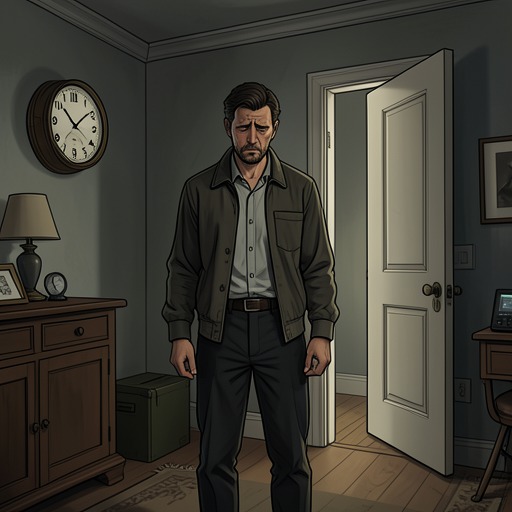
The FriendThe declining cultural status of literature is a recurring diagnosis in the narrator’s account of a writer who sees books losing readers, public authority, and the power to shape society. The decline appears in complaints about mass authorship and careless reading, in students’ views of books as obstacles or commodities, and in the dwindling attention paid even to a friend’s published novel. But the diagnosis is not presented as settled fact: the narrator recalls the friend’s sweeping claims while also exposing their contradictions, and sets them against evidence that people continue to want both to write and to be read.
The Diagnosis of Decline
The friend regarded the spread of writing as a cultural inversion. In an age when nearly everyone wrote, he argued, the difficult, lonely character of literary work had been forgotten. People increasingly treated authorship as a route to public recognition, rather than turning to collective activities such as singing, dancing, or quilting for connection and self-expression. He regarded the rise of self-publishing as catastrophic, even describing it as the death of literature and, by extension, culture. The narrator preserves the force of this complaint but also notes its weakness: the friend had warned others against statements that sounded persuasive yet fell apart under scrutiny, and his declaration about self-publishing was just such a statement.
The perceived loss of literature’s status was bound up with a loss of distinction around becoming an author. Publishing, the friend believed, no longer seemed exceptional; aspiring writers could wonder why authorship should not be open to them as well. The narrator traces that question back to the French critic Sainte-Beuve in 1839, making the contemporary complaint part of a much older history rather than a wholly new consequence of modern publishing. The friend’s alarm about the present therefore coexists with evidence that the aspiration to write, and anxiety about who gets to do so, have persisted across generations.
Authorship, Prestige, and Social Influence
The friend’s dissatisfaction extended beyond the number of people writing. He complained that even students from highly regarded schools could not distinguish a good sentence from a bad one, and that people in publishing seemed indifferent to how books were written. In his view, literature was dying while the writer’s prestige had sunk so low that it was difficult to understand why so many people still pursued authorship as a path to glory. The contradiction mattered: the culture appeared to grant writing less authority even as the wish to become an author remained widespread.
He had also lost faith in fiction’s public purpose. However brilliant or intellectually ambitious a novel might be, he felt, it could no longer make a meaningful difference to society. The narrator recalls the comparison with the story of Abraham Lincoln meeting Harriet Beecher Stowe in 1862 and crediting her book with helping start a war, then immediately qualifies the anecdote by noting that Lincoln may not actually have said it. That qualification sharpens the contrast: the friend’s sense of lost influence rests partly on a remembered ideal of literature’s historical power, while the story offered as proof is itself uncertain.
Reading as Consumption and Misrecognition
For the friend, literature’s diminished standing was visible in the way readers judged books. He objected to treating a novel like a meal or a consumer product, assessed chiefly by whether it satisfied personal taste. His beef-and-lamb comparison makes the distinction concrete: a reader’s enjoyment does not erase the difference between what a writer put on the page and what the reader believes was there. He saw the same problem in students’ papers and customer reviews that dismissed books for failing to affirm what readers already felt or found relatable. In this account, reading had become less an encounter with another mind than a demand for recognition and satisfaction.
Some examples particularly dismayed him. Readers complained that a novel did not contain a death, or faulted Anne Frank’s diary because little happened and the story stopped abruptly. The friend knew that other writers might call his position precious, or argue that a book’s failure to be understood could mean that the artist had failed. Even so, pervasive careless reading had changed his own relation to an audience: he had begun not to care whether people read his work. He was inclined toward the severe estimate that a truly good book might find no more than three thousand readers. The claim is not offered as a measured account of readership; it conveys how sharply disappointment had turned into withdrawal.
Signs, Counterexamples, and Everyday Neglect
The surrounding evidence gives the decline a material and social dimension. A news item reports that thirty-two million adult Americans cannot read, while the potential audience for poetry has fallen by two-thirds since 1992. Alongside those figures appears a rent-burdened woman in New York City trying to write a novel. Her attempt, described with a brief note that it is going well, resists a simple story of cultural disappearance: economic precarity and diminished literary prestige do not prevent the desire to write.
In the classroom, students voice competing versions of the same diminished regard. One objects to the number of reading courses because she wants others to read her writing rather than read theirs. Another questions the assigned books because they did not earn money or have gone out of print, and argues for studying more commercially successful writers. These attitudes make literary value answer to personal ambition, sales, and current availability. They also show how the friend’s complaints about authorship and reading surface in ordinary educational choices, not only in abstract pronouncements about culture.
The narrator’s own lapse supplies a quieter counterpoint to the friend’s anger. At a bookstore, the narrator realizes that a friend’s novel, published the previous year and now available in paperback, has not been read and had been forgotten altogether. This is not evidence that the novel failed, or that no one else read it; it is a precise instance of how easily a book can pass out of one reader’s attention. Set beside the friend’s fear that literature has lost its audience, the forgotten paperback turns cultural decline into an intimate failure of notice. Together, these episodes leave literature neither simply dead nor securely alive: its prestige and reach are questioned, while the impulse to write and the possibility of meaningful reading remain unresolved.