Writing as self-help versus literary art
The FriendWriting as self-help versus literary art names a tension between writing as a private means of survival or reflection and writing as a public literary vocation. The book neither dismisses the comfort writing can offer nor treats self-expression as sufficient justification for making literature; instead, it sets private practice, artistic ambition, and the burdens of publication against one another.
Private Writing and Therapeutic Claims
A young woman the narrator met at a summer writers’ conference wrote a first-person account of Larette, a sex-trafficked girl. The work was closer to memoir than fiction, though its category remained unsettled. It drew its force from unsentimental treatment, an absence of self-pity, and humor. The woman had spent two years in a residential recovery home confronting drug addiction and shame, and resisting the pull to return to her pimp, whose name was tattooed in three places on her body. Afterward, she enrolled in community college and took her first writing course. Like many people the narrator had met, she believed writing had saved her life—a claim the book presents as a genuine experience, not a guarantee that writing can serve everyone in the same way.
The deceased friend was skeptical of writing offered as self-help. In support of that skepticism, the friend invoked Flannery O'Connor’s view that public writing should be reserved for those with a gift. The distinction is not simply between good and bad writing: it is also between writing kept private and writing addressed to an audience. The narrator observes that few people expect their writing to remain private, while many imagine it entitles them to public attention and fame. The friend believed that people searching through writing for self-expression, community, and connection might find those things more readily in collective singing and dancing or in quilting bees. Writing, in this account, is difficult and isolating rather than an easy route to belonging.
Journaling as a Private Practice
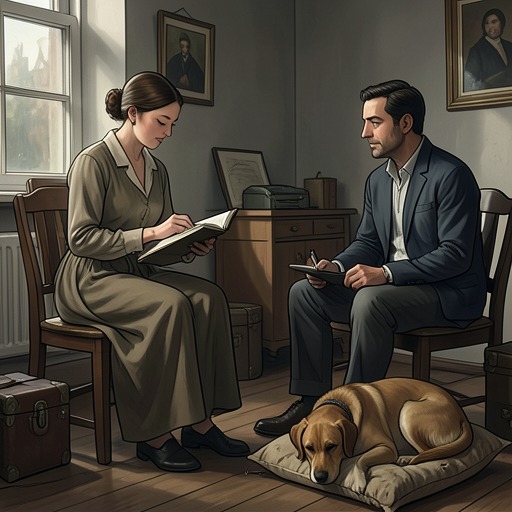
The women at the center were encouraged to keep journals, but the psychologist who organized the practice stressed that the writing was private. Some participants had worried that their words might be read; she assured them that no one would see the journals, not even her. That promise distinguishes this exercise from the public literary vocation defended by the deceased friend: its purpose did not depend on an audience, recognition, or a claim to artistic status. Participants were free to write whatever they wished without having to turn experience into something for public consumption.
The women’s differing ways of handling the notebooks make privacy an active condition rather than an abstract principle. Some hid their journals when they were not writing; others carried them everywhere. A few chose to destroy what they had written immediately or soon afterward, and the psychologist considered that acceptable too. Keeping, concealing, carrying, and discarding the pages were all accommodated within the practice. The journal mattered as a space in which a woman could write, not as a durable record that someone else had a right to preserve or interpret.
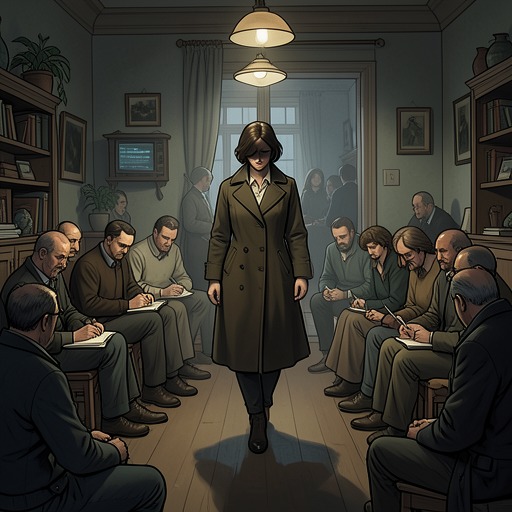
The instructions made the exercise concrete: the women were asked to write every day for at least fifteen minutes, quickly and without pausing too long to ponder or become distracted. They wrote by hand in notebooks supplied by the center. The psychologist believed longhand helped concentration and that a lined page was more welcoming than a blank screen for intimacies and secrets. Women who spoke English as a second language could write in their native tongues. Some refused to journal, a refusal the account acknowledges without treating participation as compulsory or claiming that the method worked for everyone.
Ambition, Attachment, and the Decision to Stop
The conflict between private writing and literary ambition became personal when a woman who had begun a novel found it difficult to concentrate and went to an upstate meditation retreat. She continued to journal and write poetry, but increasingly understood those private practices as compatible with meditation in a way that pursuing a literary career was not. At an artists’ colony, she saw that literary success demanded more than talent: it also required ambition, a drive to surpass predecessors, and conviction that one’s work was urgently important. Those demands seemed at odds with learning to sit still and let go.
The colony also made competition visible. Although writing was not supposed to be a contest, she perceived that writers often treated it as one. When a fellow resident received an advance so large that the news appeared in the Times, he joked at dinner that he had lost his last two friends. She also noticed the effort that followed a writer’s success to diminish that person. Around the wider literary world she encountered chronic frustration over who received what and who was excluded, alongside anger about perceived unfairness. Readings, too, sharpened her discomfort: she did not wish to occupy the author’s place before an audience, and the scene called to mind the comparison of art to prostitution.
Her doubts reached beyond the personal costs of competition to the perceived abundance of books. While struggling with her novel, she considered whether its absence would matter in a world already crowded with novels. A radio speaker’s observation that a year without newly published fiction would leave the world essentially unchanged gave force to a decision she had been approaching: she would change her life rather than continue pursuing the book. The choice did not eliminate regret; she sometimes feared she had merely quit through laziness or cowardice. Yet her waning interest in reading, especially fiction, seemed to her a further sign that the literary career she had imagined no longer held its former claim.
Audience, Misreading, and the Limits of Consolation
In what may have been the Deceased Friend’s last interview, for the inaugural issue of a Midwestern literary journal, the friend predicted a coming wave of suicides among writers and answered that it would happen soon. The friend later explained the prediction as something said after a few drinks and admitted to feeling embarrassed by how melodramatic and self-pitying it might sound. The episode complicates the friend’s skepticism about writing as self-help: writing publicly could expose a writer not only to ambition and competition, but also to the pressures that made literary life seem perilous.
Asked whether the friend wrote for a particular reader, the friend described an ideal audience shaped by early advice: a reader at least as intelligent as the writer, intellectually curious, and devoted to books and fiction. The internet brought actual responses within reach, including readers who seemed to resemble that imagined audience. But the friend also encountered many readers who seriously misread the work, sometimes praising or condemning ideas the friend had never expressed and did not hold. The difficulty was not simply hostile reception. Even a reader’s attention could feel alienating when it attached the book to meanings opposite to the writer’s beliefs. The friend would rather such readers pass the book by than mistake what it said.
The book extends this uncertainty from public reception to private remembrance. The Narrator recalls the Current Therapist’s observation that suicide can be contagious and that knowing someone who died by suicide is a strong predictor of risk. In another passage, the Narrator imagines that the Deceased Friend believed those left behind would endure shock, grieve, and eventually move on. The Narrator accepts that possibility as a way the friend might have spared themself the added pain of guilt, without claiming to know the friend’s thoughts with certainty.
Writing about loss can seem to offer a hold on experience: it may help a person search for meaning and resist the disappearance of memory. Yet the Narrator also fears that the memory of writing about an experience may replace memory of the experience itself, as a traveler’s recollection of a place can become inseparable from photographs taken there. Writing therefore offers no simple cure for grief and no guarantee of preservation. Its power to shape and retain the past is shadowed by its capacity to displace it, leaving the act of literary making suspended between remembrance and loss.