Emotional trauma
The Girl he Never NoticedEmotional trauma is the central psychological condition behind Liz Montrose’s guarded adulthood. It begins in the collapse of her relationship with Scout’s father, but persists long after the immediate crisis, shaping her work, motherhood, self-image, and responses to Cameron Hillier. The wound is not presented as a single past episode that can simply be left behind: it returns through memory, bodily distress, defensive habits, and repeated fear that intimacy will again leave her abandoned and responsible for the consequences alone.
Origin in Abandonment and Forced Responsibility
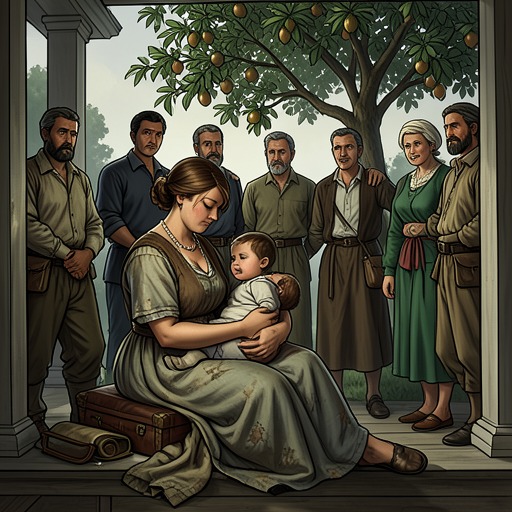
Emotional trauma takes its decisive form when Liz Montrose discovers that her relationship with Scout’s father was only a rebound fling for him. She recognizes that their relationship is finished, while he begins a new life with another woman, moves interstate, and accepts a new position. Her pregnancy intensifies the abandonment. After she tells him, he says that abortion is the only appropriate response, offers to help her through it, and appears to suspect that she has tried to trap him into marriage. Liz refuses both the abortion and the implication that her pregnancy is a scheme, insisting that she can cope before walking out; that encounter is the last time she sees him.
Her decision is formally autonomous, but it is made under conditions of acute isolation. She goes away for a month, changes campuses, and becomes an external student, leaving herself uncertain whether Scout’s father tried to contact her before moving. The practical consequences fall entirely on her. She must raise Scout, complete her degree through an altered course of study, and build a life without the partner whose actions helped create those responsibilities. The trauma therefore combines romantic betrayal with financial insecurity, single motherhood, and the enduring knowledge that a life-changing decision was met not by shared commitment but by withdrawal.
Persistence Through Self-Blame and Defensive Control
Years later, Liz has not converted the experience into forgiveness. When Cameron Hillier asks whether she has got over Scout’s father, she says that she has neither forgotten nor forgiven him, while also refusing to absolve herself for having been naïve and foolish. Her pain is divided between anger at the man who abandoned her and shame at the younger self who trusted him. Cameron’s lack of judgment almost overwhelms her, because compassion reaches the part of the wound that accusation would have allowed her to keep hidden.
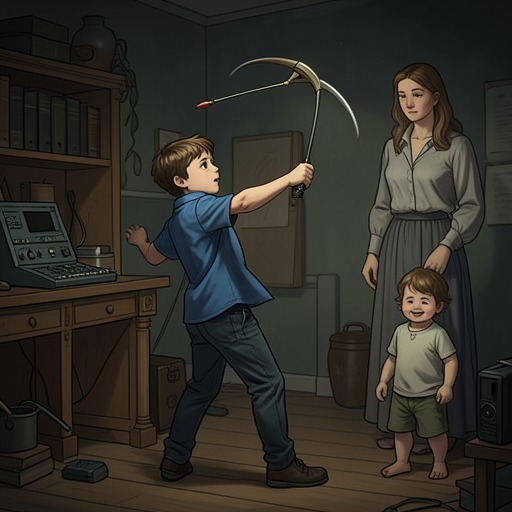
The trauma has become a system of daily self-protection. Liz’s attention is fixed on Scout and on constructing a viable life for both of them, leaving no emotional space for men. She describes her method, developed without fully realizing it, as “Ice Queen armour”: a controlled, distant presentation designed to prevent renewed vulnerability. The armour gives her a measure of safety, but it also narrows her life. Economic survival remains a struggle, she feels guilty about depending on Mary Montrose and restricting her mother’s freedom, and she believes she is growing old before her time. Bitterness toward men makes ordinary social pleasure seem inaccessible, as though enjoyment itself might expose the defenses that keep her safe.
The contrast between control and vulnerability becomes visible after Liz confides in Cameron, who is also her employer. Once she realizes how much she has disclosed to a virtual stranger, she fears that her emotional exposure has compromised her professional position. She asks whether he believes her and offers to accept dismissal if he does not. Cameron immediately says that he does believe her and that he has no intention of sacking her, then offers to take her home. His response does not erase the trauma, but it provides an experience sharply opposed to her earlier abandonment: disclosure produces protection rather than rejection.
Trauma and the Management of Future Security
Liz’s wounds also govern how she evaluates opportunities. When Cameron offers her a more responsible position at Yewarra, together with a staff cottage large enough for Liz, Scout, and Mary Montrose, she cannot accept the proposal as a simple expression of professional confidence. She asks why he has chosen her, and he explains that she has impressed him, possesses organizational and people skills, and is wasted as a diary secretary. The offer recognizes competence that her precarious circumstances have obscured.
Her eventual decision is inseparable from custody anxiety. The position would improve her finances, resemble working from home, remove the need for part-time weekend work, strengthen her résumé, and give her more time with Scout. Most significantly, Liz believes it would make her appear a more suitable mother if Scout’s father ever contested her suitability. Her reasoning shows how trauma turns security into something that must be calculated and continuously defended. Employment is not only employment; it is evidence against a possible threat to her child and a way to prove that she can provide what Scout needs.
The same fear complicates Cameron’s romantic intentions. Liz admits that an attraction exists but insists that she cannot allow it to affect her. Her previous mistake was made in the name of what she thought was love and turned out to be only a passing attraction, leaving her to repair not merely her life but her morale. She cannot understand why five years have failed to make the experience harmless. When Cameron tells her that he would not leave her pregnant and alone, he directly addresses the precise catastrophe that organizes her distrust, but reassurance alone cannot instantly disarm the pattern formed by the earlier betrayal.
Reopening the Wound Through Intimacy
Cameron’s courtship forces Liz to distinguish gratitude, dependence, attraction, and love. When she hesitantly considers accepting his offer of marriage, she says she cannot make promises and refers to how good he has been to her. Cameron rejects the possibility that gratitude should determine her choice and withdraws the offer when she seems to be accepting out of obligation. He insists that they want each other and that gratitude has nothing to do with it. Liz eventually acknowledges that he is right.
This exchange matters because trauma has taught Liz to distrust the motives behind apparent rescue. A marriage shaped by financial security, maternal protection, or indebtedness could reproduce the loss of agency at the heart of her first relationship. Cameron’s insistence on desire rather than gratitude creates a different basis for commitment, although it also confronts Liz with the risk of choosing freely. Her difficulty is not a lack of feeling; it is the fear that feeling may once again lead to consequences she alone must bear.
The pressure finally becomes intolerable when Liz believes that the relationship cannot survive its unresolved issues. She says that she does not want it, declares that it is over, and plans to leave the next morning. Her language returns to the old logic of anticipated abandonment: she tells Cameron that he was mad to become involved with her and asks him to let her go. She is not merely ending a romance; she is trying to regain control before another man can decide that she and her complications are too much. The attempt to flee repeats the original injury in reverse, allowing Liz to abandon the relationship before she can be abandoned again.
Recognition and the Possibility of Recovery
The decisive counter-movement comes when Cameron seeks Liz out. The shock of seeing him again releases everything she has been unable to say. She declares that she would never have slept with him without loving him, explains that her actions were not really about Scout, and identifies the feeling as having been directed toward Cameron from long before. Her confession does not deny the role of custody anxiety or practical fear in her decisions; instead, it separates those pressures from the emotional truth she has been unable to trust.
The scene gives the trauma a form that is both bodily and verbal. Liz is shaking and crying as the buried declaration emerges, while Cameron is visibly shaken and embraces her. Unlike the earlier memory in which her revelation of pregnancy is answered by a proposal of abortion and departure, this revelation is met by presence. The contrast marks the possibility of healing: not the deletion of betrayal, self-blame, or fear, but the discovery that disclosure can lead to mutual recognition rather than abandonment.
Emotional trauma thus functions as both obstacle and organizing structure in Liz Montrose’s story. It explains her “Ice Queen armour,” her economic vigilance, her fear of losing Scout, her suspicion of Cameron’s motives, and her impulse to escape when love becomes undeniable. At the same time, the narrative treats her not as permanently defined by the wound but as capable of revising the story she has built around it. Her final admission that Cameron—not merely Scout’s security—motivated her intimacy is an act of recovered agency: she names desire as her own and allows love to become a choice rather than another danger disguised as rescue.