Liz Montrose–Archie relationship
The Girl he Never NoticedThe Liz Montrose–Archie relationship is one of the central care bonds in the story, transforming Liz’s professional connection with Cameron Hillier into a place within his family circle. Archie first enters her life as Cameron’s adopted, orphaned nephew, but through shared play, attention to animals, and repeated acts of reassurance, he comes to regard Liz and Scout as essential to the emotional life of Yewarra. Their relationship gives concrete form to the novel’s idea that family can be made through reliable care as much as through blood.
First Meeting and the Grounds of Trust
Archie is introduced to Liz as a small boy of about five, Cameron’s sister’s orphaned son whom Cameron has adopted. His arrival immediately complicates Liz’s view of Cameron: she sees the businessman become physically affectionate and attentive, lifting Archie into his arms, reasoning gently with him about keeping only one of Wenonah’s six puppies, and promising to return for the weekend when Archie is disappointed that he cannot stay. Cameron then identifies Liz simply as someone who works for him, but Archie responds with impeccable manners and invites her to see his menagerie.
Liz accepts the invitation before Cameron or the nanny can intervene. That decision establishes the relationship’s first important feature: Archie is not treated as an interruption to adult business but as a person whose interests deserve attention. He leads her by the hand to the fenced compound, where rabbits, guinea pigs, a white cockatoo, frogs, goldfish, and a blue-tongued lizard are housed among gravel paths, shrubs, hollow trunks, ponds, and climbing equipment. The setting is both a child’s achievement and a carefully arranged environment of care. Cameron explains that Archie has always been interested in animals, and that he created the menagerie instead of allowing the boy to keep mice in shoeboxes; he also believes it has helped Archie recover from the loss of his mother.
Liz is enchanted by the enclosure partly because she immediately imagines how much Scout would enjoy it. The bond therefore begins through an emerging connection between the two children as well as through Liz’s responsiveness to Archie. When she and Archie kneel together, laughing as they try to coax Wally the blue-tongued lizard from its cave, Cameron finds them already absorbed in a shared activity. Liz’s apology that the menagerie is fascinating, followed by her thought of Scout, shows that her care for Archie is continuous with her care for her daughter rather than separated from it.
A Deliberately Chosen Caregiving Role
Cameron later gives the relationship an explicit purpose. He tells Liz that his sister had been a single mother, which is one reason he sympathizes with Liz, and then explains that Archie needs the right influence in his life. Cameron cannot spend as much time with him as he should, and Archie will start school the following year, making their available time together even more limited. Cameron wants the boy’s final year before school to be memorable, safe, and happy, and says that what he saw in the menagerie convinced him Liz might provide that influence.
Liz’s suitability is not presented as an abstract qualification. Cameron has watched her with Archie, just as he has noticed how strongly Scout matters to her. His proposal turns an informal moment of play into the basis for a caregiving arrangement. Liz’s maternal experience, emotional attentiveness, and practical competence become valuable within Cameron’s household, while Archie’s immediate ease with her supplies evidence that the proposed role is not imposed solely by adults.
The arrangement also carries a professional tension. Liz is employed by Cameron, and her initial position is defined by the boundaries of work, yet Archie’s needs draw her into a more intimate sphere. Cameron’s household staff discreetly monitor how she fits into the job, especially where Archie is concerned. Liz does not resent this scrutiny because it makes sense to her: Archie has already suffered the loss of his mother, and the adults responsible for him must judge whether a new caregiver is safe and dependable.
Animals, Play, and Everyday Attachment
Animals provide the relationship with a recurring medium of communication. Archie’s concern for living creatures is intense and sometimes painful. When five of Wenonah’s puppies are sent to new homes, he can hardly eat or sleep, and Liz’s sympathy deepens because she sees how seriously he feels separation and loss. His sensitivity reinforces her awareness that he is motherless and fatherless, while his enthusiasm gives her practical ways to comfort and engage him.
The menagerie also turns care into shared work and discovery. Liz’s visits with Scout and Archie to inspect the foals born on Yewarra become a regular pleasure. She takes the children with her while checking the young horses, and the three of them invent names as the foals change from stiff-legged newborns into frisky, confident animals. These outings make Liz part of the daily rhythm of the estate rather than a temporary visitor, and they allow Archie and Scout to form a relationship through a common world of animals.
Cameron’s gifts to Archie extend the same pattern across distance. He sends postcards, books, and strange objects from different parts of the country and overseas, which Archie keeps proudly in a special cabinet. Not every gift is suitable for a five-year-old: a full-size boomerang once went through a window when Archie experimented with it indoors. Yet Cameron responds not only by dealing with the damage but by finding a song about a man whose boomerang would not come back, helping Archie recover his spirits. Liz recognizes the song and understands that these apparently eccentric gifts are part of Cameron’s continuing effort to remain emotionally present for the boy.
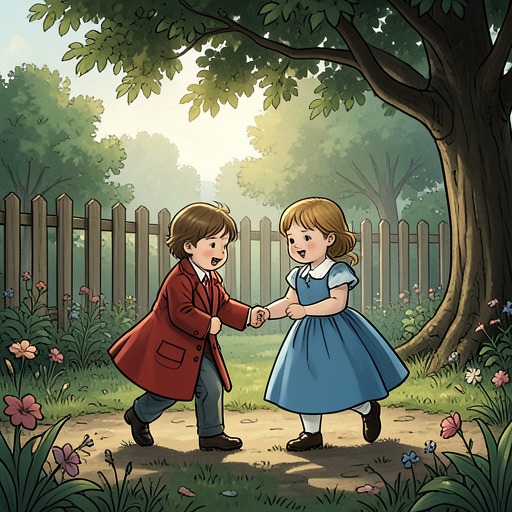
Liz’s bond with Archie is likewise formed from small, embodied occasions. At a garden gathering, she places sparklers in a chocolate ice-cream log. When Scout becomes nervous, Archie reassures her and dances around the garden holding her hand until she relaxes. Archie thus acts as a protector and companion to Scout, while Liz’s preparation of the celebration gives the children a shared experience in which his confidence can shelter her daughter’s uncertainty. The relationship between Liz and Archie expands through this emerging child-centered family unit.
Separation, Return, and Mutual Dependence
By the time Liz has settled into Yewarra’s work and family life, she has become deeply fond of Archie. Her role is no longer limited to arranging repairs, managing practical matters, or setting up a computer program for the stables. She participates in the emotional maintenance of a household that includes a sensitive child, a busy adoptive father, Scout, and the adults who keep the estate functioning. Archie’s trust makes Liz feel at home, even as she warns herself not to become too attached because she may eventually have to move on.
That fear becomes real when Liz and Scout are absent from Yewarra. On their return, Archie hugs Cameron and Scout first, then stands before Liz with visible concern. He asks whether she will go away again and whether she will take Scout away again, explaining that nothing feels the same when they are not there. His words reveal the extent of the bond more clearly than any adult arrangement could: Liz and Scout have become part of his understanding of home, and their departure changes the emotional character of the place.
Liz answers by kneeling and embracing both Archie and Scout. She promises that they will not go away again. The promise is significant because it reverses the insecurity that has shadowed her attachment to Yewarra. She had feared temporary employment, displacement, and the loss of a household to which she was not certain she belonged; Archie’s appeal makes the cost of that uncertainty visible. His need also gives her an opportunity to make a direct commitment rather than remain guarded.
Archie accepts the reassurance not through an adult explanation but through renewed play. After studying Liz’s eyes for a long moment, he turns to Scout and tells her that Golly and Ginny have had more babies, then races with her toward the menagerie. The movement returns the relationship to its characteristic medium—animals and shared activity—while showing that reassurance has restored the ordinary life he feared losing. Liz rises, takes Cameron’s hand, and receives his husky thanks, linking Archie’s emotional welcome to the larger reconstruction of their family.
Significance Within the Family Structure
The Liz Montrose–Archie relationship illustrates how the novel builds family through overlapping acts of adoption, single parenthood, employment, and chosen belonging. Archie is connected to Cameron by adoption, to Liz through caregiving, and to Scout through companionship. Liz herself lives with Mary Montrose, who cares for Scout while also sometimes needing care, so her understanding of family already includes reciprocal and imperfect forms of dependence. At Yewarra, that understanding is extended rather than replaced: Archie does not simply receive a substitute mother, and Liz does not merely perform a job. They become participants in a wider household whose bonds are repeatedly confirmed in practice.
The relationship also humanizes Cameron. His creation of the menagerie, his attention to Archie’s grief, his gifts from distant places, and his effort to secure a safe final year before school show a man aware of the limits imposed by his work and trying to compensate for them. Liz’s presence does not erase Cameron’s responsibility; instead, it helps make his care sustainable. Her involvement allows Archie to receive continuity, supervision, play, and emotional recognition when Cameron cannot always be present.
For Liz, Archie is both an emotional responsibility and a source of belonging. Her instinct to imagine Scout enjoying the menagerie, to join Archie on the ground, to include the children in checking the foals, and to create the sparklers’ celebration reveals care that becomes spontaneous rather than merely assigned. The final reunion confirms the relationship’s decisive change: Archie no longer sees Liz as Cameron’s employee who happens to be kind to him. He sees her and Scout as people whose presence is necessary to the feeling of home, and Liz answers that claim with a promise to stay.